
I will waste not one more word on the Dire Wolf "de-extinction" story. That's it. That is the whole post. I do have more to say about other ways science is failing us, but that will come in a separate entry.
I will waste not one more word on the Dire Wolf "de-extinction" story. That's it. That is the whole post. I do have more to say about other ways science is failing us, but that will come in a separate entry.
It has been one month since the American Ornithological Society released a statement of its intent to change the English common names of bird species named for people, starting with those birds found in the United States and Canada, then moving to Latin America. Reactions to this initiative have been predictably mixed, often polarized. It is demoralizing to me personally to see friends and respected colleagues opposed to it, an absence of nuanced perspectives, and lack of creativity in solutions.

Here are some basics so we can all be on the same page. Common, English names of species that include the moniker of a historical figure are termed “eponymous” names. This practice of naming species after people dates to at least the 1800s, and has been revealed to be wildly inconsistent, if not random, in its application. A little excavation work by author Kenn Kaufman shows that some “honorees” in eponymous bird names had little if anything to do with ornithology, let alone advance the science.
More troubling still, eponymous names have come to be associated with racism, misogyny, other forms of bigotry, and colonialism. Rather than painstakingly evaluate the baggage of each eponymous bird name, the AOS has decided to do away with all of them. This has led to accusations of “wokeism” and political correctness by some birders, and many people who have no interest at all in our feathered friends. No one seems to be asking what is to be gained by retaining such names, aside from convenience and tradition.
Do we really want a tradition of exclusion? Birding is already viewed by many as an elitist recreational pursuit, with globetrotting retirees chasing rarities for their life lists. Birding will benefit greatly from expanded human diversity within its ranks. It follows that birds themselves will benefit from increased attention to their plight.
Some with less visceral reactions have questioned whether this effort at name-changing will draw valuable financial and human resources away from bird conservation and research. My intuition tells me that expenditures will be relatively minor, and the people doing the work will not be the same people already engaged in protection of species. This is an endeavor that complements conservation, if not enhances it by making the discipline of ornithology more attractive to Indigenous scientists, and others who have viewed the science as exclusionary.
There are those who do not believe that mere name changes go far enough towards the goal of decolonizing science, politics, economics, and improving other aspects of life. This may have merit if we do not address how we can take down barriers to birding such as the affordability of optics and other equipment, increase accommodations for disabled and neurodivergent birders, prioritize the safety and respect of women and children in the birding community, and take economic initiatives beyond bird-friendly coffee.
Should you question whether I have nothing to lose in siding with those endorsing a move away from eponymous names, allow me to mention that I am a direct descendent of the “OC” (Original Colonists). My forefathers were literally on the Mayflower. In no way do I feel threatened by extending rights, freedom, and prosperity to people who identify other than White, cis, male, straight, neurotypical, able-bodied, and otherwise advantaged.
Ironically, the one downside of eliminating eponymous names, as I see it, is that we cannot name birds after any people of color, who truly have furthered ornithology and birding. (J. Drew) Lanham’s Sparrow has a nice ring to it.

In an otherwise winter-dead landscape, wild birds bring a reminder that animate life still exists. The sun still rises, the Earth still turns, the seasons march on. When the frenetic pace of humanity becomes too much, birds offer a sense of peace, a reset button that allows us to relax a moment. These basic sentiments and sensations are rarely cited as reason enough for conserving our feathered friends, nor used in arguing that we have a right to nature.
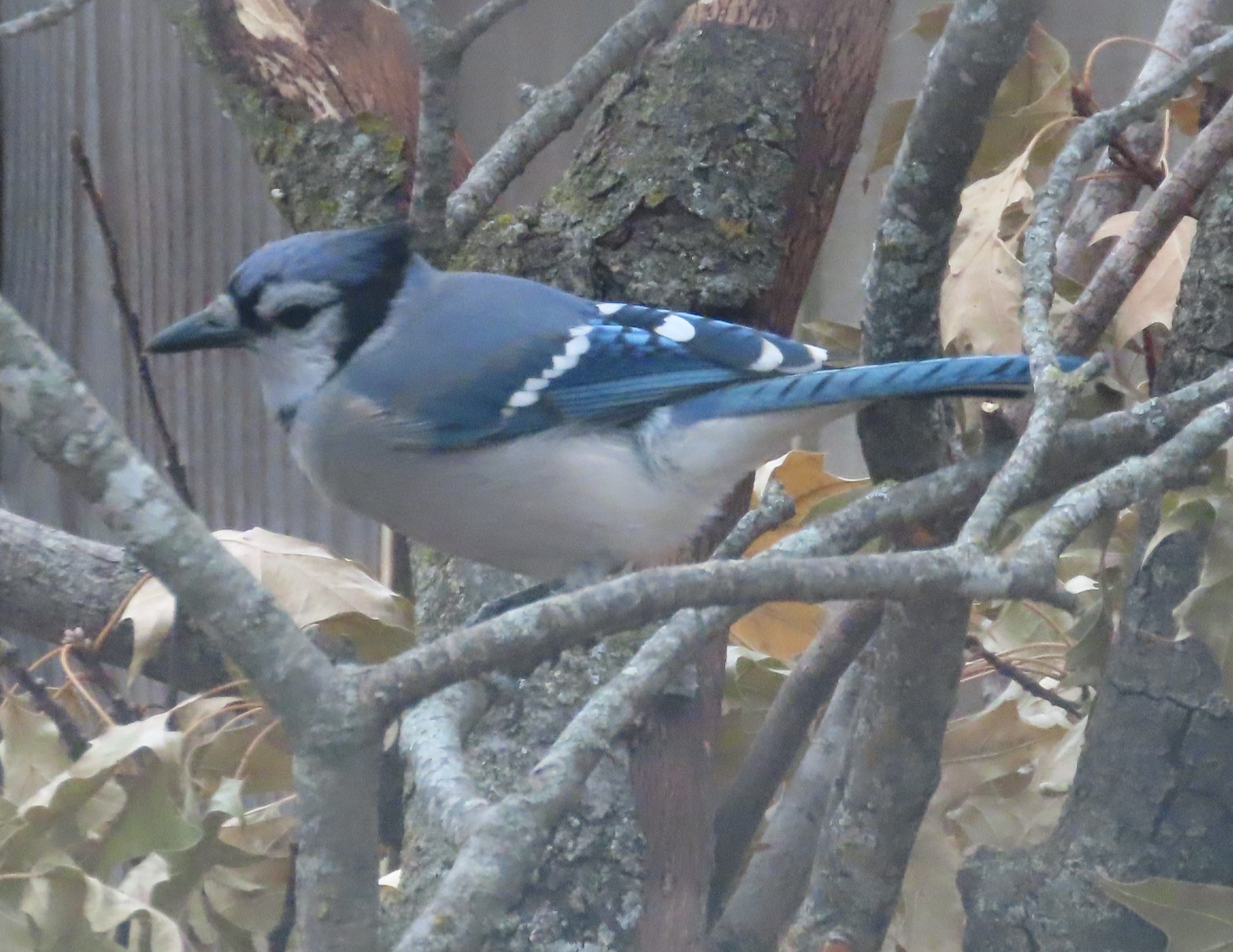
My partner and I live in Leavenworth, Kansas, USA, less than two blocks from the federal penitentiary. One could hardly imagine a more stark, vivid contrast between the freedom of flight and the permanence of incarceration. We can see the dome from our kitchen window, but in the foreground is our back yard, enclosed by a wooden fence and one wall of the detached garage. Heidi insisted we put up feeders, and that gesture has been a blessing.

We moved from a dense residential neighborhood in Colorado Springs, Colorado well over a year ago now, and I have found it nearly impossible to embrace this much smaller town, overwhelmingly conservative in the political sense. Prisons, churches, and Fort Leavenworth define the entire county. The human atmosphere has been utterly stifling, and I have found my creativity and productivity suffering. Everyone I see looks old, unhappy, often in poor health.
By contrast, the birds that visit our feeders are energetic, alert, colorful. They chatter and sing as they compete for seed and suet, or communicate with fledglings they are still feeding (I’m looking at you, White-breasted Nuthatches). The birds are at least a reminder of what can be, the vibrant, happy lives we could have if we only chose to. We subscribe to far too many unhealthy pursuits and addictions as we try to escape the prisons of capitalism, familial discord, and other stressors.

As I write this, the only sounds audible through the walls and windows are gunshots at the firing range on the prison property, light vehicle traffic, and an occasional dog bark. We wait for the birds to visit in waves of brief duration, usually mixed flocks of House Sparrow, juncos, chickadees, nuthatches, titmice, cardinals, Blue Jays, Mourning Dove, and woodpeckers. House Finches prefer to have the feeders to themselves and seldom appear with the other birds. What competition there is tends to be relatively peaceful, though until we can translate perfectly the calls of birds, who knows what is profanity.

Birds are not here for our entertainment, of course. Science tells us they fill niches unoccupied by other species, and provide ecosystem services such as membership in the food web, seed dispersal, and suppression of insects that would overwhelm entire ecosystems without checks and balances from avian predators. Still, such arguments are dry, impersonal, and relatively weak in convincing lawmakers and corporate executives of the need for conservation, preservation, and creation of bird-friendly habitat.
That is where comfort and joy come in. Birds, and other undomesticated organisms, are critical for the personal and social functioning of a great many people. The passion for birds is so great that it creates jobs itself: Seed growers and processors, feeder manufacturers, optical industries, travel and tourism, and parks and recreation agencies all depend on, and cater to, birders. Artists! Increasingly, landscape architects are specializing in planning and executing native plantings with birds in mind. Failing to acknowledge the comfort and joy that wild birds bring to citizens is an affront to human rights, and threatens to undermine our collective mental health, and even some livelihoods.

My partner and I have the luxury of White privilege, enough disposable income to feed the birds, and enough time to enjoy them. We can even travel to see birds elsewhere. We’re so far ambulatory and without most other physical challenges. It is incumbent upon us, however, to improve inclusiveness and promote diversity in birding whenever and wherever we can. We cannot allow anyone to be less than a proud birder, or birdwatcher, free of derision and shame perpetrated by those who have no appreciation for the living world in its natural state.
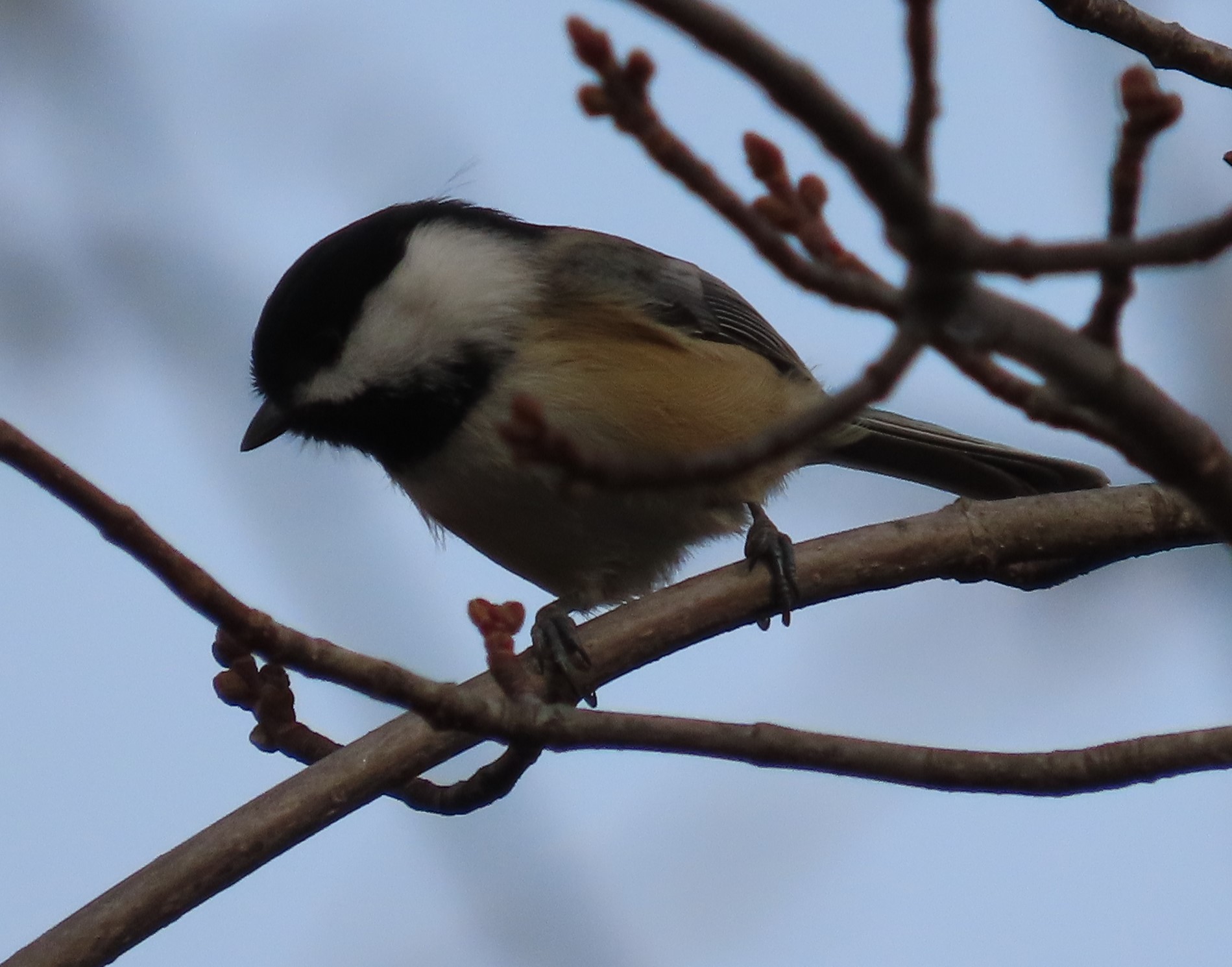
Share your bird-joy. Wrap others in philosophical, feathery comfort. Lend your binoculars and field guides. Donate to local, national, and international organizations promoting birding. Do not neglect those aimed at Indigenous, Black, LGBTQ, women, and other traditionally ignored demographics. There may be no greater gift you can give this holiday season, or at any other time of year.

Wildlife and plant conservation is more complicated than ever in the twenty-first century. Outright habitat loss from agriculture, urbanization, resource extraction, water diversion, the introduction of non-native species, and other endeavors continues nearly unabated. Now, we have the added effects from climate change. Consequently, habitat protection is less predictable. We know change is going to happen, probably more rapidly than anticipated by our government, business, and cultural institutions. How best do we cover our bases?

The experience that got me thinking about this was my discovery of the only known breeding population of the Filigree Skimmer dragonfly, Pseudoleon superbus, in Colorado. The documentation of the species just up the hill from my home in Colorado Springs represented a significant northern range extension for the species. I am using past tense because it is almost certain that the population will perish during or after a stormwater mitigation project slated for execution by Colorado Springs Utilities.
This situation was at the forefront of my mind in deciding whether to vote in favor of the reintroduction of the Gray Wolf to Colorado. The citizen-generated initiative made it onto the ballot in November, 2020, and passed by the narrowest of margins. It represents an attempt at restoration of historical ecosystems, and the historical range of Canis lupus in the Lower Forty-eight states. It could also be interpreted as contingency planning should wolves re-establish on their own, which seems to be the trend since the re-introduction of the species to the Greater Yellowstone Ecosystem.
In the absence of reliable predictive modeling for shifts in the geographic distribution of organisms, and therefore shifts in the composition of ecosystems, it is prudent to be as immediately responsive as possible when changes arise. The more preemptive actions that can be taken to facilitate those responses, the better. The wolf reintroduction bill at least forces the hand of Colorado Parks and Wildlife to manage wolves one way or the other, with the advantage going to the wolf and its human advocates. Similar legislation is needed at an ecosystem level to guard against both continued exploitation of natural resources by business interests, and to mitigate probable climate-driven catastrophes such as prolonged drought and wildfires.
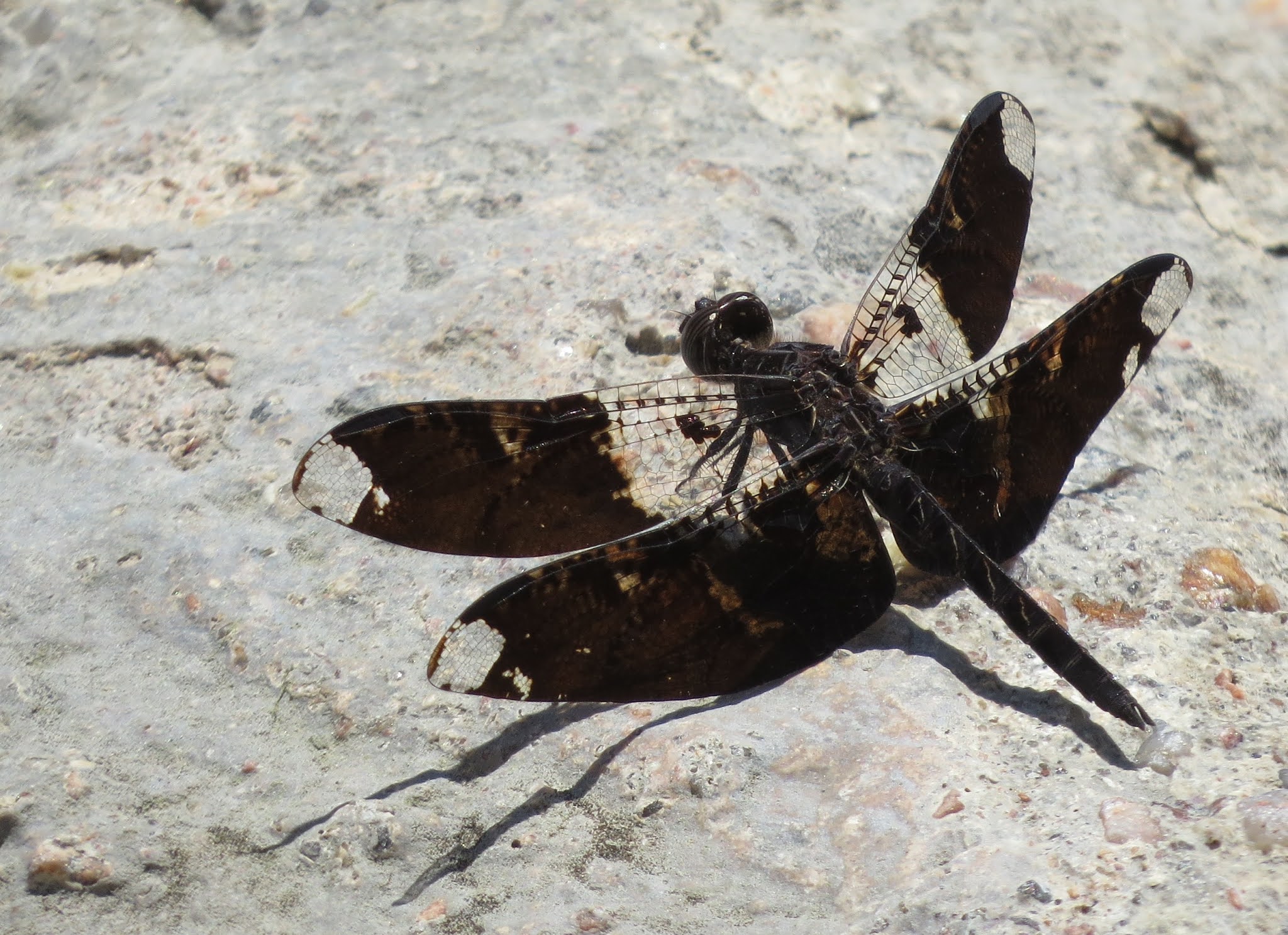
Back to the dragonfly for a moment. The Colorado Springs occurrence could be viewed as a disjunct population, far removed from the historical range of the species in canyons of the deep southwestern U.S. It could be that this is the “new normal” for the species. If the species is progressing northward, is something happening farther south that is driving it northward? Such outlier populations deserve consideration of protection, regardless of whether the species is currently listed as threatened or endangered in any part of its existing range.
I explored every recourse I could think of to get protection for the dragonfly population up the hill, but to no avail. It is tragically ironic that we demand a species to be already in peril before we give authority for its interests to be considered. Thus, the rights of a given species do not matter until the very last minute. What of the rights of humans to other species? What of our rights to experience other species in nature, in a passive fashion? Why do those rights not count at all? Many a human being would elevate the experience of immersion in wild ecosystems above mere recreation and into the realm of necessity for one’s mental health and physical well-being.
The time has come to raise the bar in proper stewardship of a constantly changing landscape, and give priority to preservation of not just species, but populations of each species. The maintenance of genetic diversity has never been so critical. There has never been such an urgent need to preserve as much remaining habitat as possible because climate change is diminishing viable ecosystems wholesale.
Conservation organizations and environmental law professionals, take note. The old standards and methods no longer apply. It is time to be creative, with innovative approaches to legislation, the forging of new partnerships with indigenous peoples to restore the “history” in “natural history,” and the assertion of urgency to preserve wildlands not for future generations, but to honor present and previous generations of ecological advocates. Get to work.

Many people are not happy with the place where they live. Maybe the neighborhood is bad. Maybe the climate does not agree with them. Maybe they are just restless. I have concluded that I would rather live in a different time. I have no desire to return to my childhood. This is not about a re-do on a personal level. We make the best of the cards we are dealt. This is about something bigger. This is about a longing for what was never allowed me because it was gone before I was born.
There is increasing evidence, if only anecdotal, of an "insect armageddon," which suggests the abundance and diversity of insects and related organisms are plummeting. We have already lost many once-populous species to the greed and ignorance of previous human generations. A planet devoid of even insects raises a specter that I am unwilling to contemplate, and a life I would not be able to endure, psychologically if not physically.
That is the thing about history. You will eventually learn about what you will never have the opportunity to experience.
You better believe I am angered that I have been deprived by my forefathers of the vast flocks of Passenger Pigeon, the antics of Carolina Parakeets, and the jaw-dropping icon that was the Ivory-billed Woodpecker. I can only see Bison on preserves and ranches, and on the ranches one suspects it is actually the hybrid "beefalo" that one is seeing. Meanwhile, I have a hard time looking at a salmon or trout without seeing a fish hatchery. There are still California Condors, but so few that each bird is fitted with huge, numbered tags, radio telemetry devices, and who knows what else. The bird's "recovery" is not a success story. Maybe it will be once they are no longer wearing the accessories of science, and are truly free to fly.
We have not just tamed the wild, we have diluted it beyond recognition in the name of risk assessment and public safety and public grazing, to name but a few agents of wilderness simplification. The national forests are national tree farms, and it should come as no surprise that the U.S. Forest Service is in the Department of Agriculture rather than the Department of the Interior where it ought to be.
Back to the past, the long ago that I long for. It would be wonderful to know the truth of the landscape that surrounds me today, to see what a riparian corridor looks like without Russian Olive everywhere. What is a foothills meadow without mullein? What is your eastern deciduous forest without an understory of Japanese Honeysuckle? Do I wish we could resurrect mastodons and mammoths? No. I draw the line at being a potential meal for a saber-toothed cat or a Dire Wolf. Furthermore, those were the days when our ancient ancestors were just surviving, without understanding of the ramifications of their actions.
Naturally, I would still want to bring my binoculars, digital camera, first aid kit, and waterproof jacket on the Lewis and Clark expedition.
Perhaps I am guilty of romanticizing the age of the old growth hardwood bottomland forests with their gargantuan oaks and hickories before we started logging and draining the good kind of swamp. Old photographs and artwork paint pictures that are hard not to idealize when you are passionate about the natural heritage of this country. That is the thing about history. You will eventually learn about what you will never have the opportunity to experience.
Ah, but what would I give up in exchange for that bygone era? I do believe I would sacrifice the internet, television, maybe even electricity, especially because I would never know those innovations were on the horizon. Naturally, I would still want to bring my binoculars, digital camera, first aid kit, and waterproof jacket on the Lewis and Clark expedition. Sure, I would likely have a shorter lifespan, but at least I would enjoy that life more fully. Today, instead of California Condors gracing the skies, I am subjected almost daily to extremely loud military aircraft overhead. I would gladly trade noise and neon and traffic and the illusion of choice in the marketplace for something a lot simpler, with fewer losses of species.

We can reverse some of this, turn back the clock if you will. The grand experiment of reintroducing the Gray Wolf to Yellowstone National Park proves decisively that Mother Nature has a memory, and that when you bring back a piece of the puzzle, the whole thing fits together tighter and smoother. We need a historical spectrum of nature, from the initial stages of succession to the "finished" product, because we know there is no such thing as a permanent climax ecosystem. Even natural communities are ephemeral, but until now there have been multiple, continuous habitats that feed each other. They are now so isolated that there is no transfer of species and so invasives take command. We need to link the wild spaces with corridors to facilitate healing of the landscape.
It remains to be seen if I can continue to be as resilient as that landscape, how many times I can come back healthy, vibrant, committed to making the world a better place, acting on my vision of wholeness in every sense of the word. For now I am misplaced, a pioneer naturalist and writer in a domain that I had no conscious hand in architecting.
Social media is nothing if not a lightning rod for raging arguments and polarizing opinions. Take for example a frenzy of commentary that erupted last week when the administrator of a wildlife photography group on Facebook announced that no one would be permitted to disclose the geographic location of any image taken of any animal species posted to the group. I had intended to include quotes from some of the replies to that post, but I have always been much more interested in what remains unspoken, and the motivations behind a person's stance on any topic.

The directive from the wildlife photographer's Facebook group stemmed from the throngs of people pursuing Snowy Owls that have strayed far south of their normal range and are showing up even in Kansas this winter. Each spotting ignites the bird equivalent of what one might call Princess Diana Syndrome. Hordes of camera- and phone-wielding citizens descend upon the place the bird was reported from. Many people are protesting that crowds are endangering the owls, causing them to expend energy in fleeing instead of hunting rodents. That may be true, but what constitutes harassment of wildlife is debatable. Maybe the people complaining just don't like crowds themselves. The point is that the public conversation is always the tip of the iceberg.
I have my theories. Given what is happening in the natural range of the Snowy Owl, I can understand wildlife professionals and enthusiasts wanting to limit impacts on individual birds. Between climate change, and the U.S. actively seeking to drill for oil in what are now protected Arctic refuges, it may be a matter of decades before the Snowy Owl goes extinct and no one has the privilege of seeing one, anywhere. The interesting thing is that few, if any, advocates for the "rogue" owls in the lower forty-eight are making this point.
You may have legitimate concerns, but claiming to speak on behalf of another species is usually done to avoid speaking selfishly, though selfishness is not a crime. Dishonesty is a crime, and that is the kind of dialogue we have with each other daily, on almost every issue whether personal or public. We fail to speak frankly. That dishonesty leaves the recipient on the other end free to make wild assumptions about your motives.
Assigning the proper location to a specimen, be it the actual organism or an image of it, is standard for the scientific community. Each data point is crucial to our understanding of distribution, behavior, and other aspects of a species. Not including that information could be construed as you having no interest in science, or furthering our collective knowledge in a era when one could argue there is a war on science.
Posting an image and then not disclosing the location can be interpreted as "I got my photo, but I'm not helping you get yours." It is an attitude of smugness and snobbery that you probably never intended, but because you did not honestly explain your motivations, we are free to make assumptions about your character.
Then there is flat-out irony. By driving any distance to see a Snowy Owl, or any other organism, you burned fossil fuels directly or indirectly, and may even have killed some other animal on the road along the way (insects at the very least). One could argue that the process used to get your image is part of the problem. You have added to the demand for fuel that is driving the encroachment into Arctic habitat. Your vehicle's exhaust is adding pollutants that are hastening global warming. The people that don't chase might claim the higher moral ground in this scenario.
We may have to come to peace with not getting "our" shot, our own personal trophy. Instead, maybe we should explore closer to home. In my Bug Eric blog I talk all the time about the potential for discovery in one's own backyard, or neighborhood. You can make a big splash with little if any negative impact. You can find something never seen before in your city, county, or state. You can observe behaviors previously unknown.
Most of all, in your speech and actions, strive to be honest no matter how selfish, strange, or surprising it sounds. It will be refreshing, and maybe it will catch on. Who knows, maybe even members of Congress will have the courage to speak truthfully. No, I'm not holding my breath.
Note: This post was ready to publish last week, but I wanted to give a friend an opportunity to convince me that the net neutrality situation was a non-issue. That was a mistake. I remain unconvinced that what the FCC intends to do would not wreck things beyond repair.
It is not difficult to find things to be grateful for during this American Thanksgiving holiday. The question is whether you will still have that sentiment at this time next year. Much of what we take for granted is now in serious jeopardy thanks to this edition of the Presidency and Congress. Life as we know it may not survive through the next three years. One could argue that optimism about the future has been the first casualty.

Elephants, and lions, and tigers, and Polar Bears, oh my. They may be trophy-hunted or poached into extinction, or killed off by the policies exercised by climate change deniers. Science has no place in federal government right now, unless it can be used to accelerate the extraction of fossil fuels in the interest of "secure" energy of U.S. origin. The only bright spot has been the President's apparent reversal of his bid to overturn the ban on the importation of African Elephant parts by trophy hunters who kill their victims in Zimbabwe and Zambia. He has faced more public pressure on this one issue than any other so far, and he is apparently bowing to it. Good to know.

The onslaught against nature continues with a proposal to raise one-day admission fees to popular national parks a whopping $50.00 to $70.00. Yes, our parks are starved for funds for maintenance and other services, but that is thanks to a bloated Department of Defense budget that amounts to corporate welfare for private contractors, and wasteful spending in other areas as well. The conspiracy theorist in me believes the astronomical entry fee proposals are designed to drive down park visitations. Even people who can afford those prices may boycott the parks on principal. The less the attendance at parks, the more our President and Congress can argue that those public lands should be opened up to something truly beneficial: leases for oil, gas, and mineral extraction. The government will not see the profit, but the multinational corporations doing the work certainly will, which is the whole point. Meanwhile, leases are already being drawn up for properties managed by the Bureau of Land Management, U.S. Forest Service, and other agencies.

Do you think the World Wide Web is just fine as it is? Me, too, which is why I am aghast that the Federal Communications Commission, again led by a Presidential appointee, plans on allowing ISPs (Internet Service Providers) to pretty much write their own rules for access to the internet, both for users like you and me, and for those who provide services and content online. The oversimplified scenario is that if you want access to some of the websites and apps you are enjoying currently, you will have to pay more. Likewise, if you want your business to continue enjoying a (high) profile online, you will have to put up more money to get the same amount of customer traffic. Gee, I wonder who gets rich in all this (rhetorical question, sorry).
Meanwhile, alternative media, the non-fake news we turn to for the real scoop, will get overwhelmed by traditional media that can afford to get its message out there. Organizing protests, boycotts, petitions, and other means of dissent will become infinitely more difficult if people have to choose between different social media outlets, or are now unable to afford access at all. It might be the final nail in the coffin for dissent.
That question could be taken two ways: What other atrocities of policy are we in for? Or, what do we do to stop this runaway train? I cannot recall a time when I have written more about public issues, signed more online petitions, or (ever) written to my Congressperson than I am doing now; and it has nothing to do with political affiliation. I honestly feel I am being personally assaulted because of my passion for liberty, wildlife, creative enterprises, small business, the sharing economy, local agriculture, and rights to freedom of (non-hate) speech, healthcare, and safety. This administration is not good for anybody, except the ultra-rich who are also greedy.
What we have to do is avoid despair, and keep up the pressure. Keep informing each other. Raise awareness of issues as you yourself become aware of them. Raise funds for organizations battling against this administration on the streets, in the courts, and elsewhere. Mostly, don't lose friends over disagreements.

My social media newsfeeds have blown up the past couple of days with the news of our President seeking to overturn the ban on importation of "trophy" elephant parts by American hunters who take the animals in Zimbabwe and Zambia. This seems to be a collective "last straw" in tolerance for this administration's egregious policies, symbolic of an utter disregard for anything and anyone without financial affluence.
Irony of ironies, the symbol of the Republican Party is....an elephant. When you cannot even respect the mascot of the political affiliation that planted you in the White House, you really have sunken to a new low. We are not surprised, of course, just continually disappointed and angered by your contempt for other living creatures. You show no mercy even on threatened and endangered species, at home and abroad.
The other day a Congresswoman introduced an amendment to the SECURE American Energy Act that would exempt oil companies from paying for violations of the Migratory Bird Treaty Act. When the next spill happens, these huge corporations would be relieved of the financial burden of rehabilitating oil-soaked birds.
Meanwhile, an article in the current issue of The Nation outlined the methodical takeover of the U.S. Department of the Interior by oil, gas, and mining interests thanks to Presidential appointments and the resulting "reassignment" of key personnel. No public scandal holds a candle to the conflagration that is the wanton destruction of our country being wrought behind the scenes. Policies are being dictated by the very industries that are supposed to be regulated by our government.
Oh, and just for good measure, the tax plans proposed by the House and Senate are going to fleece you and me to pay for the opening of public lands to drilling and other natural resource exploitation, with few if any laws left in place to protect us from pollution of our air and water. Naturally, we will not have healthcare to treat us for the effects of those pollutants and toxins, either. That is apparently just fine as long as the ultra-wealthy can continue the exponential growth of their profits.
What boggles my mind completely is how anyone who is not in the one-percent tax bracket can continue to endorse policy that is literally going to kill them, or their parents, or their children and grandchildren. By extension, how can you then continue approving the performance of the President and Congress? I am left with only a handful of theories: You are hoping this administration's destructive tendencies brings about the Second Coming of Christ; you are blissfully ignorant; you suffer yourself from mental illness; you have no concept of what is truly important in life; you have no empathy for other people, let alone other life forms (see mental illness again).
Mr. President, I sincerely wish that you would finally admit that you simply do not care about the lives of the overwhelming majority of the electorate. It might be the first honest statement you have made since taking office. Actions speak louder than tweets, and it is abundantly clear that you just don't give a damn. Unless they are a family member or someone who can boost your income or your ego, you have no use for them. The rest of us are a means to inflating your own bank account and sense of self-importance.
Lately I have been at a loss for words other than the four-letter variety, and my followers do not deserve a dumbed-down vocabulary, or the vitriol that they no longer even have to search for given how prevalent it is in all media outlets. No sir, I will not stoop to that level of indecency. However, I can no longer be polite, either. That ship has sailed, and I will be doing everything in my power to thwart your horrible agenda. The people of this country already know what makes America Great, and you are hell-bent on taking all of it away from them. Not on my watch you don't, [expletive deleted].


Even if you do not already admire the Turkey Vulture as a master of sustained and effortless flight, and its willingness to consume the deceased animal life that would fester and overwhelm us were it not for these efficient scavengers, you will find Vulture: the private life of an unloved bird University Press of New England, 2017), by author Katie Fallon, to be well worth your indulgence.
Experience informs the advocate, and Fallon does a superb job at weaving her personal life experiences into the narrative of this story. The natural arcs would be the life history of her subjects, from egg to adult; or the migratory journey of a vulture. Indeed, Fallon employs these natural rhythms as elements of continuity; but it turns out not all Turkey Vultures do migrate, a fascinating aspect of the diverse biology of the species.
Familiarity cannot breed contempt in the case of vultures because people, including avian scientists, are simply not familiar with these birds. Much of the content in Vulture represents new information, acquired within the last decade or so, resulting from tagging studies. Vultures cool themselves by urinating and defecating on their feet, which quickly corrodes the metal ankle-bands used by scientists on other birds, hence the need to apply the wing tag strategy instead.
An unexpected and welcome element to the book is the frequent addition of information that applies to other vulture species. The Turkey Vulture is the main character, but our avian hero is also employed here as a messenger for other vulture species all over the planet. Fallon shares her own globe-trekking adventures as they relate to other vultures, like the Egyptian Vulture in India, where the birds have vanished from a sacred Hindu temple they once visited like clockwork. Old World and New World vultures are not as closely related as one might imagine, but they suffer, unfortunately, from the same conflicts with humans.
It is easy for advocates of any orphaned or maligned species to be overly zealous in their efforts to educate; or be too sternly admonishing in addressing those people who lack an understanding and respect for other life forms. Fallon should be commended for reining in her emotions while still managing to be assertive in her opinions and policy recommendations when it comes to vulture "management" here in the U.S. She backs up her statements at every step, and also informs the reader when there is a need for more study to conclude whether a given assertion can be proven.
Fallon should not be compared to any other writer. She confesses to her admiration for Edward Abbey and other predecessors, but her writing stands on its own merits, with a unique and welcome new voice. This book enjoys the personal qualities of a memoir, but those insights and life events are used like spices in a favorite recipe: Not as a dependent "crutch" or overwhelming element, but instead adding just a touch of flavor and eloquence to the literary dish.
This book is about vultures in the human world, but nowhere in the story does the human aspect overly intrude. The great birds are front-and-center, consistently painted in a positive and empathetic light. It is to Fallon's credit that she is able to coax the reader into the same love affair with vultures that she herself enjoys, without romanticizing her subject to the point of putting off her audience. As a male reader, I find this a tricky path that Fallon negotiates with precision and consistency. Her research is far-reaching and impeccable.
Vulture ends with an afterword that leads readers to the next step: their own advocacy for vultures and related birds of prey. It may seem naive to believe that one book could generate enough momentum to result in a surge of sustained interest in promoting vulture conservation the world over, but I have high hopes. Fallon seamlessly integrates the plight of vultures into the landscape of wildlife conservation in general. What we do for vultures we do for the health of entire ecosystems....but don't take my word for it, read Vulture for yourself.

Our Colorado Parks and Wildlife have recently made public a plan to hunt bear and mountain lion in select areas of the state in an effort to increase populations of deer for hunters. The period for public comment is apparently still open and I took it upon myself to draft the following letter to the commission at dnr_cpwcommission@state.co.us. I encourage others to make their voices heard as well.

Dear Commissioners:
I hope this comment in opposition to the proposed predator control strategy for bear and cougar does not come too late in the process.
While I support the hunting of game animals, and understand the occasional need to put down a "nuisance bear" or other individual predator, I am vehemently opposed to hunting non-game wildlife otherwise. It is my opinion that we do not have adequate knowledge of predator populations to ensure that hunting would not cause undo harm, not simply in decreasing populations beyond a viable threshold, but also by weakening the gene pool. This may already be happening with game animals because human hunters tend to target the healthiest, most robust specimens while natural predators go after weak, diseased, elderly, and young prey.
Secondly, for better or for worse, the cat is out of the bag, so to speak, in terms of our current understanding of the biology of predators. Research by state and federal agencies, universities, and private organizations and individuals has revealed these animals to be far more complex and admirable than previously recognized. Documentary filmmakers have turned public sentiment in favor of fostering populations of predators. Whether or not you decry anthropomorphism, you have to recognize that the public is now going to oppose hunting predators in most instances. In fact, there is widespread support for increasing predator populations to balance what is seen as a surplus of deer, elk, and other prey species.
The idea that predator control is necessary for deer and other game animals to prosper has been disproven time and again since the days of Aldo Leopold and his land ethic. I know that I am not saying anything you do not know already, I respect your individual and collective intelligence, knowledge, and experience. However, we have reached a point in history where politics no longer has a place at the table.
Hunters may have a strong lobby, but that does not mean those who pursue wildlife in a non-consumptive fashion to watch, photograph, paint, and otherwise take away experiences that do not involve killing an animal, do not have rights as well. They are simply not as organized, in many cases not as wealthy, and are certainly a lot less quantifiable. This does not mean their numbers are small, or their voices should be ignored. I am quite confident I speak for hundreds if not thousands.
The one case you could make is that aside from state park fees, and tax check-offs, wildlife "watchers" pay little towards conservation and management. I am certainly open to help crafting ways to change that so that we are helping instead of complaining and otherwise responding without participating in a material fashion.
Thank you for your attention and consideration of the points made above.
Sincerely,
Eric R. Eaton
This is a $4.5 million plan that will be executed in the Piceance Basin and along the Upper Arkansas River, involving trapping as well as shooting puma and Black Bear. There is no question there is a disconnect between rural residents (and hunters) and urban populations in how each view predators. Those who make their livelihood "in the woods" and on ranches deal with real, live predators on a regular basis, with real, live consequences. City-dwellers are mostly exposed to carnivores in television documentaries and at the zoo. Predators tend to be an abstract concept from the safety of your living room or from the safe side of a fence or moat.
We need to start a dialogue between all public and private stakeholders before situations like this arise that needlessly pit one group against another.
The social media fallout from the recent tragedy involving the euthanizing of a male Lowland Gorilla after a child entered its enclosure has surprised and shocked me, and that is just my reaction to my friends, some of whom I know personally outside of Facebook. The emotionally-charged reactions run the gamut from those who think zoos themselves are an atrocity to the other end of the spectrum claiming that the planet would be better off without people.

I found myself outraged and disgusted for a number of reasons. I used to work at the Cincinnati Zoo. Several of my former colleagues still work there. My spouse works with gorillas here in Colorado Springs. There but for the grace of God and responsible zoo-goers goes her.
I have attended regional and international gorilla-keeper conferences with her and can attest to the fact that these people pour their heart and soul into their work. Every zoo's gorilla population is closely monitored, every male and female pairing scrupulously evaluated before the animals are ever introduced. The loss of a single captive gorilla has to the potential to throw the whole world zoo community into chaos. Keepers witness things you would never want to see, and then learn how to prevent future episodes like them. They share every experience, from exhilarating and positive, to tragic and devastating, because it is vitally important to do so.
Some people without experience in zoos have been quick to attribute blame for this incident to the zoo. Zoos are inherently risky places for both employees and visitors, but every effort is made to protect guests while furnishing increasingly innovative immersion exhibits. Some animals are, obviously, too dangerous for direct contact, even by keepers, and gorillas are among them. The bottom line, however, is that it is not a zoo's responsibility to protect you from your own reckless behavior, no matter what age you are.
Meanwhile, zoos are critical to efforts aimed at conserving endangered species, especially in the sense of genetic diversity, and raising not only infant animals but also raising the awareness and appreciation of zoo visitors to the plight of the captive's wild brethren. To suggest that (formally accredited) zoos have no place in our world, or are inhumane and cruel, is simply ludicrous. Remember those gorilla keeper conferences? One topic always held in high priority is "enrichment," to insure that captive animals are constantly stimulated physically and emotionally.
My one failing in this discussion is that I am not a parent. It is telling that the people most incensed at the accusations suggesting the mother (and father?) are to blame in this tragedy, are themselves mothers or fathers. The argument invariably goes something like "I can see someone losing sight of their child in an instant, it has happened to me." Perhaps. What do I know, I'm an only child, raised mostly by an overprotective mother in an age that lacked electronic distractions. For better or worse, we are a society that demands accountability; because we so often don't get it, from our government officials to our next door neighbor, we explode with even greater hostility over the next time.
The whole concept of a human life being more important than the life of another organism I find troubling. Religion is largely responsible for conditioning us to believe our species is somehow "above" others, but the fact is that we, too, are animals. We act selfishly, as any other animal does, but we have gone to extremes to disguise that selfishness as, say, "what's in the best interest of the child" in divorce cases. Every other species would love to be in our bipedal shoes, able to limit mortality factors like predators, parasites, and diseases, while eliminating competition for resources and distributing itself widely over an infinite variety of habitats.
So, while it is certainly an extremist notion to suggest that the planet Earth would be better off without Homo sapiens, it is at least somewhat encouraging to see that we might be approaching a consciousness of "species equality." Even if this does not mean granting "rights" to other species, we are guaranteed in the U.S. the right to the "pursuit of happiness." Those of us whose happiness is found in nature are now deprived on one more gorilla.
The fact is that whatever our opinion of this tragic episode, we are going to have personal blank spots. Not everyone knows what it is like to be a zookeeper. Not everyone is a parent. Nobody knows what it is like to be a gorilla in captivity.

