
I will waste not one more word on the Dire Wolf "de-extinction" story. That's it. That is the whole post. I do have more to say about other ways science is failing us, but that will come in a separate entry.
I will waste not one more word on the Dire Wolf "de-extinction" story. That's it. That is the whole post. I do have more to say about other ways science is failing us, but that will come in a separate entry.
It has been one month since the American Ornithological Society released a statement of its intent to change the English common names of bird species named for people, starting with those birds found in the United States and Canada, then moving to Latin America. Reactions to this initiative have been predictably mixed, often polarized. It is demoralizing to me personally to see friends and respected colleagues opposed to it, an absence of nuanced perspectives, and lack of creativity in solutions.

Here are some basics so we can all be on the same page. Common, English names of species that include the moniker of a historical figure are termed “eponymous” names. This practice of naming species after people dates to at least the 1800s, and has been revealed to be wildly inconsistent, if not random, in its application. A little excavation work by author Kenn Kaufman shows that some “honorees” in eponymous bird names had little if anything to do with ornithology, let alone advance the science.
More troubling still, eponymous names have come to be associated with racism, misogyny, other forms of bigotry, and colonialism. Rather than painstakingly evaluate the baggage of each eponymous bird name, the AOS has decided to do away with all of them. This has led to accusations of “wokeism” and political correctness by some birders, and many people who have no interest at all in our feathered friends. No one seems to be asking what is to be gained by retaining such names, aside from convenience and tradition.
Do we really want a tradition of exclusion? Birding is already viewed by many as an elitist recreational pursuit, with globetrotting retirees chasing rarities for their life lists. Birding will benefit greatly from expanded human diversity within its ranks. It follows that birds themselves will benefit from increased attention to their plight.
Some with less visceral reactions have questioned whether this effort at name-changing will draw valuable financial and human resources away from bird conservation and research. My intuition tells me that expenditures will be relatively minor, and the people doing the work will not be the same people already engaged in protection of species. This is an endeavor that complements conservation, if not enhances it by making the discipline of ornithology more attractive to Indigenous scientists, and others who have viewed the science as exclusionary.
There are those who do not believe that mere name changes go far enough towards the goal of decolonizing science, politics, economics, and improving other aspects of life. This may have merit if we do not address how we can take down barriers to birding such as the affordability of optics and other equipment, increase accommodations for disabled and neurodivergent birders, prioritize the safety and respect of women and children in the birding community, and take economic initiatives beyond bird-friendly coffee.
Should you question whether I have nothing to lose in siding with those endorsing a move away from eponymous names, allow me to mention that I am a direct descendent of the “OC” (Original Colonists). My forefathers were literally on the Mayflower. In no way do I feel threatened by extending rights, freedom, and prosperity to people who identify other than White, cis, male, straight, neurotypical, able-bodied, and otherwise advantaged.
Ironically, the one downside of eliminating eponymous names, as I see it, is that we cannot name birds after any people of color, who truly have furthered ornithology and birding. (J. Drew) Lanham’s Sparrow has a nice ring to it.

Please do not stop at my episode. I will not be offended if you skip it entirely, in fact, but do lend and ear to other installments of the show. Podcasts, I am happy to report, are free of the formality and constraints of traditional media, and allow us to confront issues and topics at a more visceral level. No sound bites here, but far better connections with those who tune in.
The last few days have been full of headline-making science stories. We landed another rover on Mars, cloned an endangered species, and may have rediscovered a species believed to be extinct. If this is all great news, why are some scientists so defensive? The Twitterverse is a strange entanglement of overlapping galaxies, and this week is bringing out the best and worst in the scientific community.

Depositing a self-propelled data-collecting rover on a distant planet is a technological achievement for which the creators and support personnel should rightly be proud. Among the congratulatory and celebratory voices, however, were those who complained immediately that such milestones unleash an inevitable flurry of public resentment over tax dollars being spent on the “luxury” of space exploration. Public perception, they claim, is that interstellar endeavors are a waste of time, money, and other resources when we have urgent problems affecting flesh-and-blood people here on planet Earth. Landing a rover on Mars while citizens in Texas and other southern states were freezing in the wake of a polar vortex was a coincidence of, dare I say, astronomical proportions.
At the other end of the spectrum came news that is igniting excitement from the public, but criticism from scientists. A video announcement was released suggesting that a trail camera had possibly detected a family of three thylacines, the infamous “Tasmanian tiger,” a large carnivorous marsupial that vaguely resembles a dog. The thylacine was last documented conclusively with the last wild individual captured in 1930. The man in the video has turned over the trail cam images to experts for their evaluation, rather than posting them immediately to the internet. That cautionary act enhances his credibility.
Unfortunately, the immediate reaction of the scientific community was overwhelmingly negative. The consensus seems to be that hunting for thylacines is a fool’s errand, a waste of time, money, and other resources when we have urgent problems affecting endangered species that we know for a fact exist, if by a thread. Sound familiar?Conservation scientists appear threatened by competition from those still looking for thylacines, Ivory-billed Woodpecker, and other species believed extinct. However, the Formosan subspecies of the Clouded Leopard was declared extinct as of 2013 and yet rediscovered in Taiwan last year. We are, in fact, still discovering new species of mammals every few years. Criticizing scientists engaged in those efforts amounts to a form of bullying and is at best unprofessional.
Meanwhile, it was also announced that scientists in Colorado successfully cloned a female of the highly-endangered Black-footed Ferret. Rarely has anyone been able to spin the science of cloning in a positive fashion, but here we are. At first blush, this does not appear to be cause for elation because it means the youngster is a genetic duplicate of its “parent.” In this case, the female she was cloned from died back in the mid-1980s, so this little one does represent an enhancement of the gene pool.
The only criticism anyone can level at the ferret story is that the species still needs intact prairies, and a prey base of prairie dogs, to sustain and increase its numbers. Here in Colorado, anyway, agricultural interests (to include ranching) and developers, and fossil fuel extracting companies all seem hell bent on eradicating prairie dog towns.
All of us, scientists and the general populace, at least here in the U.S., are guilty of accepting the idea of scarce resources for which we must compete. This is especially true of federal budgets that allocate only so much to each public concern. Pressure needs to be exerted on Congress, and the corporate sector, to be more responsible in budget decisions. What good is a bloated defense budget if we don’t have a country worth defending? Why are only majority shareholders and executive officers of publicly-traded companies the beneficiaries of corporate wealth?
We vote for government representation at some level at least every two years, but we vote in the marketplace daily. We need to make our spending dollars count in both our consumer choices and in our private donations to causes we believe in, from civil rights to endangered species to space exploration. Let’s stop complaining reactively, and be more proactive instead.
A friend on social media recently posted to ask the difference between facts and opinions. I assumed they already knew, but it is a useful exercise to ask ourselves that question periodically, and ruminate on what constitutes truth and honesty versus lies and manipulation. The following is an abbreviated version of my own assessment, please take from it what you will. You are also encouraged to share your own perspectives in the comments. United States readers, please exercise your right to vote next month.
Facts are, ideally, bits of information for which there is widespread consensus as to their validity, achieved through independent and unbiased evaluation with reproducible results. This is essentially the scientific method, writ large to cover non-scientific subjects. Consulting documentation from a variety of resources that yield the same answer is usually indicative of something factual. There is consensus that gravity exists, for example, and no one is going to suggest water is any other compound but H2O.
Are facts absolute? Not always, and not always indefinitely. This is another lesson science can teach us: today’s conclusion may not hold up tomorrow, if a newer, better tool of evaluation is made available, or the same tools do not yield the same results as those found previously. This demonstrates the importance of peer review, and continued repetition of experiments and observations.
An opinion is a personal interpretation of observations and experiences that lead you to a perspective or conclusion that may or may not reflect reality. Opinions are important, as they can illuminate another side to a subject or condition that others may not have entertained previously. The overriding emphasis here is on “personal.” You may share this opinionated definition of “opinion” with me, or you may have a different description. Perception is very much reality for individuals in abusive households, toxic workplaces, and similarly oppressive conditions. The reality of the abused will differ from that of the abuser.
A lie is a knowingly false assertion disguised as fact. The important aspect here is intent, not the tidbit of “information” provided. A lie essentially has an agenda, or is used to further an agenda. An agenda is irrelevant to a fact. Let me repeat that: an agenda is irrelevant to a fact.
One can argue that politics and religion are the least fact-based endeavors of humanity, overrun with agendas, opinions, lies, and manipulation of the English language. This is because the principal agenda is one of power-seeking, or maintaining power that is owned already. Any matter of genuine importance to the citizenry is fair game for twisting, depriving, or enforcing in order to strengthen the power of those with existing privilege.
The worst kind of lie may be in architecting a false agenda and assigning it to the opposing party (and “party” refers to any individual or group, political or otherwise). We see this abuse committed repeatedly in campaign advertising leading up to elections. Marketing professionals are ninja-level experts when it comes to manipulating language to trigger the desired audience response. “Defund the police” is graphically equated with a flaming cop car by opponents of those who seek accountability of law enforcement, for example.
How can we avoid becoming susceptible to lies, distortions, and manipulation? Dust off the dictionary and keep it handy. Avail yourself of dependable fact-checking sources online. Be more personally inclusive of people of color, lesbians, gays, transgendered persons, non-binary individuals, and others who suffer from a profound lack of privilege and respect. Broaden your circle of associates to include those who may be of differing political or religious affiliations.
Cultivate a sixth sense of truth- and motive-detection. Ask whether media use of the word “democracy” is habitually conflated with “capitalism,” for example. Such exercises can help unmask hidden agendas, in this instance related to the preservation of concentrated corporate wealth, as opposed to an altruistic pursuit of justice and equality for all, regardless of privilege.
Last night I stumbled upon the documentary Inventing Tomorrow, directed by Laura Nix, on our local PBS (Public Broadcasting System) here in Colorado Springs. One of the things that struck me about these young women and men was how much they are motivated by reverence for nature and human history. I found the cultures these students live in to be a welcome, but stark, contrast to the culture and society American children are raised in. Science has informed their emotional attachment to nature, amplified their ability to empathize, and offered them real hope for a brighter future, one they can create.

Here in the U.S., children barely connect with their elders, let alone respect them. In many other cultures, several generations reside under one roof, or live next door, or no more than a few blocks away, the better to teach their children and grandchildren well. Personal stories are a powerful source of inspiration and action when told to children. Do we relate our own experiences to our children these days, or do we fear embarrassment, or risk empowering our youth to try daring things like peace marches, or poetry? Do we invite our children to sacrifice instead of feeling entitled to material things? Most children who excel have families that go above and beyond mere support. Fathers and mothers may leave jobs or drive their child for hours to participate in activities or meet with a mentor. Sometimes entire families uproot to be in a location that is optimal for the next step in the child's path to greatness.
While the family is usually at the core of a child's developing sense of values, the community, the "village," is also important. Surrounding a child with influential people outside the familial circle further expands the child's realm of experience and knowledge. This happens routinely in non-American cultures, and it once happened here in the U.S., too, but today we are told that every adult is a stranger, a potential pedophile, rapist, scam artist, or other devious criminal. We assume the worst now, and trust no one. We fear that sending the gifted child to university prematurely will forever stunt their growth in the social sense.....
Religion should be working in concert with science to develop young minds. Science can show what is possible. Religion, ideally, creates the bedrock of reverence for creation and cautions against a completely dispassionate approach to research, especially in the biological sciences. That is not what is happening in American Christianity. Extreme conservatism has put itself at direct odds with scientific advancement, even questioning practices like immunization inoculations that have protected humanity from illness and disease for decades (centuries in some cases).
One could argue that the religious practices of indigenous peoples reflect a much greater reverence for the natural world, but Christianity has dismissed such belief systems as "paganism," seeking to convert other cultures at every possible opportunity. Missionary programs offer poverty relief, but with the strings of Jesus attached. Meanwhile, Christianity pays lip service to a reverence for creation, even when it could claim that Noah was the first wildlife conservationist. Prayer is the only action needed to save the world, while you continue your over-consumptive lifestyle.
I have personally exposed myself to both science and religion, and found that science creates a greater reverence for the natural world. It does at times demand a detachment from your (research) subject that I find distasteful, sometimes outright wrong, but it is generally a far less judgmental community, and getting better by the day. It does not retreat into outdated doctrines that have proved toxic to scientific progress, impeded the advancement of women, and suppressed minorities. It is embracing the entire spectrum of gender identity, and continues to welcome immigrants who bring new insights, skills, strategies, and vision in meeting the challenges of the future.
In short, science is what religion should be. Go ahead and pray, it cannot hurt, but please stop wasting energy attacking science. The two should complement each other, not antagonize one another. Practice restraint in your lifestyle, be conservative in your carbon footprint, and joyful in your celebration of all things wild and free. Feed your curiosity, fascination, and sense of wonder. Support your local science fair, as well as the vacation Bible school bake sale.
Lisa Margonelli's Underbug: An Obsessive Tale of Termites and Technology (2018 Scientific American, 303 pp) offers a much bigger picture than a mere glimpse inside a termite mound. The book has a story arc as great as the universe, and as small as a microbe found in a termite's gut. It represents a metamorphosis of history, science, and the mind of the author herself. Part memoir, part journey, and all science and experience, it works brilliantly.

The only holes in Underbug are the ones in the dust jacket, a clever nod to the affinity of termites for all things cellulose and lignin, or derived from it. The irony that this work about termites will inevitably be consumed by them reflects a bit of the humor in Margonelli's approach, as well as the futility of expectations in scientific inquiry.
It came as a shock to this reader that the book was something of an afterthought that emerged from a....recreational(?)....fascination with scientific endeavors that Margonelli was pursuing at her own expense, without monetary advances and publisher deadlines. Who does that? Maybe the proper question should be why don't we (writers) all do that? I dare say this might have been a completely different book if the author had started with the intention of writing it instead of putting a wild horse before an organized cart.
If your brain is wired to go off on tangents while reading, Underbug will have your mind reeling, spinning off into the existential time and time again. Anticipating a dry-as-weathered-wood treatise on termites? Then you have another think coming; and another, and another after that. All your assumptions about insects, science, and even history and culture are in for a shake-up. This is exactly what our society needs to recognize: that while we may have a desire to compartmentalize our human activities, social groups, and our personal motivations and emotions, they all have impacts far beyond our habitual perceptions. Interconnectedness, distant consequences, ambivalence, and empathy are the major themes of Underbug, not termites.
Margonelli is one of the "new" league of women non-fiction writers who is able to insert herself into the story to the correct degree, conveying humility and struggle rather than bravado and arrogance as many male writers tend to do. She manages the perfect mix of participation and detachment, cultivating a bond with readers that only gets stronger as the story progresses. She shares your skepticism, but has relentless curiosity and a tenacious commitment to doing whatever she needs to in order to elevate her knowledge and broaden her horizons.
Termites, it turns out, are a nexus of ridiculously disparate scientific disciplines, and a metaphor for human societies. They span a scale that ranges from their miniscule bodies to continental landscapes. Well, smaller than that since termites rely on intestinal microbes to digest cellulose and lignin into compounds useful to the termite. Meanwhile, the mounds of many species utterly transform ecosystems. One can argue that termite colonies and their architectural masterpieces are ecosystems.
How such a "simple" organism can achieve such overwhelming success is one of the conundrums addressed in Underbug. Our failure (so far) to scale-up the termite's "engine" to produce "grassoline" and other biofuels is a testament to the complexity of insects and the limits of science and the human mind. Also, where does one termite end and the colony begin? Which of those two is the "brain?" What constitutes a "mind?" You may be left wondering if termites have it better than we do. The attraction of instinct, after all, is freedom from morality, freedom from responsibility for our actions, because we would not be cognizant of them.
We are nothing if not collectively selfish, being animals ourselves, able to execute our desires to eliminate competition from other species for scarce resources, minimize mortality factors such as predators and pathogens, reproduce freely with greater success thanks to advances in medicine, and to enhance our lives through technology. However, as Margonelli writes:
"We need to call technology what it is -- an abstraction of power, politics, and economics. And then -- if we are going to take ideas from the termites into our human realm -- we should use them to become more human, not less."
I cannot recommend this book highly enough, as a microcosm of concepts in critical need of addressing by the world community, and mulled over with regularity by us as individuals, families, and local communities. Oh, and to explorers looking for signs of intelligent life in other galaxies? You might be looking for interstellar termites.

Rob Dunn grabs your attention right out of the gate in his book Never Out of Season (Little, Brown and Company, 2017, 323 pp). Our monotonous diet, and utter lack of crop diversity is not just stunning, it is frightening. The book's subtitle, How Having the Food We Want When We Want It Threatens Our Food Supply and Our Future, is a bit misleading. First, that applies mostly to Western cultures which are affluent enough to import fruits and vegetables from other parts of the world, continually. To his credit, Dunn addresses global agriculture and food security, going out of his way not to ignore Third World nations, poverty, war, and other factors that influence the ability of countries to feed themselves, let alone the rest of the world.
Indeed, Dunn's historical accounts demonstrate how time and time again human populations has been on the brink of starvation, yet are bailed out by individuals and organizations on the far side of the globe. It has been Russians and others who have had the foresight to save seeds in banks and vaults, preserving crop diversity even at their own personal peril. Meanwhile, governments and industries have blissfully ignored the lessons furnished by famines and crop failures.
Never Out of Season is in many ways a real-life thriller, but the reader is largely left to draw their own conclusions as to who the villains are. There are plenty of victims and heroes, but aside from a small group of henchmen who sabotaged a cocoa tree plantation by deliberately infecting trees with a fungal disease known as witches'- broom, few criminals. At least, they do not have overtly hostile intentions. The problem is, overwhelmingly, neglect, plus failure to learn from history and failure to properly invest in efforts necessary to avert future calamities.
The progress of the Green Revolution creates the narrative arc, from its beginnings around World War II through present day. Humanity quickly became dependent on pesticides, fertilizers, and other chemicals to increase crop yields and exploit marginal soils. From there, agriculture scaled up, and today it is largely the province of multinational corporations with a primary agenda of profit and patent protection over feeding people. Consumers are left with increasingly processed foods in the supermarket, the illusion of choice, poorer nutrition, and a widening disconnect with farmers. Dunn is less simple and direct in his presentation of the state of agriculture, and how we got here, but is captivating, entertaining, and educational in his language. His research is exhaustive and beyond reproach. The end notes take up forty-six (46) pages.
Readers looking for an unequivocal indictment of industrialized agriculture will have to search elsewhere. Never Out of Season presents a series of cautionary tales that inform, enlighten, and serve as examples of the kinds of catastrophes we are in for if we continue to devalue genetic diversity in our food crops. Genetically Modified Organisms (GMOs) are not painted as evil here, but powerful tools that can help advance agriculture provided we do not become as addicted to them as we did to pesticides, herbicides, fungicides, and phosphate fertilizers.
Dunn also offers hope at the end of the book, successfully energizing and empowering the reader to plant their own yards with vegetables and fruit trees, join in citizen science projects to enhance our collective understanding of agricultural ecology, and to purchase from local farmers those foods they cannot grow. The variety of approaches to agriculture is beginning to diversify, which is a positive trend, but it remains to be seen whether agribusiness will respond favorably, or seek to bury smaller entities under patent-infringement lawsuits and other legal strategies.
Paul Ehrlich, in his own endorsement, states that "Everyone who eats should read Never Out of Season. This reviewer could not agree more. Even fans of fiction would be hard-pressed to find a more compelling page-turner replete with colorful and heroic characters, and an ending that only we, the reader, can finish by holding our leaders accountable for funding priorities, environmental regulation, making conservation of heritage seeds an overriding concern, and bolstering consumer protections. We can also shop smarter and grow our own.

The subtitle of this wonderful 2017 book is "A Kid's Guide to Exploring the Night," but parents, naturalists, camp counselors, and other adults will find it a captivating read; and it is full of activities designed to enthrall children of all ages. This book is a perfect vehicle for leaving no child indoors, no matter where you live.
Wife and husband authors Anita Sanchez and George Steele, with the help of illustrator John Himmelman, examine life after dark through the heightened senses of a variety of non-human animals. The writers invite the reader to become the eyes of an owl, ears of a frog, nose of a deer, and so forth, chapter by chapter. We are invited to embrace our own animal-ness and train our senses and faculties to become more acute. It is an ingenious strategy for any book about natural history.
The layout of the book is occasionally difficult in that one never knows whether to continue from one page to the next and then go back to read the "You Can Do It" activity box, or stay on the page and then pick up the storyline after reading about the activity. This minor drawback does nothing to compromise the quality of the text and illustrations; and there are few other bones to pick at all.
What does perplex me is the chapter "A Tongue Like a Gila Monster." Nowhere does it mention that this is a venomous lizard, not to be approached or handled. That this warning is absent when the text is discussing organs inside the mouth of the reptile strikes me as not just an oversight, but highly irresponsible.
One other thing I would appreciate clarification about is the chapter on the ability of many animals to perceive and utilize the Earth's magnetic field with "The Mysterious Sixth Sense." When mention is made that perhaps human beings may have a latent ability to relate to the magnetic field, this becomes "A Seventh Sense?" Considering that Homo sapiens is also an animal, I fail to see the distinction.
Again, these are rather minor quibbles considering that this is otherwise an excellent 60-pages of exciting natural history observation and exercises. The back matter talks about the need to preserve true darkness, general safety precautions when doing the activities, and citizen science projects that the whole family can participate in. There is a glossary (omits defining GPS, though), and valuable bibliography to conclude.
Wait Till it Gets Dark would make an outstanding holiday gift to any young naturalist in your life, or anyone who works with children in an outdoor setting. I can hardly wait for the next book by Sanchez and Steele, courtesy of muddy boots™, an imprint of Globe Pequot publishing.
It has been a long, agonizing road to get to this point where I can be even remotely comfortable discussing matters of personal spirituality. In my experience, whatever social pressures I may have faced to drink alcohol, do drugs, have sex, or get married pale by comparison to the frequent and intense attempts to convert me to one form of Christianity or another.
Several years ago it suddenly dawned on me that God and the Church are not the same thing. It was then that I began to lose my hostility toward the concept of a Higher Power. My scientific friends and colleagues may be disappointed to learn that at minimum I allow for the possibility of God, that I have not rejected the idea outright as a certified atheist. Am I rationalizing my own beliefs to placate both camps? Perhaps, but I expect to offend many with the following outline of my objections to Christianity as I know it. I also reserve the right to revisit each of the topics more in depth in later posts to this blog.
The church is a creation of human society, and so is vulnerable to all the problems that any human enterprise faces: Corruption, greed, lust for power, and sexual abuse to name but a few such perils. Time and again we have witnessed the abuse of power by men of the cloth who hijack the Lord for their own personal gain.
Not every person has a good experience or perception of their own human father, so interpreting God as a man will inspire inappropriate fear, resentment, perhaps even hatred in those individuals estranged from their own male parent (or any other male in a position of power who has abused that power).
Christians claim to be a peaceful group, but the language of the Bible and hymns is anything but peaceful. Vanquishing the enemy is the overriding message, and if that means spilling blood, so be it. The God I believe in is not hostile in the least.
I took “Lutheran 101” at our church and was disappointed (but not surprised) to find the belief is that only human beings will go to heaven, not any animals or other organisms, because only people have souls. Well, first of all, humans are animals. I don’t know how one proves we have souls and other species don’t. Setting ourselves apart from the rest of nature is futile at best, and highly destructive at worst.
The overriding concern of Christianity is to get as many souls to heaven as possible, and because the apocalypse guarantees instant judgment, many want to hasten the second coming. There is no incentive to work toward world peace in the meantime. Indeed, the greater the conflict, the more potential for heavenly intervention.
On the one hand we are taught that God sits in judgement of us, while on the other God is endlessly forgiving. Which is it? I prefer the forgiving God, not only out of self-interest but out of the belief that there is at least something redeemable about everyone. It is natural to want eternal salvation for those "like us" and eternal damnation for those we perceive as the antithesis of what we hold sacred, but I suspect it is a lot more complicated than that.
Here in the United States, our Constitution is firmly established on the idea of a separation of church and state. This is no longer the case, and while there are certainly moral ideals we should be aspiring to, the form that religious lobbying has taken is one of intolerance and exclusionism rather than compromise and inclusiveness.
My personal belief is that God created life through the process of evolution. This statement may upset as many of my scientific friends as my church friends, but it underscores my fervent desire to see science and religion work together to conserve and protect creation, no matter how it came to be.
One of my childhood Jewish friends honored me by inviting me to his Bar Mitzvah back in the day. Now that was truly impressive. He had studied and learned an entire language (Hebrew) for his faith, and during this ceremony stood and recited passages from the Torah at length. This demanded intellectual commitment, substantial time to study, and physical stamina. Where is that kind of expectation in Christianity?
Not once to my knowledge have I ever been approached, let alone lectured to, by a Buddhist, Hindu, Wiccan, or other non-Christian believer. However, there have been plenty of times when I have encountered Christians eager to convert me to their denomination. This is no way to win friends, by threatening them with eternal damnation if they do not subscribe to a particular belief system.
I have come to the conclusion that religion is too often a barrier to achieving a personal relationship with God. There is good reason that so many of our most thoughtful human beings have stressed the need for solitude and communion with nature to restore one’s faith, rejuvenate one’s spirit, and reach a better understanding of creation.
Please understand that I respect your own ideologies, and that I conduct my personal relationships on a case-by-case basis. How you live your life speaks volumes to me, and we would not be friends if I did not accept who you are in your entirety. I do expect the same courtesy in return.
Religion and I do share one thing in common, of course. We both want God to be Who or What we think He/She or It really is. We want, Above all, to be right.

The sociopolitical landscape of the U.S.A. at this moment seems rather schizophrenic when it comes to whether citizens greet science and scientists with trust and acceptance, or distrust and disbelief. It is my opinion that this is not a sudden phenomenon, but one that has been brewing for several decades. It is not the result of changes in the scientific method, either, but in the agendas of the parties engaged in scientific research. There is now less independent research and more study by scientists beholden to corporations. Meanwhile, politicians have exploited the growing chasm between religion and science. Lastly, the internet has spawned more misinformation than ever, and made it easier for individuals and groups of like minds, predisposed to belief or skepticism, to reinforce their own opinions.
In an age where perception equals reality, science and scientists are increasingly viewed as agents for the advancement of corporate profits, at the expense of consumer access, safety, and environmental health. The pharmaceutical industry is a great example. Privatization is thus the overriding problem with science today. At worst it excludes science in the decision-making process. It subverts peer-review and limits protocols based on cost-benefit analysis in the monetary sense only. More money is invested in lobbying for deregulation than in establishing and upholding basic standards of health, safety, and disclosure. Even more money is spent on procuring patents and protecting "proprietary information." Science, in essence, is now all about product and everything that this concept entails.
That even includes advertising, from prescription meds to energy. Here in Colorado, we are subjected nightly to advertising which promotes fracking, a means of extracting fossil fuels that are otherwise difficult to harvest. There is actually no science in the advertising. It plays upon sympathy for rural populations that rely on oil and mineral rights to supplement farm and ranch income. Well, of course it is major corporations, usually absentees from the states they are exploiting, that make the real profits. "Coloradans for Responsible Energy Development" and "Protect Colorado" are behind the ads, but guess who bankrolls them?
The government regulatory agencies we have traditionally relied upon to serve as watchdogs for the public interest are also increasingly in the pockets of the multinational corporations they were designed to be skeptical of. This is what happens when industries are successful in lobbying for deregulation. Did we learn nothing from the collapse of the big banks of Wall Street? Apparently, because we seem hell-bent on repeating the same scenario with science; only this time it is our personal health and the health of the environment that are at stake.
Yet another problem is that scientific decisions are now bypassing the scientific community. No unbiased scientist in their right mind is going to blindly sign off on the decision to make the Detroit River the new water source for consumers in Flint, Michigan, for example. Again, politicians are not scientists, but now they are not even soliciting input from scientists, or they do so after the fact.
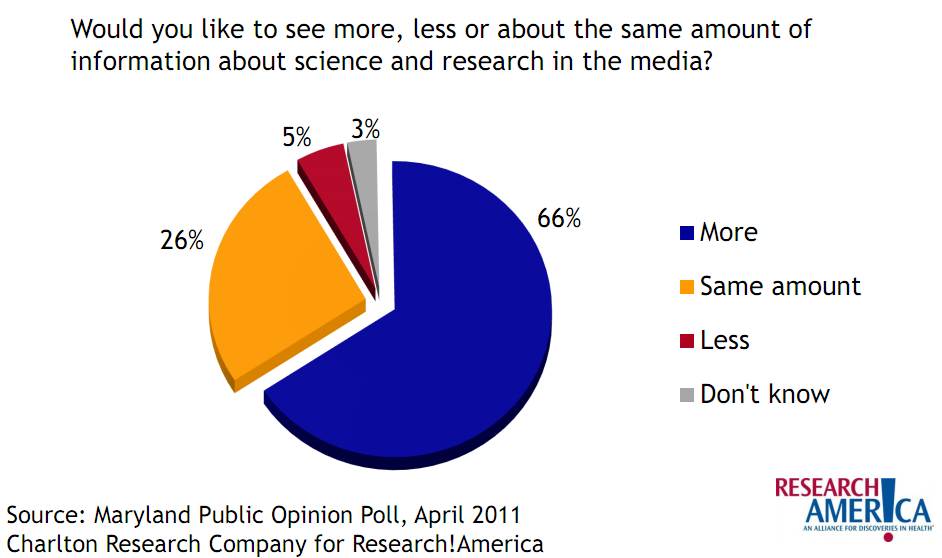
Two factors are largely responsible for public scientific illiteracy: the expansion of social media, and funding cuts to education at all levels. Misinformation, urban legend, and rash "theories" now spread at warp speed thanks to Facebook Twitter, and other internet portals. The consumer, for their part, has the attention span of a gnat, and the media demand answers instantly to "fill the void." Consequently, journalists are quick to pull the trigger on a flimsy "theory" instead of weighing all sides, and waiting patiently for traditional authorities, including scientists, to chime in. This study suggests a sort of "bandwagon" phenomenon in the wake of hot-button topics like the Zika virus.
Funding for public education is also suffering at state and local levels, and every interest group demands that politicians make funding contingent upon their own agenda. Consequently, we get legislation prohibiting the teaching of evolution, and/or equating "creation science" with evolution. Regardless of one's faith, it should be obvious that in order to be fully informed, students need to be aware of basic scientific principles, not shielded from them.
All of the preceding concerns have resulted in the perfect storm of consumer ignorance and orchestrated deception on the part of many for-profit entities. None will be solved overnight, but perhaps we can agree on some goals and strategies for reversing the trends.
I am not holding my breath for the day when corporations and government officials suddenly start accepting the idea of accountability, but as a writer I hope to continue demanding that they do; and demand more of myself in articulating scientific matters in a timely manner, with a voice of authenticity, and respect for my readers. We need an honest dialogue more than ever, fearless in expressing our fears, and with minds open to enlightenment.

That is the question being asked in a popular article over on Slate.com. It seems that “eco-pragmatists” (aka “modernist greens”) are asserting that it is at best illogical and unhelpful to assume that pristine habitats are the only definition of “natural.” At least one even lauds GMOs (genetically modified organisms) and nuclear power as essentially to the continued success of our species. Others think invasive species are not all that bad. I believe the truth lies somewhere between the modern movement and the old guard that still clings to the belief the only good wilderness is….well, wilderness.
Here are the fundamentals that I believe we must collectively address if we are to move forward for a better planet:
Perhaps one of the good things that will come from rising fuel prices (as a result of dwindling oil supplies) is that people will be forced to look at their immediate surroundings and lifestyle and realize that they need to appreciate what is close to home. I hope it doesn’t come to rationing and other extreme measures before we come to our senses, though. I truly believe that biodiversity begins at home. So does conservation, sustainability, and environmentalism.
One of my posts awhile back was lamenting the conspicuous absence of the “church” in advocating environmental conservation and protection of endangered species. It seems only fair that if I complain I also offer a potential solution. Perhaps a new, faith-based conservation organization is in order, or at least a non-profit that works to hold religious institutions accountable for their role in supporting or undermining The Creation.
To that end I propose the following mission and goals for churches when it comes to these issues:
Mission: Hold religious institutions accountable for their actions (or lack thereof) that impact the natural environment and the other creatures that inhabit the world.
Goals:
- Recognize that as children of God, humans are endowed with the responsibility to protect, conserve, and manage the remainder of the animal kingdom (and plant kingdom) in a manner consistent with the desires of the Creator. Noah may have been the first wildlife conservationist, and he may be seen as a role model for the church’s approach to modern wildlife conservation.
- Include in worship services prayers for the healing of the environment in the aftermath of human-initiated ecological disasters (oil spills, deforestation, slaughter of endangered species, etc). It would not hurt to make it routine to simply pray for the welfare of all non-human animals and their habitats.
- Make ecological sustainability an overriding priority in all missions, both foreign and domestic. Aid to the poor should include lessons in sustainable practices, especially in regards to agriculture.
- Church grounds shall reflect respect for nature and an enhancement of native habitats whenever possible. This means planting native trees, shrubs, and wildflowers, providing nest boxes for breeding birds, and limiting the amount of acreage devoted to lawns. Community gardens, when on church grounds, shall be managed with limited use of chemicals such as fertilizers and pesticides.
- Community service projects shall include clean-up and maintenance of local parks, waterways, and other areas critical to native wildlife and plants.
- Teaching of Creationism shall include modern stories of wildlife conservation to illustrate the ongoing need to be responsible stewards of the planet Earth.
- Church congregations shall be encouraged to donate to conservation and environmental organizations.
- Sermons based on the accomplishments and philosophies of Noah, St. Francis, and other notable religious conservationists should be incorporated into worship schedules whenever appropriate and possible.
- Strive to reach out to scientists who may be schooled in the teachings of evolution, but who share a commitment to creating a healthier planet Earth through wildlife conservation and sustainable energy, agriculture, and environmental policies. Cooperation, not conflict, should be the order of the day. Science and religion have complementary roles here.
One final thought: I would be all in favor of requiring a course in world religion for all high school students. It might go a long way toward correcting stereotypes, and fostering a better understanding and respect for the belief systems of others. Such a curriculum would also be the place for discussing Creation tenets.
I welcome your comments, opinions, ideas, and input about the above. I am only one mind, and I have surely overlooked something important here. I am also a novice when it comes to the Bible and all other things religious. Please forgive any inadvertently disrespectful rhetoric. I assure you that I hold everyone in equal contempt. I mean “esteem.”
It was not without a great deal of deliberation that I decided to write this and make it public. Personal struggles with faith, consciousness, and current affairs are always a bit of a risk when one dares to dislose them. The potential pending extinction of the Earth’s remaining rhinoceros species has finally given me the sense of urgency and will to confront the conflict I have between religion and Creation.

Let me say first that I have faith in God. I would also like to believe that I respect the beliefs of others, be they Baptists, Hindus, or Muslims. I personally know individuals of many faiths, and relate well to them. We learn from each other and sometimes challenge each other’s tenets. What I often have a problem with is the church in the institutional sense. The church holds great power, and does great things for humanity at a community level. National campaigns in the political arena are often effective, and missions to impoverished foreign lands bring relief to untold thousands. Where the power of the church is conspicuously absent is in advocacy for protecting the remainder of Creation.
Rhinos are facing the kind of violent assault usually reserved for wars of human genocide. Indeed, that is what species extinction amounts to: zoological genocide. The carnage even threatens those individual animals at zoos. What do people have against rhinos? They covet the rhino’s horn.
In the Middle East country of Yemen, rhino horn was polished and fashioned into ceremonial dagger handles. These curved knives, called “jambiya,” are presented to pre-teen boys as symbols of impending manhood and devotion to the Muslim religion. The use of rhino horn in daggers has been outlawed since the 1980s, and the black market there has largely dried up. It is the long-held belief of Asian cultures that rhino horn has medicinal properties that is at the root of the current spike in rhino poaching.
Rhino horn allegedly relieves everything from pain, fever, acne, laryngitis, and anxiety to rectal bleeding, rheumatism, gout, food poisoning, headaches, and boils. It is also thought to cure “devil possession,” smallpox, typhoid, and snakebite. Recently, rumors that a Vietnamese government official used rhino horn to cure his cancer sent demand, and prices, for horn through the roof. A horn can now fetch $33 to $133 per gram. This is close to double the price of gold, and sometimes exceeds the value of cocaine.
This utilitarian view of wildlife is nothing new of course. The problem is that with endangered species it is an unsustainable enterprise. The only sustainable value of wild animals is probably ecotourism. Without rhinos in Africa, ecotourism takes a hit and things slip back into valuing all wildlife as a dead product.
Scientists and game reserve managers are doing their best to defend their own rhino populations from poaching pressures, but it is not enough. Zookeepers engage in an annual event called “Bowling for Rhinos,” in an effort to raise much-needed funds for continued conservation. The Christian church….
Ah, yes, where is the church? Busy saving human souls, no doubt. Maybe they are ministering to incarcerated poachers. What we don’t see are prayer circles for rhinos. We don’t see ecological sustainability as a leading goal in missionary work. Why not?
I know plenty of individuals, including my own fiancée, who are religious and ardent supporters of wildlife conservation. It is the institution of the church that is not. I suspect that much more effort goes into trying to defeat the teaching of evolution in schools. Perhaps that is the real problem. No good Christian institution could possibly work in concert with a scientific community that believes in evolution.
Personally, I don’t care which philosophy one subscribes to: Genesis or Darwin. What both sides can say with certainty is that we are losing pieces of the Creation rapidly, due to humanity’s continued negative impact in this Garden of Eden. We can no longer afford the luxury of continuing to argue about how every species came to exist.
According to the Bible, we are supposed to be stewards of this Earth while we are here, not hell-bent on attaining immortality once we make our final exit. We will get our just reward if we are just in our care of the Creation. Scientists and theologians can complement each other instead of excoriating one another.
What about you? What can you do? Yes, you can support conservation efforts with your monetary contributions, but times are tough for folks financially. How about this: When you count your blessings, count rhinos, tigers, elephants, whales, and all other wild creatures among those gifts. Looking for something to pray for? Bless the beasts and the children, for don’t we want our sons and daughters to be equally blessed with wild animals?
Sources: rhinoconservation.org
Anyone with an interest in nature owes it to themselves to become familiar with The Kansas School Naturalist, a (highly) periodical journal devoted to all aspects of the natural world. I received my latest issues (below) about three weeks ago, but it has been at least one year since the last volume. The sporadic nature of this publication is its only drawback, however. The mission and content are outstanding.

The Kansas School Naturalist has been enlightening its audience since at least 1954, judging from the catalog that came with the newest additions. Just who is the audience, and how does it circulate? I’ll let the masthead inside the cover of each issue speak for itself:
”The Kansas School Naturalist is sent free of charge and upon request to teachers and anyone interested in natural history and nature education. In-print back issues are sent free as long as supply lasts. Out-of-print back issues are sent for one dollar photocopy and postage/handling charge per issue. The Kansas School Naturalist is sent free upon request by media mail to all U.S. zipcodes, first class to Mexico and Canada, and surface mail overseas. The Kansas School Naturalist is published by Emporia State University, Emporia, Kansas. Postage paid at Emporia, Kansas. Address all correspondence to: Editor, Kansas School Naturalist, Department of Biological Sciences, Box 4050, Emporia State University, Emporia, KS 66801-5087. Opinions and perspectives expressed are those of the authors and/or editor and do not reflect the official position or endorsement of E.S.U. Some issues can be viewed online at: www.emporia.edu/ksn/ The Kansas School Naturalist is listed in Ulrich’s International Periodicals Directory, indexed in Wildlife Review/Fisheries Review, and appropriate issues are indexed in the Zoological Record. The KSN is an irregular publication issued from one to four times per year.
It is important to know that not every issue is restricted in its geographic treatment to the state of Kansas. Even if that were the case, Kansas is literally in the heartland of the U.S. and many species found there occur over much of North America east of the Rocky Mountains. The issue on centipedes and millipedes actually discusses global fauna.

All issues I have received have included plenty of images, often in color, and an easy-to-follow layout. A list of technical references is also included, such that the reader can pursue whatever level of additional scholarly information they so desire.

Once you are on the mailing list, you will receive all forthcoming issues for life (as near as I can tell, anyway). Inserted in each will be a little yellow slip politely requesting a donation in any amount to the Emporia State University Foundation, and applied to the Kansas School Naturalist. It is a worthy cause as this short note on the back of the donation slip indicates:
”Dear Kansas School Naturalist Reader:
In 2004, we sent the millionth copy of Kansas School Naturalist free to teachers, scout leaders, librarians, and others upon request. While there is heavy readership within Kansas, the KSN serves readers nationwide and internationally. Grants and the grassroots contributions of readers are our major source of funds. Our high-interest, high-accuracy booklets authored by the experts in the field are a mainstay of science education in classrooms, labs, and fieldwork. To help the Kansas School Naturalist reach a new generation and raise environmental literacy, take a moment to contribute to the KSN endowment and underwrite…
…A SECOND MILLION COPIES!"
I plan to donate again soon. I haven’t done so in awhile, and I need to alert them to my new address anyway. I just hope they don’t confuse me with an Emporia State U. alum again.
I realize that what I am about to write will probably offend even some of my most loyal followers, but it needs to be said. Natural history museums, zoos, nature centers, parks, and other public and private institutions have come to rely too heavily on volunteers to accomplish their missions, especially in management of specimen collections.
Case in point: Today one of my Facebook friends posted this recruiting announcement. I was all excited until I saw it was for volunteers. Do you really want non-professionals handling specimens? The time and expense to properly train them really outweighs hiring a professional? You can’t contract for this kind of work?
Those institutions that do offer paying opportunities sometimes have unrealistic expectations, desiring PhD- or Masters-level candidates when a Bachelor’s degree, or even experience in lieu of a degree, would be more than enough to execute the requirements of the position. Increasingly, work in collections management in particular has become grant-dependent, for a limited amount of time, and still heavily reliant on volunteers being managed by the person hired for the project. This only serves to set up a destructive cycle of neglect of collections followed by salvaging of specimens years later, followed by another period of neglect and so on.
I freely admit that I take all of this as a personal insult to my previous professional experience and current abilities to work in a museum setting and advance the goals of whatever department I’m working in. I don’t think I am necessarily “better” than any other person in this field, but I certainly have better qualifications than a volunteer or docent off the street. Museums deserve better than that as well. I don’t need to make a fortune, either, but I need to be able to pay the rent, afford health care if I need it, pay for my own continuing education, and save for increasingly frequent stretches of unemployment when I don’t have any income.
That leads to another point I believe is not being considered: The failure of investments that retirees were counting on for income has left them looking for paying work as well. The volunteer pool will be steadily shrinking in coming decades. Better to address this now, and reward good work with a paycheck instead of just a pat on the back or a plaque.
The continuing devaluation of professional personnel in the natural sciences, from museum collections to field work and public education must cease. We owe it to current generations, as well as future generations, to deliver the high quality services that only experienced professionals can provide. Could it be that the trend toward “anti-scientifism” is one result of such a heavy reliance on non-scientists to do scientific work and deliver science education? I’m just sayin’.
Ironically, I learned of the new zodiac sign (Ophiuchus) on my birthday last week. Suddenly, I was no longer a Capricorn, but a Sagittarius. It was pretty much the icing on the cake of an awful day. Subsequently, it was interesting to follow the threads of conversation on the “status posts” of my Facebook friends concerning this new bit of trivial information.
Some people are very indignant, or even downright angry, at the change in the zodiac calendar. Others wonder aloud what all the fuss is about, communicating their opinion in a rather condescending manner that suggests anyone who follows astrology is beneath them. I strongly suspect most of the people I know fall squarely in the middle: astrology is a pleasant and occasional diversion not to be taken too seriously, but that helps remind one to take stock of their life now and then.
Belief in astrology is almost beside the point as I see it. The zodiac is, or was, like death and taxes: something predictable and common to all people. It is part of our social fabric, dependable even in its frivolity. It can stimulate a conversation, much like “What weather we’re having!” or “How ‘bout them (insert sports team here)?” The zodiac calendar has boundaries, rules, and suddenly all of that has been thrown out of whack.
I will readily admit reading my horoscope, usually when I blunder into it while reading a newspaper like our local alternative paper, the Tucson Weekly. I find the “Free Will Astrology” column by Rob Brezsny to be entertaining but also thought-provoking on a personal level. I may rarely take any action recommended in his horoscopes, but I feel at least a little more self-aware and introspective as a result of reading them.
Interestingly, Brezsny calls the recent announcement of the new sign a “scam” that resurfaces almost annually based on the assumption that astrology is associated with the constantly changing positions of stars in distant constellations. Not so, says Brezsny, who points out that (here on planet Earth, at least) astrology revolves around the position of the sun and planets in our own solar system. The zodiac signs were named for constellations, but are no longer tied to them.
It is probably only human nature to cling to things we feel are constant because so much of the world around us changes continually, ever faster. We seek philosophies, religions, and other institutions to ground us in these times of uncertainty. I generally find my horoscope neither positive nor negative, but empowering. It reminds me I always have the opportunity to change, to adapt, to ground myself in….myself.
Monday, September 20, Malaysian government officials announced that they will not proceed with a planned release of genetically modified Yellow Fever Mosquitoes, Aedes aegypti (pictured below, on *me*), in rural and wild regions of that nation (source: Malaysia Today.com). The mosquitoes have been “engineered” to produce short-lived larval offspring. This is obviously an attempt to prevent delivery of the disease-causing organism by eliminating its vector. What I find ironic is that there are concurrent efforts being made to engineer malaria mosquitoes (genus Anopheles) that are non-lethal to the insects, but prevent them from being viable intermediate hosts to the malaria parasite Plasmodium. Quite a contrast between the two strategies.

It can be argued convincingly that anything curtailing widespread mortality in “Third World” nations should be a high priority that will also aid in eliminating poverty. It can be argued that with current trends in climate change, tropical diseases will make significant inroads into temperate areas thus far free of such epidemics. It is also a fact that disease-causing organisms are developing resistance to antibiotics at an alarming rate. Why not shoot the messenger then: Attack the vector organisms responsible for ferrying those protozoans and other microbes.
The problems with killing off mosquitoes include a potential disruption of the food chain, whereby other organisms will be deprived of prey. Mosquito larvae also have their own role in filtering water. We cannot readily predict what the absence of mosquitoes would mean to ecosystems on even a local scale.
Interestingly, another article I read recently described how the “Brain tissues and the nervous systems of insects may provide the next line of antibiotic defense against emerging superbugs that have become resistant to drugs.” How do we know that the very cure for some of our human plagues doesn’t rest in the literal minds of mosquitoes? The point is that we haven’t examined all the possibilities. Before we assert a death sentence for a species, should we not mine it for all the “good” it could do? We are reticent to execute individual human criminals, perhaps in part because there might be something to be gained as a society by keeping them alive. We tend to be optimistic that way.
I tend to be optimistic about the most malevolent creatures we share the planet with. No creation, or product of evolution, is without some degree of merit, even if that grain of positivity has no direct bearing on human lives.
The “shoot the messenger” campaign has been seen before. Tsetse flies carry the trypanosomes responsible for sleeping sickness in humans, and “nagana” in livestock, especially cattle. Wild African mammals are immune to the disease, but serve as reservoirs for the parasite. Eliminate the tsetse flies and Africa becomes one big cattle ranch with no place left for wildlife. Is this an oversimplification? Perhaps, but the Law of Unintended Consequences factors prominently in cases like this.
We need to have meaningful dialogue about the direction that GM research is taking. The left hand needs to know what the right hand is doing, and profit from that information. I remain confident that we can overcome human mortality factors in a responsible manner that does not disrespect other creatures in the process. I still have faith that we can act responsibly in our own affairs of reproduction and population.
”What the….?” must be the reaction of many a motorist sharing the highway with this RV, decked out in snazzy graphics depicting North American wildlife, especially insects. The story behind this rig is truly intriguing, and we owe it to our neighbors to the north for coming up with the idea.
I had the pleasure of spending a day with the Bio Bus team at Picacho Peak State Park north of Tucson, Arizona on April 20, 2010. It was the culmination of a desire to meet one of the members of the crew since about 2002.

While soliciting photographers to contribute images to the Kaufman Field Guide to Insects of North America, I had the good fortune to cross paths with Jay Cossey, a professional nature photographer in Canada. He has stayed in touch ever since, and was delighted to inform me that he had gotten this job a couple years ago. Jay figured that at some point the Bio Bus would be passing near Tucson, and sure enough, here it was.
The Bio Bus is a research effort of the Biodiversity Institute of Ontario, based at the University of Guelph. It has been on the road since 2008, traveling across Canada for the most part, but also venturing into the U.S. as spring and summer slowly creep northward. The goal of the mission is to collect mostly invertebrate specimens for DNA “barcoding,” a method by which one gene with species-specific variation is used to identify a species. The result is that many “species” formerly recognized by mere morphological (physical) characteristics turn out to be a complex of species that are discernable only through genetic analysis.
The RV, which rides like a dream, amazingly enough, can accommodate four people along with all the gear necessary for navigation, collection, and day-to-day living. Graduate students and others rotate along the route, but Jay has been a pretty constant presence since last year.
This year’s organizer, Jill, has been there, too, making certain that permits are secured for collecting in state and provincial parks, making contacts ahead of the bus’s arrival, and generally being an incredibly diplomatic ambassador for the project.

Our day at Picacho Peak was reasonably productive, though the most abundant insects were large blister beetles (Lytta magister) that eventually became rather annoying with their droning flight drawing our attention from other creatures. We ended the day with a tasty dinner at a steakhouse in Tucson.

Thank you Jay, Maneer, Rene, and Jill for the warm welcome and camaraderie in the field. May you have a successful journey up the west coast and back across Canada this summer.
Please visit the Bio Bus website. Also, be on the lookout for a “Gigapan” of all of us atop the RV at Gigapan.org. Hopefully, one of those big blister beetles didn’t fly in front of the lens….

I finally got my act together and made my first ascent of Tumamoc Hill, just west of downtown Tucson, on Easter Sunday, April 4, 2010. The public is only permitted on the property during weekends, and you must stay on the paved road at all times. Why? Well, this particular parcel of land has a very unique history.

The sign pictured above reads: University of Arizona Desert Laboratory, founded in 1903 as the Carnegie Desert Botanical Laboratory, Tumamoc Hill, United States Geological Service. Indeed, this butte has served as a living laboratory for a very long time, and non-university and non-government personnel need to be restricted to protect the study plots. Consequently, the area is closed to the public weekdays from 7:30 AM to 5:30 PM. The hill is very popular with the exercise-minded on weekends. Birdwatchers, botanists, and nature lovers in general also visit. I spotted this Cooper’s hawk while at the summit.

The Carnegie Institution of Washington chose this site to establish an ongoing study of the adaptation of plants to aridity, beginning in October, 1903. That mission continues to this day. The University of Arizona purchased the facilities (several buildings occupy the area) in 1956 to house their new department of geochronology.
Meanwhile, the United States Geological Service (USGS) conducts two major long-term projects: Biotic response to climate variability; and Landscape change in the Southwest.
Walk all the way to the top and you might see a flock of white-throated swifts, or some of the insects they are feeding upon. You will also be treated to some pretty stunning views of Tucson (with the Rincon Mountains in the background), and the Santa Catalina Mountains.

The entire butte is 860 acres (3.5 square kilometers), but 320 acres, including a handful of study plots, changed hands in February, 2009. This came as a result of a state trust land auction in which Pima County made the winning bid (and only bid). Prior to that, Tumamoc Hill was more or less the poster child for a movement to reform state trust land policies. A 2006 effort to change the state trust land system via a state constitutional amendment failed.
Human occupation of this site actually dates back as far as the Hohokam tradition of the Native American Southwest. With any luck, our collective footprint on Tumamoc Hill will continue to be relatively light, while continuing to shed light on the changes in climate, flora, and fauna here.

