Showing posts with label nature. Show all posts

Friday, January 23, 2026

Creepy Cooper's, Sinister Sharpie

Last month we had two predatory birds visit our yard in Leavenworth, Kansas, USA. While they were thrilling to observe, they gave me a bit of the shivers. Cooper's Hawk, and Sharp-shinned Hawk, are both accipiters, well-known for ambushing songbirds at feeders, much to the consternation of birders. These raptors don't give up easily, either, as I learned from the two I witnessed.

Profile of a regal killer.

My first look at the Cooper's Hawk.

On December 8, at about 12:15 PM, I got up abruptly from my chair in the living room, having remembered a household chore I needed to do. Glancing up, I saw, through the open blinds over our backdoor windows, the largest bird I had ever seen in our backyard. It was an adult Cooper's Hawk (COHA if you are a fan of banding codes), perched atop the shepherd's hook from which our feeders are suspended. Since I was startled myself, I fully expected it to fly off immediately, but went to get my camera anyway.

Oh, no, it's leaving?

The bird did indeed launch itself a short time later, but merely glided to the back section of our fence, where it came to rest once again. I was delighted to get more opportunities for photos from between the slats of the blind, through the entirely too-dirty windows.

Still here!

Three minutes later, the hawk flew to another section of the fence, closer still. A minute later, it returned to its previous spot on the rear section of fence. From there it moved to the fencepost that abuts our detached garage, and beneath a non-functional light fixture. We need to have that looked at, but I digress. The bird was staring intently at the brush pile I erected to offer cover to songbirds for situations just like this one.

At twelve-thirty, the Cooper's Hawk flew onto the brush pile itself, perching low, on one of the more exposed limbs. A minute later it was back atop the back section of fence. A moment later it was on the side fence again. What it did next was unexpected.

Prowling on the ground.

The hawk flew down to the ground into our backyard. It proceded to skulk around our forty gallon, prefabricated pond, and crawl through the dense, weedy thicket that is our vague attempt at a pollinator garden.

At this point, I became unsure whether I was watching a hawk, a Greater Roadrunner, or even a weasel. The alert, thorough searching of this predator was truly remarkable.

Searching in the weeds.

At twelve thirty-eight, the hawk returned to the brush pile. This time, it dove right in, scouring every inch of the labyrinth for potential prey. Creepy. Literally. Another minute or two later, the hawk flew away for good, headed in the direction of the federal penitentiary, an embarrassing block-and-a-half to the north, beyond the back section of our fence.

Exploring the brushpile.

The whole encounter seemed to last much longer than the twenty or so minutes between the time stamps on my first and last photo. I would have expected the hawk to conceal itself in the brush pile, and simply wait for the House Sparrows, House Finches, Dark-eyed Juncos, and maybe other birds, to return to the feeder, unaware of the potential danger. Not so. This was active hunting, and it took me completely by surprise.

On December 15, just before one o'clock PM, I stepped out the backdoor to top off the feeder. A bird about the size of a dove, maybe slightly larger, rocketed out of the brush pile, nearly giving me a heart attack. Miraculously, I could tell immediately that it was another accipiter, but definitely not the Cooper's Hawk from the previous week.

I was able to follow the flight of this smaller raptor and, amazingly, it came to alight atop a neighbor's fence about thirty yards away or so. I went back inside the house to retrieve my camera.

Even more surprisingly, the hawk was still there when I returned. I was too excited, and too vertically-challenged, to get a sharp (no pun intended) photo of what I suspected was a Sharp-shinned Hawk (SSHA banding code), over three layers of fences, at distance, but I tried anyway.

Sharp-shinned Hawk.

Separating Cooper's Hawks from Sharp-shinned Hawks is a challenging exercise even for seasoned birders. You caannot use size as a reliable difference because there is overlap between a small male Cooper's Hawk and a large female Sharpie. Both species are clad in nearly identical colors, though the back of the neck is colored the same as the top of the head and back of the bird in Sharp-shinned Hawk. The back of the neck is vaguely paler in Cooper's Hawk, giving it a black-capped appearance.

In my limited experience, I have noted that sharpies, when perched, look like they have no neck at all, the head tapering immediately into the rest of the body. Their beaks are very short and comparatively delicate compared to a Cooper's Hawk.

Profile of the Sharpie.

More experienced birders note that the eyes of a Sharp-shinned Hawk are larger in proportion to the head, such that they appear to be "bulging." The tip of the tail in a sharpie is straight-edged, whereas it is rounded in a Cooper's Hawk. This last trait can be unreliable, though, or at least difficult to properly perceive.

I wish I had not flushed the sharpie, and been able to observe whether it behaved similarly to the Cooper's Hawk. Maybe I can train my brain to recall these encounters before I abruptly and absent-mindedly throw open the back door again. It could be months, if not a year or more, before we get another visit, though. I suspect the hunting territory of these hawks encompasses a pretty large area.

You are invited to share your own stories of accipiter encounters in the comments here. I moderate input at least once per week. I will try and not be envious if you have seen a Northern Goshawk on your property.

Tuesday, May 6, 2025

2025 City Nature Challenge Recap for Kansas City Metro (Vertebrates and Plants)

The City Nature Challenge is an annual event that I always look forward to, when I have no conflicting engagements. I tend to plan around it, in fact. This year’s edition was held from Friday, April 27, through Monday, April 30.

Prothonotary Warbler at Wyandotte County Lake Park, Kansas.

Some background is in order for those unfamiliar with this urban bioblitz. What began in 2016 as a friendly challenge between the California cities of San Francisco and Los Angeles has blossomed into a global project. The intent is to generate public interest in native urban flora and fauna, document as many species as possible during the event period, and build a database useful for assessing environmental trends both locally and globally.

A young Common Five-lined Skink under a chunk of wood, Wyandotte County Lake Park.

Here in Kansas City, I am fortunate that the official map area includes counties a fair distance from the city. It is mostly rural in Leavenworth County, Kansas, where we live, but the town itself is at least suburban. Heidi and I usually travel to other areas, too, like Wyandotte County, Kansas, and Platte County, Missouri.

Louisiana Waterthrush at Weston Bend State Park, Missouri.

The weather this year was less than optimal, overcast virtually the entire time, cool temperatures in the low sixties (Fahrenheit), and occasional rain. Perhaps that is why public engagement was low. The stats are still coming in to iNaturalist, the web platform that hosts the observations for the event, but we had less than 300 people who contributed sightings. As a percentage of the human population, that is pretty dismal.

Blooming Mayapple in Havens Park, Leavenworth, Kansas.

Still, there is a current total of 3,744 observatios of 1,084 species (however iNaturalist defines that term, and it probably varies by taxon). Help in identifying observations has come from 349 individuals, from all over the globe. The border of Kansas and Missouri represents the eastern fringe of the Great Plains meeting the western edge of the eastern deciduous forest, so we have some diverse and interesting habitats.

Virginia Springbeauty, Weston Bend State Park, Missouri.

Personally, given the inclement weather, I looked at plants more heavily than I usually do. It helped that I now have an iPhone that takes photos which are comparable in quality to those produced by my Canon PowerShot SX70 camera. I think it performs better than the camera in some instances.

Blue Phlox, Wyandotte County Lake Park, Kansas.

When Heidi and I went out together, we focused on birds. This was especially true at Wyandotte County Lake Park in Kansas, and at Weston Bend State Park in Missouri. Both parks are heavily forested, with a large reservoir at one, and small streams running through the other.

A flock of six female Red-breasted Mergansers was a wonderful surprise at Wyandotte County Lake Park.

I don’t like that the City Nature Challenge brings out my competitive nature, but I feel compelled to demonstrate to other local citizens that insects and spiders are worth looking at. Consequently, I had the most observations for the Greater Kansas City Metro Area, and the second highest species tally. You can find the results for everyone at this link.

Swainson's Thrush at Wyandotte County Lake Park.

It is a good thing that the nature challenge was not a week later. I went back to Havens Park here in Leavenworth yesterday, May 5, to find that a new gravel road had been laid, right through a small, ephemeral wetland, and over glade habitat at the top of the park. I am devastated and angry. Rumor has it that it will eventually be another paved trail for cyclists, dog walkers, and others. I am all for accessibility, when it does not compromise ecosystems. I don’t know that I will go back to the park now, but there is nothing similar within walking distance of our home (I don’t ride a bike, nor drive any longer, and we only have one car anyway). Pretty much everything else here is lawns.

A male Summer Tanager, Havens Park, Leavenworth, Kansas.

One thing that appears sorely lacking for the City Nature Challenge is widespread publicity. There is a wonderful team of individuals at the Los Angeles County Museum of Natural History that organizes the event each year, but they can only do so much. They have to register cities, for example, which is a demanding chore all by itself. It is up to the individual metropolitan areas to do their own marketing.

A male Northern Parula at Wyandotte County Lake Park, Kansas.

Did you participate this year? Have you done so in years past? Please feel free to share your experiences in the comments. Meanwhile, you can find my insect and spider observations from City Nature Challenge over on my Bug Eric blog.

Tuesday, March 5, 2024

Please Don't Paint Me

The dead, but still stately, cottonwood tree in the image above is located in Leavenworth Landing Park, along the banks of the Missouri River in Leavenworth, Kansas, USA. The snag is slated to be painted blue as part of a global project related to promoting awareness of mental health issues. While this is a noble cause, the side effects of landscape art installations like this should give us pause.

The Blue Tree Project has its roots in the tragic story of Australian Jayden Whyte, whose suicide at age twenty-nine gripped headlines in 2018. During the eulogy at Whyte’s funeral, his best friend related the story of how Jayden had pranked his father by painting one of the trees on the family farm blue. That became the inspiration to paint trees elsewhere as a reminder to check on the mental wellbeing of loved ones, and foster a greater awareness of issues surrounding mental health.

There are now numerous painted trees, and other objects, throughout the world, on every continent except Antarctica. There are currently 1,138 trees registered by Blue Tree Project, mostly in Australia.

Some communities have taken to erecting facsimile trees instead of painting actual trees. One of the more innovative examples is a tree of fifteen basketball hoops. Unfortunately, the website for Blue Tree Project does not indicate where these artificial trees are located, nor how they were constructed.

While this endeavor is meant to send a specific, clearly posted message, what else is implied by turning trees into artistic and/or humanitarian vehicles? One message is that it is permissible to deface a natural object, at least if you have an important agenda. This is vandalism in any other context. We are also saying that nature is something that can only be improved upon by the hand of man. Natural landscapes, and the living things within them, must serve some kind of utilitarian value in order to justify their existence, even if that means reducing them to a “canvas” for artistic expression. This is not ok.

The Blue Trees (plural) is a landscape installation project by artist Konstantin Dimopoulos, designed in part to evoke thoughts about “ecological issues, such as the ecocide of our forests and climate change, and….raising our social consciousness referencing how individually and collectively we shape the world we inhabit.” His exhibitions involve painting the trunks of entire groves of trees a deep blue color.

The pinnacle of artistic hubris may be demonstrated by Christo and Jeanne-Claude. Their landscape-level work was temporary, and performed mostly in urban areas, wrapping buildings or monuments in fabric, usurping the profile and work of the original architects. They prided themselves on avoiding “deserted places,” focusing on “….sites already prepared and used by people, managed by human beings for human beings.” This did include vast rural expanses, though, featuring fabric fences, fabric “gates,” curtains, and other potential impediments to the normal traffic of wildlife, and obscuring scenic vistas. In Surrounded Islands, they draped a hot pink fabric skirt on the surface of the water around eleven separate islands (two were surrounded together). Who knows how marine life was affected.

Where does art cross the line into damage? Who gets the authority to decide? Do we give enough critical thought to these questions? Ideally, artistic license should not trespass on the works of the Creator, if one believes in such an entity. We should not allow historical precedent to dictate the path forward, either.

There are strong and valid arguments to support the fact that Mount Rushmore defaced a mountain held sacred by Indigenous Americans. Stone Mountain in Georgia features the carved depiction of three prominent figures of the Confederacy from the Civil War. The monument glorifies White supremacy, and overwhelms the stories of the Black people who once lived and worked there, and who still reside in local communities. It also defaces a natural landscape feature that figured prominently in Indigenous occupation of the region.

Don’t get me wrong. Art can be a powerful stimulus for positive social and cultural change. It need not be permanent nor massive in scale. I do wonder, though, what will happen when that old dead cottonwood at last falls into the river, as erosion is inevitable. Will the paint contaminate the water, or negatively affect aquatic life? Will another tree be painted to replace it?

Sources: Dimopoulos, Konstantin. 2024. “About the Blue Trees,” Kondimopoulos.
Meachim, Laura. 2019. “Blue Tree Project tackles mental health and suicide in regional Australia,” ABC News, September 30, 2019.
Powers, Benjamin. 2018. “In the Shadow of Stone Mountain,” Smithsonian Magazine.
Spellman, Rebecca. 2020. “Harrowing story behind a solitary blue tree in drought-stricken land takes a sinister turn as it’s found burned to the ground,” Daily Mail, February 17, 2020.
”Most Common Errors,”Christo and Jeanne-Claude.

Monday, December 4, 2023

What's in a (Bird) Name?

It has been one month since the American Ornithological Society released a statement of its intent to change the English common names of bird species named for people, starting with those birds found in the United States and Canada, then moving to Latin America. Reactions to this initiative have been predictably mixed, often polarized. It is demoralizing to me personally to see friends and respected colleagues opposed to it, an absence of nuanced perspectives, and lack of creativity in solutions.

Say goodbye to Bullock's Oriole

Here are some basics so we can all be on the same page. Common, English names of species that include the moniker of a historical figure are termed “eponymous” names. This practice of naming species after people dates to at least the 1800s, and has been revealed to be wildly inconsistent, if not random, in its application. A little excavation work by author Kenn Kaufman shows that some “honorees” in eponymous bird names had little if anything to do with ornithology, let alone advance the science.

More troubling still, eponymous names have come to be associated with racism, misogyny, other forms of bigotry, and colonialism. Rather than painstakingly evaluate the baggage of each eponymous bird name, the AOS has decided to do away with all of them. This has led to accusations of “wokeism” and political correctness by some birders, and many people who have no interest at all in our feathered friends. No one seems to be asking what is to be gained by retaining such names, aside from convenience and tradition.

Do we really want a tradition of exclusion? Birding is already viewed by many as an elitist recreational pursuit, with globetrotting retirees chasing rarities for their life lists. Birding will benefit greatly from expanded human diversity within its ranks. It follows that birds themselves will benefit from increased attention to their plight.

Some with less visceral reactions have questioned whether this effort at name-changing will draw valuable financial and human resources away from bird conservation and research. My intuition tells me that expenditures will be relatively minor, and the people doing the work will not be the same people already engaged in protection of species. This is an endeavor that complements conservation, if not enhances it by making the discipline of ornithology more attractive to Indigenous scientists, and others who have viewed the science as exclusionary.

There are those who do not believe that mere name changes go far enough towards the goal of decolonizing science, politics, economics, and improving other aspects of life. This may have merit if we do not address how we can take down barriers to birding such as the affordability of optics and other equipment, increase accommodations for disabled and neurodivergent birders, prioritize the safety and respect of women and children in the birding community, and take economic initiatives beyond bird-friendly coffee.

Should you question whether I have nothing to lose in siding with those endorsing a move away from eponymous names, allow me to mention that I am a direct descendent of the “OC” (Original Colonists). My forefathers were literally on the Mayflower. In no way do I feel threatened by extending rights, freedom, and prosperity to people who identify other than White, cis, male, straight, neurotypical, able-bodied, and otherwise advantaged.

Ironically, the one downside of eliminating eponymous names, as I see it, is that we cannot name birds after any people of color, who truly have furthered ornithology and birding. (J. Drew) Lanham’s Sparrow has a nice ring to it.

Thursday, January 5, 2023

Book Review: The Home Place: Memoirs of a Colored Man’s Love Affair With Nature

I cannot help but see the irony in writing a review of a book written by a self-described “odd bird” in a blog entitled Sense of Misplaced. Perfect. What author J. Drew Lanham manages to convey brilliantly is that biophilia is a desirable affliction that transcends all colors of human diversity. The Home Place is a clarifying window into what it means to be an outsider among the privileged Caucasians who dominate the fields of biology, ecology, and wildlife conservation. Even casual birding presents challenges, but Lanham offers hope for a more integrated future.

Dr. Lanham and I are close in age, so it was intriguing to see what similarities of experience we shared given graphic differences in our home places. He is a Black man. I am not. He has siblings, and now children of his own. I do not. His upbringing was rural, mine urban. I am certain, however, that we both colored the same mimeographed songbird outlines in our respective elementary schools, even though there are no Northern Cardinals, Blue Jays, or Rose-breasted Grosbeaks in western Oregon. No “markingbirds,” either. Ok, end of anything “me,” here, though a literary memoir would fail miserably if it did not spark memories in the reader’s mind, and evoke empathy and agreement.

The ecosystems of place, time, family, faith, academia, economy, and wild nature are all woven together seamlessly in The Home Place. Each one influences all the others, none standing alone. Through it all, Lanham expresses an ethical philosophy and physical and emotional vulnerability that is obviously authentic. He would never call himself brave, let alone heroic, but in many ways he is exactly that. Lanham carries a reverence for life that applies to every aspect, from familial relationships to hunting, birding, and conservation research.

The book is organized along the trajectory of Lanham’s personal and professional life, beginning as a member of a familial “flock,” and progressing through “fledgling” to full-blown “flight.” Today, Dr. Lanham is positively soaring, having recently received a MacArthur Foundation fellowship, recipient one of the prestigious “genius grants” the foundation awards to exceptional individuals. Indeed, Lanham is one of those rare birds able to effortlessly navigate both the creative and scientific realms, bringing a unique perspective to both academic and public spheres.

No one would fault the author for having an angry tone given past and present injustices to their demographic. Instead, Lanham manages to tread that fine line between justified hostility and denial that historical and personal transgressions hindered their life at all. He is properly assertive, mournful for the lives of his ancestors, and insistent that things be made right.

We can all be better allies for reading The Home Place, a John Burroughs Medal Finalist as a "Nature Book of Uncommon Merit." It is an invitation to explore ourselves as well as the world around us, and to advocate for both biodiversity and human inclusivity.

In case you could not already surmise, I am highly recommending The Home Place for your personal library. It is like adding the work of an esteemed artist to your office wall. Whenever I am feeling a loss, be it mourning the loss of a favorite wild place, or simply at a loss for words, or way to communicate powerfully, I can pick up this book and be inspired all over again. The Home Place was published by Milkweed Editions, a non-profit entity located in Minneapolis, Minnesota, in 2016. The book is 217 pages.

Thursday, December 8, 2022

The Comfort and Joy of Birds

In an otherwise winter-dead landscape, wild birds bring a reminder that animate life still exists. The sun still rises, the Earth still turns, the seasons march on. When the frenetic pace of humanity becomes too much, birds offer a sense of peace, a reset button that allows us to relax a moment. These basic sentiments and sensations are rarely cited as reason enough for conserving our feathered friends, nor used in arguing that we have a right to nature.

My partner and I live in Leavenworth, Kansas, USA, less than two blocks from the federal penitentiary. One could hardly imagine a more stark, vivid contrast between the freedom of flight and the permanence of incarceration. We can see the dome from our kitchen window, but in the foreground is our back yard, enclosed by a wooden fence and one wall of the detached garage. Heidi insisted we put up feeders, and that gesture has been a blessing.

We moved from a dense residential neighborhood in Colorado Springs, Colorado well over a year ago now, and I have found it nearly impossible to embrace this much smaller town, overwhelmingly conservative in the political sense. Prisons, churches, and Fort Leavenworth define the entire county. The human atmosphere has been utterly stifling, and I have found my creativity and productivity suffering. Everyone I see looks old, unhappy, often in poor health.

By contrast, the birds that visit our feeders are energetic, alert, colorful. They chatter and sing as they compete for seed and suet, or communicate with fledglings they are still feeding (I’m looking at you, White-breasted Nuthatches). The birds are at least a reminder of what can be, the vibrant, happy lives we could have if we only chose to. We subscribe to far too many unhealthy pursuits and addictions as we try to escape the prisons of capitalism, familial discord, and other stressors.

As I write this, the only sounds audible through the walls and windows are gunshots at the firing range on the prison property, light vehicle traffic, and an occasional dog bark. We wait for the birds to visit in waves of brief duration, usually mixed flocks of House Sparrow, juncos, chickadees, nuthatches, titmice, cardinals, Blue Jays, Mourning Dove, and woodpeckers. House Finches prefer to have the feeders to themselves and seldom appear with the other birds. What competition there is tends to be relatively peaceful, though until we can translate perfectly the calls of birds, who knows what is profanity.

Birds are not here for our entertainment, of course. Science tells us they fill niches unoccupied by other species, and provide ecosystem services such as membership in the food web, seed dispersal, and suppression of insects that would overwhelm entire ecosystems without checks and balances from avian predators. Still, such arguments are dry, impersonal, and relatively weak in convincing lawmakers and corporate executives of the need for conservation, preservation, and creation of bird-friendly habitat.

That is where comfort and joy come in. Birds, and other undomesticated organisms, are critical for the personal and social functioning of a great many people. The passion for birds is so great that it creates jobs itself: Seed growers and processors, feeder manufacturers, optical industries, travel and tourism, and parks and recreation agencies all depend on, and cater to, birders. Artists! Increasingly, landscape architects are specializing in planning and executing native plantings with birds in mind. Failing to acknowledge the comfort and joy that wild birds bring to citizens is an affront to human rights, and threatens to undermine our collective mental health, and even some livelihoods.

My partner and I have the luxury of White privilege, enough disposable income to feed the birds, and enough time to enjoy them. We can even travel to see birds elsewhere. We’re so far ambulatory and without most other physical challenges. It is incumbent upon us, however, to improve inclusiveness and promote diversity in birding whenever and wherever we can. We cannot allow anyone to be less than a proud birder, or birdwatcher, free of derision and shame perpetrated by those who have no appreciation for the living world in its natural state.

Share your bird-joy. Wrap others in philosophical, feathery comfort. Lend your binoculars and field guides. Donate to local, national, and international organizations promoting birding. Do not neglect those aimed at Indigenous, Black, LGBTQ, women, and other traditionally ignored demographics. There may be no greater gift you can give this holiday season, or at any other time of year.

Sunday, November 6, 2022

The Changing Conversation Around Invasive Species

Recently, the debate about invasive species has become more polarized than ever, with a degree of defensiveness and anger not seen previously. The reasons for this are many, some difficult to admit to.

Chinese Clematis may be invasive, but it deserves a less bigoted name.

I attended a webinar a few weeks ago in which the presenter asserted that “invasive species” is a “militarized term.” My instinctive reaction was that this was accusatory, bordering on defamation of science, when there is clear evidence that the introduction of a species to a new ecosystem can have devastating consequences.

Spongy Moth is still a bonafide forest pest, but now has a more appropriate moniker.

Pondering his comment further, it occurred to me that most of the animals, and plants, we label as invasive have some sort of obvious and negative economic impact. We have, as a consumer culture, become conditioned to frame everything in terms of business and monetary interests rather than ecological concerns. This has become more complicated by angst over climate change, and the resulting vulnerability of humanity to emerging threats, be they viruses or “murder hornets.”

20200512-P1090983 Vespa mandarinia japonica
© Yasunori Koide and Wikimedia Commons. Asian Giant Hornet only "murders" in the beehive, but is a serious threat to apiculture because of that proclivity.

The sudden, and/or overwhelming appearance of a novel organism is going to cause alarm, and the public seldom has comprehensive, appropriate knowledge for interpretation of potential impacts. We are at the mercy of what news outlets tell us. Because traditional print, radio, and television media now compete with social media, sensationalism is the order of the day. “Click bait” banners prevail over more accurate but less provocative headlines.

© Kim Fleming and Bugguide.net. Joro Spider, Trichonephila clavata, is not currently considered invasive.

Initial forecasts can also be premature. The jury is still out on whether some recently-introduced species will become problematic. They may not. The Joro Spider is a case in point. It is locally abundant in some parts of the southeast U.S., but whether this translates to a displacement of native spiders remains an unanswered question.

We collectively have a fascination with heroes and villains, too, and there are no more menacing villains than alien-looking insects, spiders, and other arthropods. Fantasy melds with reality and it becomes difficult to separate the two if you are not scientifically literate, or have a business model that demands public hatred of a particular creature.

© USDA ARS, public domain. Spotted Lanternfly, Lycorma delicatula, adult and nymphs. This species is a potential agricultural pest of serious magnitude.

In opposition to nativism is the idea that there is no such thing as invasive species. After all, man is part of nature, and therefore our actions are natural processes. The outcomes of those activities are circumstances to which we, and other species, will adapt.

It may be no coincidence that a backlash against the idea of invasive species is more evident now that we are recognizing, and attempting to mitigate, a history of colonialism. A convincing argument could be made that White settlers are the original invasive species. Here, in North America, we annihilated and displaced Indigenous members of our own species. We enslaved others. To this day we continue missionary work and other forms of colonialism. Therefore, the idea of invasive species becomes one of self-loathing, certainly an eventual threat to White supremacy and privilege. White people do not want to see themselves as villains.

Meanwhile, we demonize human immigrants and refugees as criminals and threats to domestic labor pools. We clamor for the closure of borders to our fellow humans, but allow our boundaries to be permeated by everything else. Not that human-imposed boundaries reflect natural ones.

The Cross Orbweaver, Araneus diadematus, is an example of a naturalized arachnid in North America.

Scientists have an uphill battle in resolving these opposing perspectives and initiating constructive dialogue. Looking to the past we see how some species from foreign lands have become “naturalized” over time, becoming innocuous additions to our flora and fauna. The average citizen may be shocked to learn that dandelions are not native to the U.S. They have become a fixture in our lawnscapes, even if we are instructed to use weed-killers against them.

Myrtle Spurge, aka "Donkeytail," Euphorbia myrsinites, is classified as a noxious weed in some jurisdictions, but not everywhere.

What is lost in all of this is attribution of the modern problem of invasive species to global consumer culture. Historically, human colonists brought other species with them as a guarantee of food and other necessary resources when venturing into unknown territory. Soon after, those species and their products became valuable in trade, a way to establish meaningful and positive relationships with Indigenous peoples, or other settlers. The pace of travel was slow, and the scale of enterprise miniscule compared to twenty-first century business.

Today, we mostly covet plants and animals of far-off lands. Plants, especially, can harbor potential insect pests. Thecontainers used to transport international commerce are frequently occupied by insects, rodents, and other organisms. We seldom make that connection between our consumer habits and the state of ecosystems around the world.

Captive Reticulated Python. Release of unwanted Burmese Pythons into the Everglades by irresponsible pet owners has been....problematic.

We cannot turn the clock back, but we should make more informed and conscientious individual choices in the marketplace. We should promote the welfare of Indigenous peoples, and actively seek their counsel and leadership in crafting a world better able to withstand climate change. A permanent end to colonialism would not be a bad thing, either.

Sunday, October 31, 2021

Talking Feral With Paul Boyce

Earlier this month I had the occasion to record an episode of the podcast Talking Feral. The host, Paul Boyce, is a doctoral candidate in Canada, but is originally from New Zealand, so his accent alone is worth the listen, but he asks insightful questions that ignite the minds of his guests and audience. Our conversation touches on a number of topics related to science and academia, so strays into arenas I usually reserve for my Sense of Misplaced blog. It was refreshing to talk about the bigger picture, and how different scientific disciplines, social constructs, and economic interests are interconnected, both personally and at large.

Please do not stop at my episode. I will not be offended if you skip it entirely, in fact, but do lend and ear to other installments of the show. Podcasts, I am happy to report, are free of the formality and constraints of traditional media, and allow us to confront issues and topics at a more visceral level. No sound bites here, but far better connections with those who tune in.

Tuesday, August 31, 2021

Book Review: In One Yard: Close to Nature Book 2

I was introduced to Warren A. Hatch several years ago by a mutual friend. He sent me a copy of the original In One Yard: Close to Nature, which I regretfully never got around to reviewing. I will not make the same mistake with Hatch’s sequel. This book has much to recommend it, no matter where you live.

Mr. Hatch resides in Portland, Oregon, USA, and every organism shown in the book was discovered on his property, the yard of which is only one-sixth of an acre. Clearly, exploring even this small an area can result in constant discovery and astonishment. A reader is going to be inspired to put the book down frequently so as to go looking for mosses, lichens, insects, arachnids, algae, and other living things right outside their door.

This “ignition switch” alone is what makes this book unique and critically important. One could consider it an exercise in vanity (the first book was self-published), but by documenting various species in depth, and showing the reader how he captured the detail and drama of each creature, it becomes a blueprint for how you can do the same. Why you should go to the trouble is self-evident in the countless, captivating images.

The text both explains the natural histories of the organism, and challenges the reader to make their own observations. The stories are an interesting and effective mix of the author’s personal experience, additional knowledge gleaned from literature and correspondence with world-renowned experts, and a periodic, friendly “Mr. Rogers” query to the reader. The author does not put himself above the reader. He defines scientific words with each use, and understands that occasional repetition is a good thing.

The first book was a large, magazine-like paperback. Book two is a smaller, hardback volume. Both are slightly “busy” in their design and layouts, and if there is any fault to the new book, it is in the literal fine print of “Extra Notes” that may be difficult for those with poor vision to easily read. The images are so overwhelming in their excellence and detail that almost anything else can be forgiven anyway.

The one thing that surprises and disappoints is that this book is flying under the public radar. Mr. Hatch’s prior works have rightly received critical acclaim from the scientific community. Hatch has produced posters and DVDs that have also garnered generous reviews; and he was elected a Fellow of the Linnean Society of London in 2003. This is an exceptional honor, as the society was founded in 1788 and has only about 2,000 members. Admirably, Hatch lives a car-free lifestyle.

In One Yard is the perfect complement to Douglas Tallamy’s books Bringing Nature Home, and Nature’s Best Hope. Hatch’s books show you exactly what can result if you cultivate native plants and make even minimal effort to observe and record. Yes, he has invested heavily in the equipment needed to produce what you see on the pages of the book, but what a payoff.

Ideally, we need more Warren Hatchs. More people should do an ongoing bioblitz of their home and property, and share the results widely through blogs, vlogs, Youtube, Instagram, and other media, if not an actual hardcopy book. Be creative. Buy this book as an inspiration and model. In One Yard: Close to Nature Book 2 is available exclusively through Wild Blueberry Media, LLC for a very reasonable $35.00 (postage paid). Don’t take my word for it, just ask Sir David Attenborough who effuses that the book is “splendid” and “it spurs me on.” When a world class, globe-trotting naturalist asks “….whether I haven’t looked at my yard with the concentration and insight that you have,” that is high praise indeed.

Monday, August 3, 2020

Book Review: A Season on the Wind

Kenn Kaufman does something ingenious in A Season on the Wind: Inside the World of Spring Migration (Houghton Mifflin Harcourt, 2019). He compares and contrasts the way migratory birds harness the wind to propel them northward versus the bumbling attempts of our own species to capture the wind to meet our energy needs. He and his wife, Kimberly Kaufman, live in a unique location where these powerful phenomena clash head on, quite literally. To his credit, Kaufman exercises remarkable restraint in addressing the downside of renewable wind energy, while exhorting the miracle that is spring migration at Magee Marsh in northwest Ohio, U.S.A.

The book is a brilliant and colorful chronology of the history of tracking bird migration in the Americas, and northwest Ohio specifically. While many birders recoil at the notion that anything good can come from hunting, the author reminds us that the first major strides in bird conservation came about as a result of preservation of wetlands by waterfowl hunters. The organization of hunters into a cohesive unit of persuasion and legislation is something birders should take note of and emulate to achieve more widespread measures to preserve and protect our avian fauna.

From the almost primitive practice of bird banding, to next generation radar, citizen science initiatives, and birding festivals like the Biggest Week in American Birding right there at Magee Marsh, we are constantly improving our collective and individual understanding of spring migration. Kaufman deftly walks the line between what is often seemingly dispassionate formal scientific research and the nearly anthropomorphic appreciation of birds by non-scientists. The book, like the author himself, delivers fact, humor, emotion, and honesty in its appraisal of our constantly-changing, nearly schizophrenic relationship to the natural world, with birds at the center.

It would be easy to write effusively about the spectacle of bird migration as if it exists in a vacuum, a historical constant, a changeless exercise that goes on relentlessly regardless of our own existence. Most writers would simply paint a rosy picture that serves to recruit new birders and birdwatchers, and entertain readers without ever hinting at the negative impacts our species can have on migrant fauna.

Likewise, it would be easy to write a downer of a narrative that focuses solely on the perils birds face during their aerial journey north. There is certainly enough material for one to take a full manuscript in either direction. Balancing the joys with the sorrows, anger, and frustration is no easy task, but that is clearly what Kaufman set out to do, and he executes it flawlessly. When you think you cannot recover from the devastation of the previous chapter, the next one renews your enthusiasm and optimism.

One of the most significant points illustrated in A Season on the Wind is the growth of birding as a social activity. Thanks to advances in communication, formerly isolated naturalists and leisure birders can connect with each other to any degree they wish. Some still prefer “alone time” communing with the nature, but that no longer has to be the default setting. The speed of learning about birds has increased by several orders of magnitude, and the diversity of the birding community has the potential to explode as well.

Kaufman, his wife, and their contemporaries in the ornithological community are as relentless in their pursuit of justice for birds and birders as the birds are committed to their instinctive drive to move seasonally. The birds must navigate both the constant starlit sky above and the radically shifting landscape below. Climate change is a force we are attempting to mitigate for ourselves and other species, yet it is also the driving force behind wind turbine technologies that are cutting birds out of the sky.

This conundrum forces us to confront problems of scale. Bird migration is not a stream of birds like a river in the sky. The birds are widely dispersed and the grand scale of migration guarantees that migrants will confront lethal obstacles wherever they exist. The scale of wind farms, in both height and breadth, is the problem. Bird-safe technologies exist, but offer little profit for utility companies, so they remain neglected. By now we should have reciprocal power grids, mostly localized, where individual households and businesses can feed a centralized source with surplus energy in sunny, breezy times and draw from it on cooler, calmer days.

I am already anxious for a sequel to A Season on the Wind, as the emerging discipline of aeroecology recognizes the complex web of organisms that exists overhead, and seeks to unravel those aerial interactions. Meanwhile, you will find this current book a thoughtful, stimulating, and optimistic read.

Tuesday, July 30, 2019

Of Science and Reverance

Last night I stumbled upon the documentary Inventing Tomorrow, directed by Laura Nix, on our local PBS (Public Broadcasting System) here in Colorado Springs. One of the things that struck me about these young women and men was how much they are motivated by reverence for nature and human history. I found the cultures these students live in to be a welcome, but stark, contrast to the culture and society American children are raised in. Science has informed their emotional attachment to nature, amplified their ability to empathize, and offered them real hope for a brighter future, one they can create.

© Quotation.io

Here in the U.S., children barely connect with their elders, let alone respect them. In many other cultures, several generations reside under one roof, or live next door, or no more than a few blocks away, the better to teach their children and grandchildren well. Personal stories are a powerful source of inspiration and action when told to children. Do we relate our own experiences to our children these days, or do we fear embarrassment, or risk empowering our youth to try daring things like peace marches, or poetry? Do we invite our children to sacrifice instead of feeling entitled to material things? Most children who excel have families that go above and beyond mere support. Fathers and mothers may leave jobs or drive their child for hours to participate in activities or meet with a mentor. Sometimes entire families uproot to be in a location that is optimal for the next step in the child's path to greatness.

While the family is usually at the core of a child's developing sense of values, the community, the "village," is also important. Surrounding a child with influential people outside the familial circle further expands the child's realm of experience and knowledge. This happens routinely in non-American cultures, and it once happened here in the U.S., too, but today we are told that every adult is a stranger, a potential pedophile, rapist, scam artist, or other devious criminal. We assume the worst now, and trust no one. We fear that sending the gifted child to university prematurely will forever stunt their growth in the social sense.....

Religion should be working in concert with science to develop young minds. Science can show what is possible. Religion, ideally, creates the bedrock of reverence for creation and cautions against a completely dispassionate approach to research, especially in the biological sciences. That is not what is happening in American Christianity. Extreme conservatism has put itself at direct odds with scientific advancement, even questioning practices like immunization inoculations that have protected humanity from illness and disease for decades (centuries in some cases).

One could argue that the religious practices of indigenous peoples reflect a much greater reverence for the natural world, but Christianity has dismissed such belief systems as "paganism," seeking to convert other cultures at every possible opportunity. Missionary programs offer poverty relief, but with the strings of Jesus attached. Meanwhile, Christianity pays lip service to a reverence for creation, even when it could claim that Noah was the first wildlife conservationist. Prayer is the only action needed to save the world, while you continue your over-consumptive lifestyle.

I have personally exposed myself to both science and religion, and found that science creates a greater reverence for the natural world. It does at times demand a detachment from your (research) subject that I find distasteful, sometimes outright wrong, but it is generally a far less judgmental community, and getting better by the day. It does not retreat into outdated doctrines that have proved toxic to scientific progress, impeded the advancement of women, and suppressed minorities. It is embracing the entire spectrum of gender identity, and continues to welcome immigrants who bring new insights, skills, strategies, and vision in meeting the challenges of the future.

In short, science is what religion should be. Go ahead and pray, it cannot hurt, but please stop wasting energy attacking science. The two should complement each other, not antagonize one another. Practice restraint in your lifestyle, be conservative in your carbon footprint, and joyful in your celebration of all things wild and free. Feed your curiosity, fascination, and sense of wonder. Support your local science fair, as well as the vacation Bible school bake sale.

Saturday, May 4, 2019

Lessons From The City Nature Challenge

This year, Colorado Springs joined the ranks of those metropolitan areas participating in the fourth annual City Nature Challenge, which started in 2016 as a contest between Los Angeles and San Francisco to see which city could find the most species of wild organisms inside their municipal boundaries. Today it is a global event.

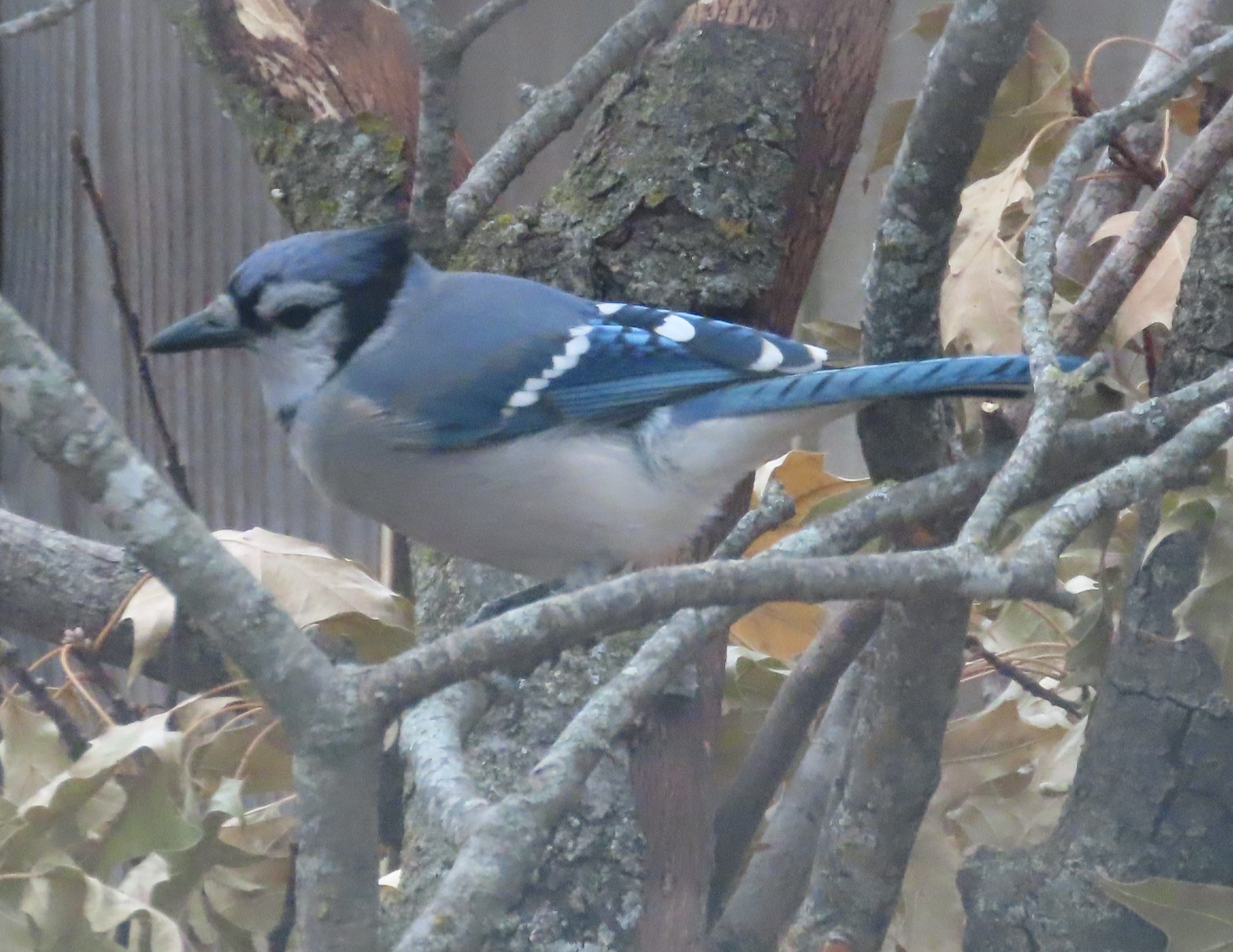
Blue Jay spotted during City Nature Challenge

Why The Nature Challenge Matters

Professional scientists cannot be everywhere at once, so "citizen scientists" are needed to help understand if animal and plant populations are healthy or declining. Unless an organism has an economic impact, positive or negative, chances are we know very little about it. We do not even know all the geographic areas certain species are found in. Your observations are critical and valuable.

Buttercup

Logistics of the City Nature Challenge

The City Nature Challenge is recorded on iNaturalist, an online platform that also has a smart phone app. Participants register on iNaturalist for free, look for their town's City Nature Challenge project, and subscribe to it. Observations of wild organisms (no people, pets, livestock, or cultivated plants, please) taken with phone or camera are then uploaded to the project. Observations are made in a four-day window, Friday through Monday. After that, you can still upload any observations made during that period, but most of that following week is devoted to identifying the animals, plants, fungi, and other living things already uploaded. City "winners" at the end of the project include most participants, most observations, and most species seen.

Black Swallowtail female

Limits and Pitfalls

At one point, the home page for iNaturalist gave the following disclaimer:

"iNaturalist had record levels of activity this week due to the City Nature Challenge, so notifications of activity such as identifications and comments are delayed. You may receive notifications out of sequence as we work through the backlog as quickly as possible. We apologize for the inconvenience and thank you for your patience."

That the website did not crash completely is a testament to its server capacity. This aspect of the City Nature Challenge seems to be in good order. Other problems remain, however.

  1. Participation. Recruiting people willing to make more than a casual effort, if that, appears to be the greatest shortcoming of the City Nature Challenge. Here in Colorado Springs, we maybe had one brief announcement on a television newscast. We had a total of 142 participants, many of them "accidental," in a city of roughly 800,000 people.
  2. Automatic suggestions for identification. iNaturalist has image recognition software that will "suggest" a species, family, order, or other level of taxonomy for the image you post. These suggestions are often wildly inaccurate and lead people to identify a North American insect as something from Africa, for example. Users should ignore this feature and instead assign the most obvious level of recognition, such as "grasshopper."
  3. Little or no crossover with other apps. One thing my wife and I noticed was a lack of birders making observations for City Nature Challenge. The avian-inclined prefer the app e-Bird. There is no excuse for not having e-Bird observations during the City Nature Challenge export automatically to iNaturalist. The technology is surely there. Likewise, other apps should be compatible with iNaturalist, at least for bioblitzes and the City Nature Challenge.
Many-lined Skink

Have a Plan of Attack

One thing I personally learned was that it would help to have a plan of attack, or at least a "plan B" if the weather is uncooperative. What can you count on for observations? Bird nests? Insect galls? Mealybugs on the houseplants? You would be surprised by the biodiversity indoors, in your basement, garage, or tool shed. Make a list to remind yourself of those places you can look, or species you know can be found reliably at a given location.

Yellow-rumped Warbler

Beyond The City Nature Challenge

If this is the first you have heard of City Nature Challenge, no worries. See if your city participated this year. No? Contact your parks department, local museum, or nature center and ask that they initiate an effort for next year. Meanwhile, you might want to make a habit of participating in other citizen science projects through iNaturalist and similar portals like Project Noah. You will make friends, learn much, and contribute positively to our understanding of planet Earth in the process. The idea that nature-watching can be a social activity is slowly catching on, and that common, widespread interest is what will ultimately protect and restore wild places.

Gilled fungi on a tree