Showing posts with label consumerism. Show all posts

Saturday, February 3, 2024

The Personal Finance Emergency Room

© saintlukeskc.org

The state of healthcare, or lack thereof, in the United States is exemplary the overall pattern of capitalist predation and oppression that causes undue financial and emotional stress. A recent experience with an emergency room visit prompts me to probe the connections once again.

While visiting family out of state for the holidays in December, my partner experienced prolonged numbness in her hand. This was not an “I slept wrong” issue that resolves itself within an hour or so of waking up. Given Heidi’s history of a mild stroke, we take symptoms like this seriously.

My sister-in-law’s family lives in a rural town, so we drove an hour to one of the few open urgent care clinics. Upon describing the issue and her medical history, the intake person declared that urgent care is not equipped to evaluate such situations, and referred us to the nearby hospital.

I will be generous and say that our time with a physician lasted fifteen minutes. The doctor asked questions, even got out of their chair to do a brief, standard protocol to rule out another stroke. They ventured that it was not a stroke, but without imaging, could not rule it out entirely. We declined additional procedures. The next half hour was devoted to the paperwork exit interview.

Fast forward to this week. The bill is over $2,400. We have health insurance. Despite this, we are left with a payment exceeding half of that amount. Yes, there is the “deductible,” and we are fortunate in being able to absorb that shock to our finances. Most people cannot, but even for those that share our circumstance, the ripple effect is profound.

Misery is simply another commodity, publicly traded under other identities.

When faced with a large, unexpected, unavoidable expenditure, be it for a medical bill, vehicle repair, needed plumbing upgrades, or some other catastrophe (all of the scenarios I listed are ones we have experienced in the last few months), my mind goes to what we must now sacrifice. There goes that vacation. Charitable donations? Off the table now. Membership in that organization? Nope. Meals out are less frequent.

It is no wonder that the average American’s bank account is always in the emergency room. It may not be a government conspiracy responsible for that condition, but certain business models literally profit from it. You did not get yourself into this mess.

We need an ‘unsubscribe’ button, and do not have to name an alternative to reject the current system.

The American oligarchy existed long before any of us were born, but its influence has intensified, and become vastly more complicated in its ways of appeasing the masses without truly solving any of the problems that exist because of….oligarchy. Government is complicit, at least at the level rendered by the ability of the oligarchy to appease politicians it helps get elected. Even supposedly well-meaning crusades like the “war on drugs” are waged not because of sympathy for addicts, but because cartels are making money that the oligarchy covets.

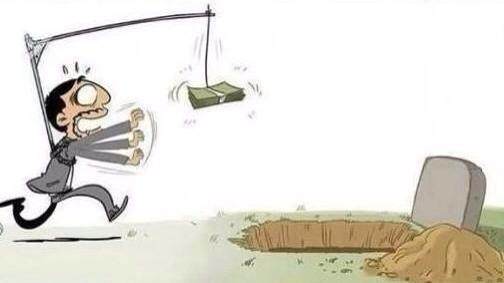
In the world of capitalism, everything must be privatized, and for profit. Only the consumer has value. Labor is an overhead cost, to be outsourced, or automated, at every opportunity. How to foster consumerism, then? Credit, and other forms of lending, which the oligarchy profits from by charging interest. Debt is not figured in the calculation of poverty levels, so the illusion of a middle class persists.

Our economic system has even turned our collective stress and anxiety into for-profit enterprise, from pharmaceuticals to sports betting. Misery is simply another commodity, publicly traded under other identities. We are in an abusive relationship with corporate-level business, on both the production side and the consumer end. We need an “unsubscribe” button, and do not have to name an alternative to reject the current system.

Instead of capitulating to the script that says Blacks and other minorities are threats to our safety and security, that immigrants are taking our jobs, and welfare is being exploited by the poor, we can seek ways of disconnecting our lives from global capitalism. We can expose the culture wars for what they are: distractions from the oligarchy that is taking power and control away from us.

We do not have to quit capitalism cold turkey. Do it incrementally. Engage in positive distractions, like arts and crafts. Go out into nature, like I do, and observe other organisms as examples of a basic, but vivid and satisfying existence. Participate in community commerce. Make friends with local farmers, and school teachers. Help them prosper. You will feel better daily.

Sunday, October 9, 2022

Children Are the Corn

It is the month of Halloween, and a perfect time to confront horrors both real and imagined. The most insidious of threats, however, are those we are blissfully unaware of, or don't perceive as dangerous. Such is the case for the marketplace. We do not spend nearly enough conscious attention to the corporate landscape we navigate daily, and it is at our peril.

In 1984, the horror film Children of the Corn was released, loosely based on a short story by Stephen King. The plot of the film revolved around the children of a ficticious rural U.S. town where the children formed a cult that demanded the ritual saccrifice of adults to ensure a successful corn harvest. The film spawned several sequels and has a cult following of its own. Cut to the reality of today, and I would argue that children are the corn of the global marketplace. Allow me to explain.

Parents who attempt to control the exposure of their children to television, the internet, and other forms of commercial entertainment are fighting an uphill battle against the influence of corporations. Kids will still be vulnerable to persuasion by their peers, social media influencers, billboards, and all manner of other corporate vehicles. Children are the next "crop" of consumers in the corporate economy, fed on the "fertilzer" of advertising and marketing campaigns. This is the real fear of corporations over falling birthrates: not the labor shortage they purport to have anxiety about, but a potential consumer shortage. If a labor shortage were a genuine concern, companies would not be outsourcing jobs overseas. They would be paying a living wage and offering a healthy benefits package to entice more workers into applying for jobs.

Children and adults alike are relentlessly conditioned to frame the solutions to everyday irritations as either "product" or "service." Spilled food and beverages require special chemical cleaners. Insects and spiders in and around the home require "exterminators," or the more politically correct "pest control operators," regardless of whether the creatures in question pose any danger at all. What are we supposed to never do? Change our mindset. Frame things differently. Ask ourselves if it really is a problem demanding action, or simply a periodic nuisance we can live with. Address our irrational fears, give them less power over us.

The expectation of the marketplace to be answer to all our ills makes us dependent on corporations, and lazy in our intellectual appraisal of circumstances and situations that annoy us or appear as intractable problems. While no one can be a jack-of-all-trades, we could stand to be more self-sufficient. Personally, I know I could use basic instruction in everything from home repairs to cooking to auto repair. This human condition is a major facet of the urban-rural divide. Those in rural regions and small towns are undeniably more self-sufficient than city-dwellers. Urbanites have partitioned expertise and resources to such a degree that there are specialists in niche markets. Farmers and ranchers are livestock EMTs, landscapers, butchers, and equipment repair technicians to name only a handful of their skills. They are too often still at the mercy of corporations that dictate which seeds they plant, where their produce can be sold, and for how much, but there is no denying their skill set.

Given our reliance on the corporate gods for our daily salvation, is it any wonder we cannot solve major societal problems that exceed the capabilities of business entities? It can be argued that colonialism, patriarchy, and White privilege and supremacy are supported, at least tacitly, by corporations. Turning to other human institutions, such as religion, gets us no further. Government has failed us repeatedly due to corruption, and extremists in political parties. As long as powerful people and entities prosper under the status quo, we are unlikely to see the systemic changes necessary for true equality in rights and freedoms, and equity in wealth distribution.

Environmental, consumer, and labor protections are viewed as barriers to corporate prosperity, but climate change, ecosystem destruction, an overstressed workforce, and an increasingly distrustful, powerless consumer constituency threaten to wreak economic havoc anyway. We need to remove the scales from our eyes and see the global marketplace for what it is: a means of preserving elitist power and wealth by dividing the vastly larger population that are employees and consumers.

We need not always be hostile in creating a revolution. Indeed, the Covid pandemic has highlighted the ingenuity of the individual, and the desire of many for simplicity, self-sufficiency, and a local economy that reduces energy consumption, rejects labor exploitation, and instead empowers each citizen to identify their personal passions and goals. People are quietly executing revolutionary changes that are positive and affirming, and vastly more inclusive of human diversity.

I am not generally a fan of horror films, but I can recommend one exceptional, and relatively tame, cinematic production that cleverly addresses the concepts mentioned above. They Live was released in 1988. Directed by John Carpenter, it is based on the short story "Eight O'Clock in the Morning," by Ray Nelson. It was ahead of its time, and might have been part of the inspiration for The Matrix. We do need to "free our minds" of the shackles of corporate expectations, and see our own personal potential to be the change needed today. That doesn't mean you have to saccrifice everything. Continue to indulge in your comforts, but perhaps not as frequently? I'm going to go brew a couple of cups of coffee now....

Sunday, November 25, 2018

Climate, Consumerism, and Immigration

Wow, look at all those refugee....Oh, never mind, it's Black Friday
© CNN.com

It has been an eventful Thanksgiving week, but you might not be in the loop if you were properly focused on family, food, and travel. We can be grateful for our American privilege of indulgence in those loves and pursuits, but for how much longer? A government report acknowledging climate change, a scathing indictment of mindless consumerism by a journalist, and the virtual disappearance of the immigrant "caravan" should give us pause.

Released at 4 PM on Black Friday, when the masses were distracted by shopping, comes the Fourth National Climate Assessment, volume II, outlining what we can expect if we stay our present course in, well, pretty much our everyday habits as consumers, producers, drivers....Will the fourth report (time) be the charm, the one that finally elicits action? Don't hold your breath.

The first alarm bells began ringing around a 1965 report issued by President Lyndon Johnson's Science Advisory Committee, its findings echoed in a speech by Frank Ikard, then President of the American Petroleum Institute. Ikard's analysis was published in the journal Nature. Good luck accessing that government report from 1965, despite it being public record. Attempts by Texas Pollinator Powwow, a Facebook group, to provide links in its posts have resulted in not one, but five broken links. Cover-up, much?

The hyperlink above goes on to reveal that physicists and other scientists had their suspicions, and were conducting atmospheric research, back in the mid-1950s to create projections of rising carbon dioxide levels and the implications thereof.

Appropriately for "Black Friday," journalist George Monbiot dropped a bomb of an editorial on what he calls "Pathological Consumerism", condemning the largely American habit of gift-giving for the sake of gift-giving, with little or no thought to the greater ramifications. He argues convincingly that production of many products, including novelty items, consumes so many resources, and takes so much energy, that it is nearly equal to the impact of driving internal combustion engine vehicles in terms of contributing to climate change. Plastics are derived largely from petroleum, electronics depend on the mining of rare metals, etc, etc.

Ok, fine, but what about that parade of immigrants threatening our southern border? Largely dismissed as a political stunt for the midterm election cycle, the deployment of troops to the Lower Rio Grande Valley in Texas seems to have evaporated in its urgency. There are larger than average numbers of asylum-seekers at the California border checkpoints, we are told, but that does not seem to have triggered any alarm or military response.

Here is something to consider: if you think "normal" streams of immigrants are an issue, just wait until catastrophic climate change kicks in. As more of the planet becomes uninhabitable, where do you think those displaced people are going to go? You want to do something about the immigration problem? Then do something to mitigate climate change. Call on our government officials to mandate industry controls, but also think twice about your daily habits, including whether you really need to drive to the store, or if it can wait until you have a greater necessity, or can find a carpool buddy.

I call on my followers to set an example of responsible consumerism, activism, and compassion for all species. No, we are not going to be perfect, and we have to learn to forgive ourselves for that and not let it prevent us from acting anyway. We have to be stern to those in power, and gentle to those struggling to change for the better. We can do this, but we have to start now, no pessimism allowed.

Saturday, September 15, 2018

You, topia

© Chelsea Leigh Stockton (Sherrie Duris is subject)

Who are you at your core? What would you be if you strip away all the material things that adorn you, lifestyle, and make your image? What are you without your occupation? How do we make tangible the intangible qualities that are what make us truly unique? We are all works in progress, aspiring to our own nirvana of self-actualization. Are you there yet?

We are forever caught between the rock of our own individualism and the hard place of societal expectations. Youth mostly lean toward living up to expectations (though they will profess otherwise) while the older we get the more we yearn to break free of the confinements of conventionality. Collectively, though, we tend to want to keep up appearances, and that is a costly lifestyle both financially and in terms of our mental and physical health. It takes a toll to pretend.

Our capitalist economy, maybe any form of economy, dictates that we be a collection of products first and foremost. You must practice self-expression through clothes, cosmetics, commitment to fitness and food choices, and your taste in entertainment and extracurriculars. You set yourself apart by branding, or at least the brands you choose, because status is everything, and you do not ever want to be yesterday's news.

What are we to do then? Walk around naked? Let ourselves go? Give up? That would be unacceptable, and actually defeat the purpose of our existence anyway, but what we need to do is shift the center of our personal and collective universe away from....things.....and to what truly gives us fulfillment. The default setting on our health and happiness meter is probably family and experiences, not material wealth, not a career, not what we are constantly told by the marketplace of diets and clothing designers, drug companies and politicians.

The late Dr. Leo Buscaglia was fond of saying the we are "human doings" because we are so obsessed with proving we are worthy of existence through tangible deeds, contributing to society in a literally visible way, that we have lost track of our true essence, the fact that we matter anyway, independent of our works. Indeed, there are few if any careers that enjoy a completely positive image in our society. Some are too complicated, dismissed as "rocket science" in conversation. Others are too simple and seen as unworthy of respect. Did you tip the wait staff at the restaurant with a generous gratuity? Do you greet the garbage collector or your postal delivery if you happen to see them? Wave at the public transit driver? I didn't think so.

We have to stop equating ourselves and each other with our jobs and our wardrobes and our bank accounts and our vehicles and every other measure of self-worth we have allowed society to calculate for us. We need to transcend "tolerance" and replace it with acceptance, free ourselves of labels and stereotypes. The marketplace is not going to stop categorizing us anytime soon, so best to just give it your middle digit.

Religion, too. Personally, I carry enough guilt to be a Catholic, and complain enough to be Jewish. Maybe that is why I am agnostic. See? There come those caricatures again, those easy-to-use ways of pigeon-holing people. We are so populous as a species, and put such a premium on convenience, that we accept our lazy ways of classifying people as the norm. We are diamonds, people, with multiple facets that will only glint in the light of patience in learning about ourselves and each other over time.

You-topia? You are already there, you just haven't realized it yet. You are still consumed by consumerism, restrained by beliefs that you cannot make a difference, that only your vote matters in your district, your ward, your precinct, and in the marketplace. You believe you are a means to an end for others, not for yourself and your family and friends, let alone other species. Rebel. Lead a personal mutiny against everything unimportant. Do not let the pressures of society lead to pent-up anger and hostility. Relax. Free your mind. When someone asks "what do you do?," tell them who you are instead. Remind them that you are a human being, already worthy, and so are they. Repeat. Daily.

Saturday, December 16, 2017

All I Want For Christmas Is....Less

© TheMindfulWord.org

It occurs to me, as the holidays approach ever closer, that material things mean less and less to me, and the appeal of "presents" under the Christmas tree is virtually non-existent. I am not about to rob anyone of the joy of giving, and receiving, but my personal reflection goes to what I could do without, from actual objects and conditions to intangibles. Food for thought, anyway.

Less stress would be nice. In fact, I bet a great number of us would trade the latest techno-gadget for relief from credit card debt, student loan payments, workplace politics, family drama, the daily commute, and an infinite list of other stress-inducers. Instead, the holidays seem to compact all our stresses into one neat, unbearable bundle, don't they? My personal belief is that on occasion at least, we need to avoid stress. Maybe that means spending Christmas and New Year's with friends instead of relatives. Maybe it means politely requesting that you don't exchange gifts this year, at least not the adults. Lower that burden on your charge card a little.

Less stuff would be helpful. I have so much clutter that I cannot even find a lot of what I own. How did that happen? Luckily, I barely have an income, so I am not accruing much in the way of new material these days. The problem is that I cannot seem to unload most of my existing possessions in exchange for even a little bit of money. I do not mind donating. I did that with my insect collection, do that with clothes, used electronics....but c'mon, I need to not be on the short end every time. Ah, well, there I go complaining again.

Let me think outside the box of "me" for the rest of my space in this post. Ah, less urban sprawl would be wonderful. We don't have to develop every single acre of land, or annex every suburb. We can rebuild it, make it better than it was, stronger, faster,....wait, that was the premise of The Six Million Dollar Man. It still applies to cities, though, including the one I am living in that seems to despise the idea that land use planning and "infill" are viable options. Gas, food, and lodging at the interstate exit seems to be an excuse to build an entirely new city these days. Enough.

Less government interference. Wait, wh-a-a-a-a-t?! This is coming from me, a certified "Liberal?" Who are you, and what have you done with the real Eric Eaton? Hey, if "Conservatives" have accomplished anything in the last year, it is to convince us that they were right all along: government is too intrusive, and clearly represents no one but special interests. The only problem is that too many Republicans are still blind to this reality; and they hold fast to the idea that pro life, gun rights, the "War on Christmas," and other far-right agendas are real issues and not the invention of their political party. We do have a common foe: class warfare. It is not "fake news." Ignore it at your peril, unless you are one of the "one percent."

Fewer natural disasters, please. Sigh. As I write this, wildfires are still raging in California, and we are experiencing severe drought in other parts of North America as well. We've been belted by hurricanes, inundated with floods, and scientists suspect this is just the beginning in terms of a geologic timeline. That's alright say the short-sighted economists, who beg and plead for the abolishment of environmental regulations that are all that stand between us and a climate apocalypse by what amounts to tomorrow (on a geologic timeline). Everything is expendable if it means infinite short-term profits for corporations, their CEOS, and shareholders. I know, I've said that before, but it bears repeating. Daily.

What do we do? We do less shopping. We share stuff instead. We do more donating to charities, thrift stores, and organizations that understand what is at stake and that fight tooth-and-nail to protect your rights as a U.S. citizen, member of the workforce, consumer, and citizen of planet Earth. We grow our own food where possible. We eat smaller portions. We stop "coping" by using alcohol, tobacco, drugs, and other substances. We take our clear heads and focus. We love each other. We stop living in fear. We do with less because we can.

Wednesday, August 30, 2017

Guest Post By Jessa Thurman - Vegetarianism

This week I fortuitously intersected a Facebook post by Jessa Thurman, a graduate student in entomology at a university in the Pacific Northwest, and invited her to allow me to post it on this blog. Vegetarianism is socially awkward for many non-vegetarians, and this may be the best explanation I have come across yet, eloquently written and free of the contempt too many folks have for anyone with a different diet than they themselves have. I thank Jessa for letting me share this, and I hope she keeps writing.


Around 7 years ago, I stopped eating mammalian meat. At the time it wasn’t a decision made for any other reason outside of how it was making me sick. After eating beef or pork, I would feel sick to my stomach, as though the meat had become stone, and would often have to sleep for 5 to 7 hours after the pain began or just revisit what I ate. It was easy to pick out the other foods that followed this trend: mammals or ‘red meat.’ What was even simpler was the decision and action to stop eating these kinds of meat. Meat was more expensive and there were plenty of cheaper, healthier alternatives. Chicken or fish worked as one substitute if I ever needed one, and I didn’t have to give up my favorite meals. Soon I felt much better and even lost a bit of weight. I continued the diet to avoid other mammals whenever I encountered them like lamb, deer, and kangaroo, even though the last one had peaked my interest. And I followed through with this choice because it just wasn't worth how bad it made me feel.

Simply saying I was allergic to the meat or couldn’t eat it immediately calmed those who challenged my dietary choice and at the time I didn’t think much of those challenges. Once I started college and began my studies in biology however, I started considering human impact on the Earth. The majority of our agricultural land is devoted to growing livestock feed with the main feed ingredient, corn being grown on 90 million acres of land (USDA - U.S. Department of Agriculture) and according to the FAO [Food and Agriculture Organization of the United Nations], livestock grazing occupies 26% of Earth’s ice-free land. This translates into most habitat destruction for agriculture being driven by our high demands for meat. On top of the habitat destruction, livestock are also responsible for about 7% of total greenhouse gas emissions which contribute to global climate change (FAO). The increased frequency of dramatic climatic events like drought which has led to the recent intensity of forest fires tearing across the US or Hurricane Harvey which is currently causing floods in Texas, are all linked to global climate change. In light of these major issues, not to mention animal cruelty, my once simple decision became more philosophical. It was a small change I could make to decrease my Carbon footprint - a personal decision.

My life choice to not consume beef or pork became more of an environmental choice and I adapted it to include buying more of my groceries from local farmers and limiting my other meat consumption. All of these changes, for me, were very easy to make. The recurring problem was instead having to explain and often defend my choice to others who eat a lot of meat. Their challenges, I understand now were made more so out of defense for their meat-eating rather than malice, but I think it should be repeated that I and many other people who have made dietary or life changes, make these choices for ourselves [italics mine]. I've witnessed more intense challenges for vegetarians and vegans for their dietary changes, but why do they seem to threaten your way of life? People who make these life choices 1) are not suffering for it and 2) are not harshly judging all meat eaters. Everyone's life is different and sustainability is a goal we continuously work towards rather than a line we cross.

It’s been a long time since I made this original change and I have debated posting about it in the past because from the same critics, I feel like they perceive this dietary choice I've made is a status I want to flaunt. Instead I just want to share how and what I am doing to lessen my Carbon footprint, and this particular change is one that came easy for me. I know I am imperfect in many other ways, but I'm working on that. I assume everyone is and want it to be known that I and others like me, be they vegetarians, environmentalists or others, generally aren't 'Nazis' for the planet who glare and gossip about how you are enjoying that burger right now. So next time, please don't roll your eyes at our dietary choice or challenge our philosophical basis for making it. It's our life and we're all making different changes.


I could stand to take several lessons from this: Be less judgmental period. Eat even less red meat than I do now, and strive to eat less meat of any kind. Read more things from Jessa Thurman.

Thursday, March 2, 2017

The Media

© MadMikesAmerica.com

What a difference a couple of months makes. When I first drafted my concept for this post, "fake news" was not a....thing; and the war on the press waged by our President-elect had not yet manifested itself. I will not speak to either of these topics, instead staying with my original intent, which is again aimed mostly at local and regional television, radio, and print media. As consumers, we need to hold our local outlets responsible for their conduct and priorities.

Seek responsible advertisers. Just as the consumer has a choice in which companies he or she wants to do business with, so networks and newspapers can choose which advertisers reflect socially and environmentally responsible ethics, while making quality products or providing quality services. The media endorse certain businesses through an agreement to allow them to advertise. At the same time, the press is the first line of defense for consumers in the face of inferior products, services, and ethics. This responsibility should extend beyond reporting product recalls and indictments of CEOS, and investigative reporting that exposes wrongdoing. The media must decline advertising revenue from such businesses.

Empower consumers. The above paragraph demonstrates how the media can empower consumers, but they also need to be more creative in how to do so. Maybe the new version of "reality television" will be to follow lab workers at the Consumer Product Safety Commission. Bringing back Mythbusters couldn't hurt anything, either. The challenge lies in making informative material entertaining. Right now we have a surplus of "empty calories" of entertainment with no purpose other than escapism.

Increase public service announcements. The Ad Council is one of the most underrated, underutilized, and no doubt underfunded organizations in the U.S. Go to their website and you will see some public service announcements you recognize, and an awful lot you have never seen before. That is probably in part the fault of your local media. Ask them to print and air more of these. Meanwhile, suggest your own issues to the Ad Council, and include resources where they can learn more and get ideas for building a message campaign. We cannot make a difference if we are unaware of issues, or do not know where to go to help change a situation.

Diversify for real. The media is getting better at projecting ethnic and lifestyle diversity that reflects our evolving cultural makeup, but that is not what I mean by "diversify." The media is the most glaring example of what comedian George Carlin described as the "illusion of choice." Think you have a huge number of choices in your cable or satellite television package? Think again. Most of those "networks" are subsidiaries of an enormous conglomerate. The "Disney family of networks," for example. There is constant duplication of content, and most of the new or live content is going into the networks you must pay for access to. Meanwhile, the newsstand is full of self-help, diet, food, celebrity, and "lifestyle" magazines, most of which are light on content and heavy (literally) in advertising.

© MadMikesAmerica.com

Be Your Own Media. Back in the day, you could produce your own television show through public access, a community-based resource that allowed citizens to learn television production skills and use studio equipment free of charge to air their programs. By 2009, public access had largely faded away or, more to the point, been driven into the ground by media corporations eager to again turn everything into a profit-making venture. The Federal Communications Commission (FCC) largely endorsed this, as it has endorsed the mega-mergers that have left consumers with fewer and fewer media choices. Today, YouTube and its descendents have become the new personal channels; and blogs have become the new printed media, albeit you have to print them yourself. Most of these personal endeavors are not local, either, and that is what public access was all about. It may be time to resurrect that medium.

Consumers are increasingly left to their own devices in assessing what is truth, what is fiction, what is propaganda. I wish I could see it getting better, but for the time being we must practice mindful consumption of what passes for information. We must view everything through the filtering question of "who benefits from this?" Follow the money, indeed.

Sunday, January 8, 2017

How to Save the American Economy: Your Part

© Quora.com

In a recent post, I answered the question why some citizens do not want to work, or at least appear to not want to. Many have reached a point of diminishing returns, and they look up at the working poor and want no part of that struggle. Today, I aim to begin showing how we can collectively, and effectively, take back our economy so that it works for all. It will demand sacrifice, thinking outside traditional channels, and affect every aspect of our lives....but I believe it will be worthwhile in the long run. Let's start with what you can do. These are only suggestions, mind you.

Think and dream differently. The most critical part of recovery from this mess is a fundamental change in thinking. We must abandon the mindset that acquiring material wealth is the goal. Let's change that to attaining financial security for all. Most of us belong to what I call the "debt class," so I do not believe this is a real stretch.

Stop consuming frivolously, start consuming smarter. Let's stop buying on impulse, following fashion trends, and living beyond our means. We should start demanding, as consumers, products from socially-responsible companies. We shop, and dine, locally as much as possible, every day. We return goods to the community through charitable donations. How do they put it? "Gently used?" We start growing our own food, and demand local relaxation of codes that may currently prohibit that, replacing them with friendlier regulations that recognize such concepts as food security. We may participate in community gardens as a substitute for, or a complement to, our efforts at home. We become our own producers as well as consumers.

Choose your employer. Let me repeat that: choose your employer. You don't think of it that way, do you? You wait there thinking "I hope they choose me, I hope they choose me" for a job you are only lukewarm about anyway. You are better than that. Value yourself. Make sure the company is one you want to work for, that they have a track record of treating employees well, treating customers with respect, and obeying the regulations that govern their line of work. Maybe you really need to be your own employer. Excellent. No risk, no reward. In any event, be doing something that doesn't sap all your energy, or leave you wanting to kick the dog when you get home. Reducing stress is the number one factor in creating a better life.

Leave your bank for a credit union. The big financial institutions that make up Wall Street do not care about you unless you are a shareholder, CEO, or extremely lucrative client. Do you use their private banking services? If not, then leave them for a credit union where the customer pretty much is the owner. They are, in my experience, far friendlier, more responsive, and rarely charge you fees. We need to leave banks in droves, my friends. They will have to respond with better products if they want to survive.

Hold your representatives accountable. Just today I received a mini survey on a postcard from my federal House Representative. I plan on calling and writing to let him know what I think of his party's agenda. I admit I have been remiss in doing this kind of thing. We don't have the luxury of apathy anymore. Today, with social media, there is no excuse for not keeping up with the latest news out of Washington, DC, your own statehouse, county commission, or city council. Shoot, even our President-elect is using Twitter for crying out loud. Not responsibly, but.... Participate.

Consider running for office yourself. The people we are electing to office today don't even begin to resemble ourselves in terms of wealth, occupation, and personal experience. There is far too little economic diversity among elected officials, too little occupational diversity, ethnic diversity, too few young people, and too few "disabled" representatives. Again, with technology, you can run a campaign on a shoestring. Look at what Bernie Sanders did. He even has a foundation to help people like us run for office.

Next time, or in the near future, I'll post what government needs to do to help us help ourselves. Lastly, I'll give the media some guidance since they appear to have lost their way, at least through traditional channels. It is the new year, time to make some resolutions to live differently.

Sunday, May 31, 2015

Scale

Few people agree with me (or want to admit) that capitalism in its present form is the source of most of our economic, environmental, and institutional ills. We want desperately to cling to our belief that the "American Way" is the *right* way, the *best* way, the only way; but we might be wrong. At the very least, we have an escalating problem with the sheer scale of capitalism. It no longer benefits everyone, and that puts at risk something far more sacred than capitalism: democracy.

Let us look at what corporate capitalism has done for us (or to us) lately:

  • Reduced consumer choices
  • The bigger the corporation, the fewer the choices for the consumer. What results from mergers and acquisitions is the illusion of choice. Take television for example. Mergers of various networks insure that we will see the same content distributed over several channels instead of new content on those other channels. Sports are increasingly televised on stations for which the consumer must pay extra as part of a cable or satellite package. This amounts to consumer coercion, whereby formerly free broadcasts are now held in virtual ransom. More disturbingly, news media are being concentrated into fewer and fewer outlets controlled by corporations that filter the news to further their own corporate, political, and economic agendas; or distract us with fear-mongering and celebrity status reports.

  • Suppressed technologies
  • When you have an existing industry firmly entrenched in the status quo of the marketplace, it will exercise all its power to maintain its dominance. Hemp is an example of a raw material that would compete very favorably with cotton, paper, even plastics and some metals. Those existing industries act to suppress the hemp industry through lobbying our government representatives and agencies, and spreading false information to consumers. Hemp is a relative of the marijuana plant, but contains only a fraction of the chemical compound that gives marijuana its pharmaceutical and recreational properties.

    Only recently have alternative, sustainable, and clean energy technologies been allowed to blossom. Even these have come under attack because of the scale of those enterprises. Giant windmills kill birds and bats, but all resources for wind energy are directed to those large-scale models. Bird-friendly, small-scale alternatives are ignored.

  • Fewer consumer, labor, and environmental protections
  • Most major corporations on the Wall Street scale honor only their monetary bottom line and increased revenue for shareholders. The consumer, employee, and environment all take a distant back seat to those goals. To that end, lobbyists argue for erosion or outright repeal of existing laws aimed at affording labor, consumer, and ecological protections. "Studies" are rigged or altered or biased to reflect business interests. Conflicting research is suppressed. Recalls of dangerously defective products are postponed. The Clean Air Act is constantly under fire, as well as the Endangered Species Act and other landmark legislation that is arguably among the best ever enacted by *any* government on a national scale.

  • Corporate Welfare
  • The welfare distributed to individuals and households in poverty is nothing compared to the dollars delivered to corporations and industries annually. We pay lip service to, and worship, the "free market" as the God of the economy which, left unfettered by regulation, will allow businesses to flourish; yet we prop up failing industries with subsidies, tax breaks, and bailouts that seem to always be lavished on CEOs and shareholders without even a trickle down to workers and consumers. We protect ailing industries with import restrictions and tariffs. Left to the "free market," those American industries would wither and die. They do anyway, of course, as manufacturing is transferred overseas to cheaper (read "substandard") labor forces.

  • Perpetual definition of the "American Dream" as the attainment of material wealth
  • It can be argued that the accumulation of wealth is in itself a goal not worth pursuing, and at worst a lifestyle that threatens the well-being of others, and even the planet itself. Consumption and economic growth as we are accustomed to in this century are definitely not sustainable, and take resources away from more vulnerable human populations. One would be hard-pressed to refute the idea that the Earth could benefit from fewer numbers of Homo sapiens, and certainly from less "development" of natural resources.

  • Increased stress and decreased physical health
  • Our physical and mental health are at risk from social, cultural, and economic pressure that are inflicted upon us or that are self-generated. We are valued in the marketplace only for what we can consume, not what we can produce, unless it is more consumers in the form of children. Our labor is consistently undervalued to the point of corporations balking at a raise in the minimum wage; and suppression of collective bargaining to insure workplace safety and fairness. The end goal of industry is production without labor, but the unemployed cannot afford to purchase products.

    How we value ourselves is just as important as cultural expectation. I, myself, constantly struggle with the idea that my wife is the major breadwinner in our household. This flies in the face of the "standard" I was brought up with. It takes a major effort to remind myself that my ego is not the point of our marriage; and money is not what strong relationships are built on in the first place.

There is reason for hope. All is not lost. In fact, there are surprising trends that indicate a potentially bright future ahead. Community gardens and farmer's markets are springing up almost daily, taking our food production back from corporate agri-business and returning it to local roots (literally). The "tiny house" movement is spreading, and demonstrating that a lifestyle with fewer material possessions means stronger personal relationships and an enhanced sense of community (while going off the grid in many cases). There is increasing demand for better public transit, more walkable neighborhoods where one can work, live, and play without dreadfully long commutes in a vehicle powered with fossil fuels. We still have power, folks, beyond the voting booth, and the internet age allows us to quickly find friends and support for what we believe is important. Thanks to crowdfunding, we can even find money for making those inventions and community projects happen, without dependence on institutions firmly entrenched in the status quo. Go for it!