Showing posts with label personal finance. Show all posts

Wednesday, October 15, 2025

Fear and Self-loathing

We faced a substantial, unexpected expense this week, related to our one vehicle, and it conjured up all manner of emotions, some based in reality, and some emanating from the deeper wells of my paranoia. I do not believe I am alone in such reactions, so I am sharing them here.

First, we are fortunate. We can absorb the cost of repairs and new tires with our savings. There are countless citizens who are not that advantaged, who would be charging it on a credit card, or forced to abandon personal transportation completely. Racking up debt seems to be as much of an American pastime as baseball and apple pie.

Every time we dip into savings, though, means less money for the future. It is snipping another thread in the safety net. Everything monetary seems extremely tenuous now, and that is where fear starts to creep in. I believe that anxiety is a legitimate concern. Everyone who is not a billionaire should behave cautiously.

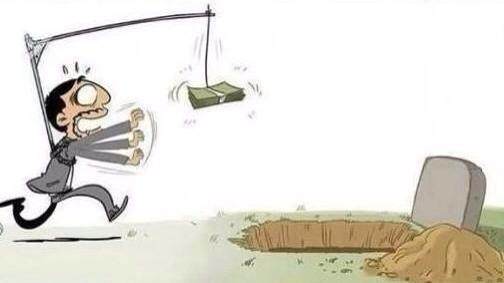
The self-loathing comes from not having traditional employment, or at least some kind of reasonably dependable income. I abandoned that lifestyle well before the pandemic. I am simply dysfunctional in the average workplace. Subjecting others, and myself, to that is not in anyone’s best interests. I do thrive when I get to choose who I want to work with, but I am in a rural location now where that is almost impossible to do in person.

I am nearing retirement, I think, but the age at which you can claim full benefits from Social Security keeps going up. Neither political party seems to have a problem with this because the people we elect to public office are so wealthy they don’t need Social Security themselves. They also get a government pension, and their own premium healthcare package.

Personally, we have investments, even a “wealth manager,” but they certainly have bigger fish as clients. Obviously, everything tethered to the stock market is precarious now, thanks to tariffs and other destabilizing actions that our President and congress have been taking. Consequently, I don’t think of our financial state as “real,” let alone something we can count on over the next twenty or thirty years.

This is all a predicament I think many of us share, and it has enormous ramifications. One horrifically distressing aspect is that as perceived personal risk goes up, we are a lot less likely to make donations to nonprofits that, ironically, help people in even worse circumstances. There are also many environmental organizations and civil rights advocates that I would like to support with my dollars, but what if we have another personal emergency?

I begin to rage when I think about how government has defunded many of those agencies and non-governmental organizations doing positive work, and instead grossly inflated the budgets of the “War Department,” and I.C.E. Emphasis on “gross.” We should have the exact opposite scenario.

If money itself is not the problem, it is the weaponization of it that enables cruelty, and compounds existing misery. We have to make money irrelevant, somehow, to rob it of its power. We stand to lose control of it entirely should cryptocurrency become the new standard. Almost nobody understands blockchain, myself included, and crypto represents, essentially, the privatization of currency. Its value will be determined entirely by powerful individuals, and we will be at their mercy.

My greatest act of fiscal resistance has been to enroll in a credit union. I did that decades ago when I lived in another city, and I have been delighted by the results. Spreading assets across different types of financial institutions seems like a good strategy, at least for now.

Today, our car is safer now, with new brakes, and rides a little smoother thanks to new tires, but where will the proverbial road take us? The GPS navigation device/department of our governments seems to be malfunctioning, and we are being taken for a ride, instead of being in the driver’s seat and determining our own destination. Fasten your seatbelt.

Friday, June 16, 2017

Budgets

© SSAE16professionals.com

Most talk of budgets is centered on government appropriations, program cuts, and other headline-making, multi-million dollar decisions made by elected officials. How much thought goes into our own personal budgeting? Are we guilty of saying to ourselves that if deficits and debt are ok for government, then overspending should be acceptable on a personal level? I find my own situation the opposite of that. I do not have a spending problem, I have an earning problem.

There is simply very little I am capable of doing, or interested in doing, that could generate a consistent income. More to the point, I no longer have tolerance for most employers, workplace politics, and being a cog that generates wealth for executives and company shareholders instead of a more equitable division of profits. Oh, I am guilty of instigating workplace drama myself. There may even be former coworkers and supervisors reading this who can attest to my being temperamental, seeking romantic relationships with coworkers, and not always completing tasks in my job description.

At least my contempt for most businesses is matched by my lack of enthusiasm for spending. There is simply very little I am interested in purchasing in the way of material goods. Not that I don't have my weaknesses. My spouse can vouch for the fact that tasty-but-not-always-healthy food and beverages are near the top of my priority list when it comes to disposable income. Good thing alcohol is so expensive, or I'd be drinking daily. Maybe hourly. On a really bad day it might be all I would do. The older I get, though, the less "things" I find I need or want. In fact, I would love to liquidate most of my possessions in favor of more money to travel.

One of my greatest disappointments is that virtually none of my belongings has any appeal to anyone else. My parents got me the Matchbox® toy cars as a kid, not the Hot Wheels™, for example. I have a few autographs, but they are from the era when sports stars and Hollywood celebrities would personalize them instead of offering a generic signature. That's apparently a bad thing that diminishes their value considerably. I put a few of my old natural history books up for sale on a Facebook group and got exactly zero responses. I don't mind donating things, but that usually isn't even enough to warrant itemizing my federal tax return. If charity begins at home, then we could use a little help here, IRS.

Collectively, we like to create the illusion that we are doing better financially than we really are. I've written about this before, the metamorphosis of the Middle Class into the Debt Class. We are taught that we need to "keep up with the Joneses," and not to complain, or have envy or jealousy over the success of others. Back in the day, that might have been true, and we could advance ourselves at least incrementally up the ladder of affluence. Today, corporations and Congress are simply removing the rungs, right out from under where we are currently perched. They are also cutting holes in the safety net beneath the ladder while telling us it is all for our own good, that we will somehow be better off. Baloney.

Back to your budget. The first thing to do is stop judging yourself by your material assets. Friends judging you that way? Get new friends. You can start with me. You know what is important, and the overwhelming majority of it you cannot find in a store or online. It is the fabric of family, community, and the other organisms we share the land, water, and atmosphere with. All else is icing, and arguably even unnecessary. There. Doesn't that make the cable or satellite service a little easier to part with? Maybe it even makes the decision to strike out on your own business venture a more plausible possibility. Go for it.

Wednesday, February 22, 2017

Why You Should Leave Your Bank...Now

© Makeyourmoneymatter.org

There may be nothing better you can do to empower yourself in today's economy and political structure (for lack of a better term) than to choose where your hard-earned dollars go. No, you don't have much of a choice in taxation, but you have a marketplace full of financial institutions. Some of those are better than others. Some of them have demonstrated time and again an absolute contempt for conventional middle-class consumers. Here are some reasons why you should choose wisely, and maybe opt for a credit union instead of a bank.

Fees. Many traditional banks nickel and dime your accounts to death. You need a minimum balance or you get a "maintenance fee." You bounce a check, you get a fee. Ok, you might deserve a fee if you are fiscally irresponsible, but too often you do not have to do anything to incur a fee.

Maximums and minimums. We already mentioned minimum balance requirements for traditional banks. They usually have a maximum withdrawal amount, and/or number of withdrawals, too, which means you are being punished for emergency situations in which you may need more than the usual amount. The most you should suffer is an interest penalty for a low balance.

Socially and environmentally irresponsible investments. This may be the overriding reason you should leave a commercial bank. Are you opposed to the construction of the Dakota Access Pipeline (DAPL)? It may interest you to know that Citibank, Wells Fargo, Bank of America, JP Morgan Chase, and Morgan Stanley have all extended credit to Energy Transfer Partners, the company constructing the DAPL. Don't believe me? Check out the Snopes.com article. We can collectively make a statement by taking our own personal business elsewhere.

Lack of interest. Literally! Can you remember the last time your bank account earned interest? Neither can I. Savings accounts are essentially worthless. Certificates of deposit (CDs) lock your money away for at least several months or more at a time and still pay next to no interest. Banks have no interest in paying you to save, or creating products that reflect the need of the average person to keep assets liquid for emergencies yet still earn a little interest in the meantime. Sure, the Federal Reserve chairman is responsible for setting interest rates, but banks still have more flexibility they choose not to exercise.

Lack of interest in you. Unless you are wealthy enough for private banking services, you are probably of little interest as a customer to the average bank. Priorities at least appear to be: Shareholders, CEO, customer and/or employee. Banks are profit-driven institutions that profit off of customers, not for them. They push loan and credit services like....I'll resist comparisons to nefarious enterprises. We are encouraged to live beyond our means, and to think first of ourselves instead of our communities. It's what banks do.

I have been with a credit union for the communicating arts for decades, and finally divorced myself from conventional banks....at least five years ago. It was one of the best decisions I have ever made. Customer service is outstanding, no matter how much is in my account, or how many products I have. This excellence has persisted even after a merger with another credit union. When was the last time an event like turned out for the better?

Because credit unions are not publicly traded, the customer is the priority. Because credit unions are usually local, or at least regional, and/or tied to a particular profession or military service, responsiveness to members vastly exceeds that of a traditional bank. Further, they are often sponsors of local charities and charitable events, from which we all prosper as a more healthy community.

I no longer live in the same city (not even the same state) as my credit union, but no worries. Many credit unions do what is called "shared branch" transactions. I can go to a totally different credit union to do my banking. How cool is that?

I urge my readers to give serious consideration to switching from a big bank to a credit union, for all of the reasons mentioned above. At least take stock of your current bank and make sure it is doing right by you, and right for our world at large. This is how you become empowered. You deserve it, and so do the rest of us.

Sunday, January 8, 2017

How to Save the American Economy: Your Part

© Quora.com

In a recent post, I answered the question why some citizens do not want to work, or at least appear to not want to. Many have reached a point of diminishing returns, and they look up at the working poor and want no part of that struggle. Today, I aim to begin showing how we can collectively, and effectively, take back our economy so that it works for all. It will demand sacrifice, thinking outside traditional channels, and affect every aspect of our lives....but I believe it will be worthwhile in the long run. Let's start with what you can do. These are only suggestions, mind you.

Think and dream differently. The most critical part of recovery from this mess is a fundamental change in thinking. We must abandon the mindset that acquiring material wealth is the goal. Let's change that to attaining financial security for all. Most of us belong to what I call the "debt class," so I do not believe this is a real stretch.

Stop consuming frivolously, start consuming smarter. Let's stop buying on impulse, following fashion trends, and living beyond our means. We should start demanding, as consumers, products from socially-responsible companies. We shop, and dine, locally as much as possible, every day. We return goods to the community through charitable donations. How do they put it? "Gently used?" We start growing our own food, and demand local relaxation of codes that may currently prohibit that, replacing them with friendlier regulations that recognize such concepts as food security. We may participate in community gardens as a substitute for, or a complement to, our efforts at home. We become our own producers as well as consumers.

Choose your employer. Let me repeat that: choose your employer. You don't think of it that way, do you? You wait there thinking "I hope they choose me, I hope they choose me" for a job you are only lukewarm about anyway. You are better than that. Value yourself. Make sure the company is one you want to work for, that they have a track record of treating employees well, treating customers with respect, and obeying the regulations that govern their line of work. Maybe you really need to be your own employer. Excellent. No risk, no reward. In any event, be doing something that doesn't sap all your energy, or leave you wanting to kick the dog when you get home. Reducing stress is the number one factor in creating a better life.

Leave your bank for a credit union. The big financial institutions that make up Wall Street do not care about you unless you are a shareholder, CEO, or extremely lucrative client. Do you use their private banking services? If not, then leave them for a credit union where the customer pretty much is the owner. They are, in my experience, far friendlier, more responsive, and rarely charge you fees. We need to leave banks in droves, my friends. They will have to respond with better products if they want to survive.

Hold your representatives accountable. Just today I received a mini survey on a postcard from my federal House Representative. I plan on calling and writing to let him know what I think of his party's agenda. I admit I have been remiss in doing this kind of thing. We don't have the luxury of apathy anymore. Today, with social media, there is no excuse for not keeping up with the latest news out of Washington, DC, your own statehouse, county commission, or city council. Shoot, even our President-elect is using Twitter for crying out loud. Not responsibly, but.... Participate.

Consider running for office yourself. The people we are electing to office today don't even begin to resemble ourselves in terms of wealth, occupation, and personal experience. There is far too little economic diversity among elected officials, too little occupational diversity, ethnic diversity, too few young people, and too few "disabled" representatives. Again, with technology, you can run a campaign on a shoestring. Look at what Bernie Sanders did. He even has a foundation to help people like us run for office.

Next time, or in the near future, I'll post what government needs to do to help us help ourselves. Lastly, I'll give the media some guidance since they appear to have lost their way, at least through traditional channels. It is the new year, time to make some resolutions to live differently.

Friday, August 5, 2016

Two Cars, but at What Cost?

The new Hyundai (foreground) and old Saturn (background)

We had occasion to take our 2002 Saturn in for a check-up last month, and the upshot was that it became clear we needed a newer, safer, more reliable vehicle for my wife to get to and from work, at least by winter when the roads get icier and diceier. The process of purchasing that second car left me feeling both relieved and anxious in ways I was not accustomed.

Heidi, my spouse, became uneasy when the dashboard on the Saturn lit up with a red "ABS" warning. Wow. I had no idea that automobiles even had abs, let alone that they were that important. Apparently, the car had not been doing crunches or sit-ups for awhile. Ok, so we learned that "ABS" stands for "Anti-lock Braking System," and that is a pretty integral part to driving safely. Unfortunately, the Saturn is no longer in production, and neither are many parts for those models still on the road. That includes the ABS. So, we are left with a vehicle that functions incompletely, and hence the need for a newer car.

Heidi really does her homework when it comes to important purchases. She likes to consult Consumer Reports first, and in her research she discovered a handful of models ranking reliable and safe, while still within our price range. We settled on a 2013 Hyundai Elantra advertised at a local car dealership, and went to take a look.

As it turned out, that particular vehicle was still awaiting title transfer and other paperwork from Oregon. Coincidentally, or not, the dealer had another Elantra, this one a 2015 model, damaged in a recent hail storm, that was good to go. It was a rental car in its previous life. It was a little more expensive, but had slightly less mileage, and was a color that we liked much better than the model we had come to see. More questions answered, and a short test drive later, and we were filling out forms. Surprisingly, to me, the last thing we did was write a check for the downpayment.

We wrote two checks, actually, from our separate bank accounts. We have been lazy and, for whatever reason, reluctant to merge our financial records. I think it comes from us both having been single for so long, and reliant only on ourselves for our welfare. We just are not used to the idea of combined incomes. Well, I hardly have an income, and that has led to guilt and frustration for me. This expense, an unforeseen and large amount, pretty much erased my savings. Earlier in the month I had to write a check in the same amount to repay half the advance from the now-terminated contract to do the spider field guide.

I felt like I went from zero to "adulting" in about six seconds. It is an emotion and stress that has not left me. In fact, it has intensified. I am also dealing with a cantankerous father, who will be 91 on August 8, for whom my cousin and myself are trying to finalize legal documents concerning my dad's will, estate, medical directives, and related matters.

The other aspect of a new vehicle purchase that makes me uncomfortable is my personal view that we, collectively as an American society, should be driving less, using less fossil fuels, and relying more on public transportation, pedestrianism, bicycling, and other modes of transit that are healthier for ourselves and the environment. While I like the idea that I now have a vehicle at my own personal disposal, any day regardless of whether my wife is carpooling with a co-worker, I am reluctant to indulge in that luxury.

So, it is a mixed bag of blessings, curses, and unanswered questions that we face in this new automobile. Where are we going to find the money for the payments and the increased insurance premiums? How much longer are we going to have the old Saturn, and what will become of it when it is no longer useful to us? What will we be sacrificing for fuel, repairs, and other expenses? The prospect of having to get a more traditional "job," outside the home, demoralizes me because so few opportunities for employment mesh with my personal values. It may come to that, though, and while it may be another part of "adulting," I don't know how well I would stomach it.

These days, my progress comes in small doses. Avoiding addictions as coping mechanisms, for example. Accomplishing a load or two of laundry, and writing one blog post may be all I can do in a given day. Avoiding the temptation to flee in the old Saturn. That may, ironically, be another victory.