Thursday, January 26, 2017

How to Save the Economy - Government

One of my more recent posts focused on what you as an individual can do to change the U.S. economy for the better. Today I want to offer suggestions for what government can do. My emphasis is on local-level government because you have a greater degree of influence there; and local initiatives that prove successful often get adopted at state, regional, and national levels later.

© KTTN.com

Stop insisting that economic salvation must come from elsewhere. The traditional strategy for stimulating local economies is to offer tax breaks and other incentives to out-of-state, even multi-national, corporations that promise to provide jobs in your city or town. This is almost never sustainable in the long term. When some other city or state offers a better deal, the company flees to that place. Further, the "good jobs" that require technical skills receive applications from everywhere, or may even be outsourced to another country. Exactly who is winning here?

Provide help and incentives to local businesses. Take those tax breaks and incentives you offer out-of-state corporations and start applying them to local enterprises. This is key in building a stable, unique, and respected economy. Offset hikes in minimum wage, utilities, and other overhead expenses that big, established companies can withstand without any help, by giving local businesses tax credits and other help. Require banks to put local start-ups ahead of big business when it comes to loans and other investments. Employment opportunities must include the opportunity to make your own employment.

Raise the minimum wage. We have heard the same tired arguments for and against, but consider this: Many individuals earning minimum wage are holding two or three jobs, or several part-time jobs just to pay their bills. Raising the minimum wage would thus increase employment opportunities as these people are able to drop one or more jobs. The decrease in stress on these workers also relieves all of us of collective healthcare burdens, allows parents to spend more time with their families, recreate, and otherwise enhance their physical and emotional well-being. Productivity goes up as each worker is taxed less in the physical sense.

Stop criminalizing homelessness and poverty. Here in Colorado Springs, the City Council has written ordinances designed not to address the roots of homelessness and poverty, but to simply erase it from public view. I know this because no councilperson has voiced objection to the homeless camps in our stream corridors where the average businessperson or shopper never ventures. Making it a crime to panhandle, or even sit or lie down on the sidewalk in certain parts of town, is an effort to protect wealthy people from shame and guilt.

Improve urban planning. In many municipalities, one could simply ask for urban planning period. Annexation to boost tax revenue may be appealing, but the cost of providing utilities, public transportation, and other amenities quickly overruns those gains. Having lived in Portland, Oregon for a fair portion of my life, I can attest to the viability of a semi-flexible "urban growth boundary" that creates a unique urban-rural interface, and allows growth to pay for itself. "Density" is not a dirty word, and walkable neighborhoods are highly sought-after by the new generation of business professionals who put a premium on reduced commutes and vibrant communities. Urban planning attracts desirable..."elements."

Broaden educational opportunities. Learning is a life-long commitment, but few cities or towns make continuing education a priority. Sure, there are online alternatives, but workshops, conferences, and traditional classrooms are still important. Opportunities for informal education through museums, libraries, and parks are not always publicized enough, and are certainly under-funded. Boost monetary allocations to reflect an interest in keeping citizens ahead of the curve and able to transition to newly-created occupations.

Promote multicultural festivals and events. Diversity is a strength of all communities, but too often we do not even know our neighbor. We may not even speak the same language. Festivals and events give citizens a chance to learn about other cultures by reaching beyond stereotypes and assumptions, and actively engaging with others in-person.

Prioritize public health and safety. This goes beyond law enforcement and an adequate number of hospitals. We have had enormous failures across the country in providing safe drinking water, healthy air quality, and safe transport of hazardous materials. We cannot tolerate privatization of water resources, or relax regulations designed to protect us from abuse by corporations trying to skirt the law when it comes to flammable, toxic substances. We need to tighten regulations, if anything.

Become innovative with taxation. Increases in sales taxes have been repeatedly used to fund what should be standard budget items like infrastructure maintenance. Such regressive applications hit the poorest citizens the hardest, and cost overruns often exceed the revenues generated anyway. Get creative. Why not a parking tax to encourage use of public transit, the revenue actually going to improved public transit? I am in no way an expert on taxation, but it is clear to me that we need to apply some serious brainpower to creating alternatives to the traditional, outdated code.

Empower citizens whenever possible. Finally, it should be an overriding priority of local governments to reward public initiatives that allow individuals to pursue projects that benefit the community as a whole. Some regulations actually do need relaxing. Ordinances that prevent homeowners from growing their own vegetable gardens, or erecting their own modest wind or solar devices, should be modified or repealed. Innovative ideas should be rewarded whenever possible, and seldom, if ever, punished. A citizen who feels motivated to create something, or share something, be it an idea or something more tangible, is the most valuable citizen of all. Oh, that means everyone is valuable, by the way, and not just as a consumer of goods and services.

Sunday, January 22, 2017

Drunk Driving

I rarely post content here that is not my own, but one of my friends on social media narrowly avoided a tragic automobile accident recently, and her account of the ordeal is so powerful that it demands more widespread circulation. Please take this message to heart, "share" it, and intervene whenever there is potential for an intoxicated human being to get behind a wheel.

The aftermath of the accident © Laura Lillie Saenz

"First - everyone involved is ok. Normally I wouldn't share something like this, but my reasoning is important. I can't convey how close we were; I'm not sure how we were not involved, but for the hand of God. The kids and I watched all this unfold. We watched the driver crawl out the window, and his passenger stumbled out to the ground.

My son was getting out of the car before I even stopped; and went to her and he sat with her while the driver ran. I checked on the elderly gentleman in the truck, while calling 911. The girls patiently sat in the truck for hours. As we sat with the young lady whose face was cosmetically damaged, [with] at least 2 teeth out, she told us she was sorry.

You see, they were drunk. Really drunk! It was 6 PM and they were coming back from a Mexican restaurant in town; she said she had 9 beers (she barely weighed 100 pounds), that they were drunk, but she let him drive her car. He left her laying on the side of a ditch, for strangers to care for her. I asked her to talk to us until paramedics got there, and she laid there talking to me about her 4-year-old daughter and her mom. I just kept looking at my son and my truck that safely held my babies and thanking God for our safety.

But, as we waited and watched first responders do their jobs, I couldn't help but be angry too. There is NO excuse for anyone to ever get in a vehicle and drive after drinking. If you have a habit of drinking - even one or two beers - and getting in your car, you need to get a picture of your kids, your wife, your mom, and put them on your dash. You need to know your story may not end as well as this one. This young momma could have very easily been taken from her daughter tonight. That elderly man, was probably a grand-daddy, a husband, and loved.

I have zero patience for intoxicated drivers. You are endangering the lives of other people around you, and could forever ruin the lives of so, so many people, robbing all future generations of a chance to know a loved one. Parents, please, tell your teenagers that if they are ever in a situation where they have been drinking, or a friend has been drinking, tell them you will come get them no questions asked (until the morning anyway). Tell them repeatedly. Tell them in their 20's that if they are out partying you'll pay for a cab ride home. Let them know they can come to you in that moment. Be mad at them later, but be thankful they're alive.

If you have a friend out drinking, maybe right now, call them, tell them you'll come get them, offer to be a designated driver or pitch in for a cab. But, don't let them, or yourself, get in a car if you have had anything to drink.

I am happy to say that just after they told us we could leave, one of the first officers on the scene came and thanked us and told us they got the guy. I am thankful that these people involved will be able to go home and hug their loved ones again." - Laura Lillie Saenz

We drink to celebrate, we drink to drown our sorrows. We are given far too many excuses to drink and not nearly enough reasons not to. Drinking alcohol is never, ever an acceptable coping skill. One could argue convincingly that we should not drive a vehicle during any emotional highs or lows, let alone under the influence of substances that exacerbate those emotions. The NFL playoffs finish today. The Super Bowl is in a couple more weeks. Do not let fanaticism end up in fatality.

Wednesday, January 11, 2017

Letters to....Colorado Parks & Wildlife Re: Predator Control

Our Colorado Parks and Wildlife have recently made public a plan to hunt bear and mountain lion in select areas of the state in an effort to increase populations of deer for hunters. The period for public comment is apparently still open and I took it upon myself to draft the following letter to the commission at dnr_cpwcommission@state.co.us. I encourage others to make their voices heard as well.

Dear Commissioners:

I hope this comment in opposition to the proposed predator control strategy for bear and cougar does not come too late in the process.

While I support the hunting of game animals, and understand the occasional need to put down a "nuisance bear" or other individual predator, I am vehemently opposed to hunting non-game wildlife otherwise. It is my opinion that we do not have adequate knowledge of predator populations to ensure that hunting would not cause undo harm, not simply in decreasing populations beyond a viable threshold, but also by weakening the gene pool. This may already be happening with game animals because human hunters tend to target the healthiest, most robust specimens while natural predators go after weak, diseased, elderly, and young prey.

Secondly, for better or for worse, the cat is out of the bag, so to speak, in terms of our current understanding of the biology of predators. Research by state and federal agencies, universities, and private organizations and individuals has revealed these animals to be far more complex and admirable than previously recognized. Documentary filmmakers have turned public sentiment in favor of fostering populations of predators. Whether or not you decry anthropomorphism, you have to recognize that the public is now going to oppose hunting predators in most instances. In fact, there is widespread support for increasing predator populations to balance what is seen as a surplus of deer, elk, and other prey species.

The idea that predator control is necessary for deer and other game animals to prosper has been disproven time and again since the days of Aldo Leopold and his land ethic. I know that I am not saying anything you do not know already, I respect your individual and collective intelligence, knowledge, and experience. However, we have reached a point in history where politics no longer has a place at the table.

Hunters may have a strong lobby, but that does not mean those who pursue wildlife in a non-consumptive fashion to watch, photograph, paint, and otherwise take away experiences that do not involve killing an animal, do not have rights as well. They are simply not as organized, in many cases not as wealthy, and are certainly a lot less quantifiable. This does not mean their numbers are small, or their voices should be ignored. I am quite confident I speak for hundreds if not thousands.

The one case you could make is that aside from state park fees, and tax check-offs, wildlife "watchers" pay little towards conservation and management. I am certainly open to help crafting ways to change that so that we are helping instead of complaining and otherwise responding without participating in a material fashion.

Thank you for your attention and consideration of the points made above.

Sincerely,
Eric R. Eaton

This is a $4.5 million plan that will be executed in the Piceance Basin and along the Upper Arkansas River, involving trapping as well as shooting puma and Black Bear. There is no question there is a disconnect between rural residents (and hunters) and urban populations in how each view predators. Those who make their livelihood "in the woods" and on ranches deal with real, live predators on a regular basis, with real, live consequences. City-dwellers are mostly exposed to carnivores in television documentaries and at the zoo. Predators tend to be an abstract concept from the safety of your living room or from the safe side of a fence or moat.

We need to start a dialogue between all public and private stakeholders before situations like this arise that needlessly pit one group against another.

Sunday, January 8, 2017

How to Save the American Economy: Your Part

© Quora.com

In a recent post, I answered the question why some citizens do not want to work, or at least appear to not want to. Many have reached a point of diminishing returns, and they look up at the working poor and want no part of that struggle. Today, I aim to begin showing how we can collectively, and effectively, take back our economy so that it works for all. It will demand sacrifice, thinking outside traditional channels, and affect every aspect of our lives....but I believe it will be worthwhile in the long run. Let's start with what you can do. These are only suggestions, mind you.

Think and dream differently. The most critical part of recovery from this mess is a fundamental change in thinking. We must abandon the mindset that acquiring material wealth is the goal. Let's change that to attaining financial security for all. Most of us belong to what I call the "debt class," so I do not believe this is a real stretch.

Stop consuming frivolously, start consuming smarter. Let's stop buying on impulse, following fashion trends, and living beyond our means. We should start demanding, as consumers, products from socially-responsible companies. We shop, and dine, locally as much as possible, every day. We return goods to the community through charitable donations. How do they put it? "Gently used?" We start growing our own food, and demand local relaxation of codes that may currently prohibit that, replacing them with friendlier regulations that recognize such concepts as food security. We may participate in community gardens as a substitute for, or a complement to, our efforts at home. We become our own producers as well as consumers.

Choose your employer. Let me repeat that: choose your employer. You don't think of it that way, do you? You wait there thinking "I hope they choose me, I hope they choose me" for a job you are only lukewarm about anyway. You are better than that. Value yourself. Make sure the company is one you want to work for, that they have a track record of treating employees well, treating customers with respect, and obeying the regulations that govern their line of work. Maybe you really need to be your own employer. Excellent. No risk, no reward. In any event, be doing something that doesn't sap all your energy, or leave you wanting to kick the dog when you get home. Reducing stress is the number one factor in creating a better life.

Leave your bank for a credit union. The big financial institutions that make up Wall Street do not care about you unless you are a shareholder, CEO, or extremely lucrative client. Do you use their private banking services? If not, then leave them for a credit union where the customer pretty much is the owner. They are, in my experience, far friendlier, more responsive, and rarely charge you fees. We need to leave banks in droves, my friends. They will have to respond with better products if they want to survive.

Hold your representatives accountable. Just today I received a mini survey on a postcard from my federal House Representative. I plan on calling and writing to let him know what I think of his party's agenda. I admit I have been remiss in doing this kind of thing. We don't have the luxury of apathy anymore. Today, with social media, there is no excuse for not keeping up with the latest news out of Washington, DC, your own statehouse, county commission, or city council. Shoot, even our President-elect is using Twitter for crying out loud. Not responsibly, but.... Participate.

Consider running for office yourself. The people we are electing to office today don't even begin to resemble ourselves in terms of wealth, occupation, and personal experience. There is far too little economic diversity among elected officials, too little occupational diversity, ethnic diversity, too few young people, and too few "disabled" representatives. Again, with technology, you can run a campaign on a shoestring. Look at what Bernie Sanders did. He even has a foundation to help people like us run for office.

Next time, or in the near future, I'll post what government needs to do to help us help ourselves. Lastly, I'll give the media some guidance since they appear to have lost their way, at least through traditional channels. It is the new year, time to make some resolutions to live differently.

Thursday, December 29, 2016

The New Volunteerism

© Slideshare.net

A recent post on a colleague's blog got me thinking again about what it means to be a volunteer these days; and how we define the word "community," too. The world is changing, and we are perhaps failing to recognize the profound impact we have on our neighborhood, town, city, country, or even the globe from our desktop PC, laptop, tablet, or phone. Must we show up in person, or donate money, to be considered valued contributors to various causes? I believe the answer is no.

Consider in-person activities. You get the exhilaration of achieving, or at least working toward, a common goal when you volunteer with others at an event or location. Not everyone enjoys such gatherings, though, and in fact many people sympathetic to a cause may be far too shy or anxious to expose themselves to the excitement and pressure inherent in fund-raising and other events. Further, they may feel inept. You may not be playing to the personality strengths of many of the most fervent people involved in a cause. Lastly, interaction with others at group events tends to be very brief, and shallow.

The internet, and social media even more so, allows even greater participation in communities, however you define them, because even those who do not venture out into crowds can still be volunteers, and may be even better at recruiting others to a given cause or charitable organization. They might be better at researching an issue, and providing links to articles and experts that solidify arguments for an issue. These unseen, nearly anonymous volunteers may also be gifted, like my friend's late friend, at pairing certain talented individuals with organizations desperate for the skills those people offer.

Here is another point. Often the best kind of volunteering has nothing to do with a non-profit, political, or social organization at all. I, myself, volunteer at AllExperts.com as an authority in the entomology category. I address questions from the public without representing a company, industry, university, or any entity besides myself. This gives me freedom that would be impossible if I were bound by the rules and expectations of an organization. I am free to speak against the use of insecticides to treat pests. I am even free to espouse my own philosophy that there is no such thing as a "pest." I was successful enough to be honored as one of the top fifty (50) experts in all categories for the year 2009.

There may be no substitute for a one-on-one exchange between a volunteer and a recipient of services, and the relative anonymity of the online world helps immensely in allowing for those relationships. Sure, it is not without its pitfalls, but one quickly learns who they can trust, who they enjoy dealing with the most, and conversely who is unreliable or has poor "netiquette."

Another aspect of the online community is that it is global. There are no geopolitical boundaries, and we have the freedom to exchange ideas across borders without a passport, or other official permission. We can engage in unfettered dialogue, or seek out moderated forums, whichever we feel most comfortable with. We teach and, more importantly, learn, daily. The odd flame war, as discussions that degenerate into angry name-calling are known, is a small price that we can usually tolerate in exchange for helpful conversations.

One way in which the internet lags behind traditional volunteerism is in the art of recognizing volunteers. You don't get a t-shirt, coffee mug, or any other tangible reward for your online service, no matter how many hours you put in, or how many people you serve. Surely we can overcome that challenge, though rarely have I seen any online volunteer's enthusiasm diminish in spite of being unrecognized. People who love what they do, and love the way they do what they do, are not easily derailed from continuing their quest to make the world a better place in one way or another.

Friday, December 23, 2016

Why (Some) Americans Don't Want to Work

© HardTimesOnline.com

One of the recurring themes in our divided nation is the persistent idea that those in poverty, who may be recipients of federal or state welfare programs, are lazy and do not want to work. I think I may have an understanding of why that is. There may be several reasons, in fact.

First of all, bear in mind that our unemployment statistics do not accurately reflect the magnitude of the out-of-work crisis. The figures do not measure the population of "discouraged workers," those who have given up trying to find a job, and do not even bother applying for unemployment compensation. If you do not enroll in unemployment, the government does not recognize that you are unemployed. If your unemployment compensation has expired, and you do not re-apply, the assumption is that you found work.

Those receiving welfare have something in common with undocumented discouraged workers: they look (up) at the working poor and think "what's the use?" I would hardly be better off if I was employed.

This conundrum is not an accident. It is in the best interest of those corporations profiting economically to point to lower unemployment as an example of how well they have created jobs....when that is far from the truth. So, many out-of-work individuals are not accounted for, are not feeding from the government tit, and struggle in anonymity. Meanwhile, corporations are relieved of the "burden" of hiring more workers.

The major source of complaints about welfare recipients comes from the next rung up the ladder, the working poor. They believe that their tax dollars are going to let "those people" get something for nothing; or, worse yet, they view the poor as scam artists who are maximizing their take by having extra children to boost their subsidies. Meanwhile, low-wage earners are working two or more jobs, maybe trying to go to school as well, having to pay for daycare if they have children, and praying they don't have to take a sick day. It is not an enviable lifestyle, and those receiving welfare have something in common with undocumented discouraged workers: they both look (up) at the working poor and think "what's the use?" I would hardly be better off if I was employed.

Now we finally come to the middle class, those who have some degree of disposable income....or do they? The truth is that we have a debt class masquerading as a middle class. The lifestyle of the Jones's is propped up on a mortgage, car loan, student loans, and credit card debt. They are one paycheck away from being working poor, if not welfare recipients, themselves. Somehow, though, they do not have much empathy for those beneath them on the socio-economic spectrum.

The real welfare queens are, of course, industries and corporations that are floundering in the free market we cherish so dearly. They have become dependent on, if not addicted to, government bailouts, subsidies, tax breaks, and other forms of institutional welfare. Meanwhile, the CEO that drove the company into the ground escapes on a golden parachute. Where is the justice? More importantly, where is the outrage? Why do we take out our frustrations on the most vulnerable instead?

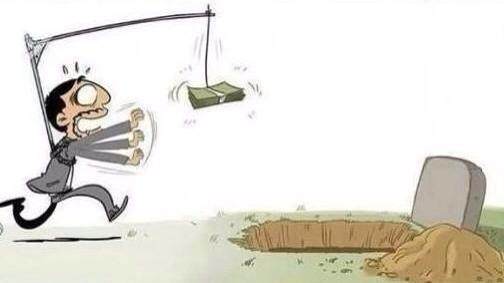
The American Dream has always been about aspiring to material wealth, even to the point of excess. We have to have a new dream where everyone has a basic standard of financial security.

We apparently feel powerless to battle against big business bullies and the irresponsibly affluent who have no interest in anything but padding their bank accounts. It is easier to flog the lower class who we view as equally responsible for our inability to ascend the ladder of prosperity, though they are not even remotely as culpable as those at the top. The American Dream has always been about aspiring to material wealth, even to the point of excess. So, why would we break off the very pinnacles we want to attain ourselves? The answer, in the name of stress-reduction and sustainable economics is that we have to have a new dream where everyone has a basic standard of financial security. Everyone. I'll talk about how to do that in my next post.

Tuesday, December 20, 2016

Doing the Wrong Thing

The Electoral College failed to do the right thing on December 19 when it completed the confirmation process of ratifying the legitimacy of President-elect Donald Trump. This was expected. Most government bodies such as this are loathe to upset the apple cart, to set any kind of historic precedent that would have huge ramifications presently, and in the future. Still, one could argue the electors abdicated their true responsibility to the welfare of our nation at large.

Before you dismiss the rest of this commentary as just another Trump-bashing editorial, please understand that ordinarily I would praise the Electoral College for not rocking the boat, regardless of what political party stood to prosper. This is an exception given at least two very disturbing conditions that presently exist. We have it on good authority that there was foreign interference in the election cycle itself. Also, our President-elect has shown complete disregard for conflicts of interest as applied to both himself and his Cabinet appointees. One more thing: Trump has not attended intelligence briefings regularly, if at all.

It turns out that there is good reason that the Electoral College convenes more than a month after the public vote. The window between the two events permits a glimpse into the behaviors and tendencies of the next potential Commander-in-Chief. This is where we gauge the prospective effectiveness of the President based on his actions, appointments, press conferences, willingness to learn from advisors of previous administrations, and other decisions made in this pre-inauguration time period. At this point, any evaluation, even an unbiased one, should raise several red flags. At the very least, the Electoral College might have considered delaying their vote until at least some of these troubling circumstances were better illuminated. That alone might have gotten the President-elect's attention, made him realize his power is not going to be rubber-stamped, and that we, the people, take his new job seriously.

The fact that the Central Intelligence Agency (CIA), National Security Administration (NSA), and Federal Bureau of Investigation (FBI) all concur that there were cyber-intrusions into the election process makes the validity of the election highly questionable. This has a lot less to do with who emerged victorious than it does the value of the public electorate and the sanctity of what is supposed to be a democracy. The fact that our newly-elected leader could apparently care less speaks volumes about how much he values democracy, and the citizenry, save those, maybe, who are attending his post-election victory rallies. Rallies. Nothing of substance, no press conference. Rallies.

It seems clear to me that the President has no intention to "make America great again," but only make America appear great.

The Trump presidency is going to be all about keeping up appearances. This is a man of Wall Street and the marketplace, where perception equals reality. Advertising equals truth. There can be no conflict of interest if you equate governance with business management. The only "intelligence" you need to collect amounts to focus groups, surveys, and polls. It seems clear to me that the President has no intention to "make America great again," but only make America appear great again. We have a remarkably good salesman as our leader now. In what business model does the salesman call the shots, wield all the power?

By now I am stunned that Trump has not named Howard Stern as his Press Secretary. This is how low my expectations have sunken. Trump apparently wants to retain command of publicity himself, but there is no one home anywhere but Twitterville. The whole impression of how the administration is shaping up is somewhere between The Wizard of Oz and....what, Young Frankenstein? It defies logic, lacks credibility by even the most basic standards, and ignores all legitimate questions, regardless of how impartial the interrogating party may be. Where is my faith, you ask? Elsewhere.