Showing posts with label corporations. Show all posts

Sunday, August 27, 2023

Why Low Wages in the U.S. Are "Acceptable"

© Getty Images/iStockphoto

I spend a good deal of time thinking about our American economic system, and how it abuses labor, consumers, and the environment. There has, in my opinion, been an elaborate orchestration of the illusion of wage fairness that has helped pacify what should be an outraged labor force. The entire idea of a “Middle Class” is, in fact, an illusion. Allow me to outline first why a minimum wage that no longer keeps up with the cost of living has endured for so long.

Ways in Which Labor is Encouraged to Augment Low Wages

The corporate world has dictated how the labor force is allowed to make up for low wages. We are led to believe that it is our responsibility to make up the deficit in earning a livable income by....

  1. Taking a second job (or third). As fewer and fewer jobs exist with full-time hours, the need to secure a second job is becoming the standard for more and more workers. Even full-time jobs may not pay enough to cover rent, food, utilities, and other necessities, so workers end up taking at least a part-time job to supplement the full-time job.
  2. Side Hustle. Labor is encouraged to monetize activities that they may otherwise consider hobbies. Platforms like Etsy and e-bay are examples of this, but also blog platforms like Medium, and video outlets like YouTube. These are all still largely corporate marketplaces, and subject to the same problems as other corporate entities. Uber, Lyft, and other transportation services, including delivery of food and merchandise, is another form of the side hustle, and they carry added risks to personal safety. In all cases, such endeavors tend to take the fun out of pursuits that one once found pleasurable.
  3. Borrowing. This broad category includes credit cards, lines of credit, conventional loans, mortgages, and other forms of lending through banks, plus loans from family and friends. This naturally produces debt that is rarely paid off in a timely fashion, and the borrower actually loses money in the long run thanks to interest, fees, and other attached expenses.
  4. Lotteries, legalized gambling. National and state lotteries have become commonplace, and there is now widespread legalized sports betting. Most states also have casinos, often on Indigenous reservations or "offshore" on rivers. Once again, odds are stacked against patrons of those enterprises. Enough low-level prize money is made available, with enough regularity, to keep gamblers coming back for more. It can become an addiction that necessitates borrowing again, sometimes from ruthless sources.
  5. Civil Litigation. Have you noticed how many law firms advertise these days? The implication is that through lawsuits, an individual can recoup what they believe they are already entitled to. It is classic displacement. Your wrath over low wages or salary at your job is taken out on a third party when circumstances such as traffic accidents or malpractice on the part of physicians or hospitals present themselves. Guess who is footing the bill for those prime time television advertisements. The expense and emotional stress of litigation is seldom worth the trial, or even the settlement. It is also an enterprise ripe for corruption itself by unscrupulous attorneys.
  6. Government Assistance. Low-level employees at many corporations still qualify for government assistance in the form of foodstamps, Medicaid, the Child Care Credit, and related programs. Because there is still a social stigma attached to receiving government benefits prior to retirement age, there is reluctance to avail oneself to those avenues of income.
  7. Crowdfunding. Social fundraising has become a popular go-to for individuals facing tragedy or trauma, to cover the expenses of medical, veterinary, or repair and reconstruction emergencies. Platforms like Kickstarter can also help someone launch their own business, or creative project, in the hopes of abandoning their dependence on corporate wages over which they have no control. Again, there exists some social stigma over the idea that individuals are self-indulgent and/or "needy."
  8. Pawning, garage sales. Selling one's existing possessions is a socially-acceptable way of generating money, albeit precious little. The assumption is that you are making a sacrifice, something laudible, and also providing other people with items that they need or desire. Pawning something of sentimental value, on the other hand, like a wedding ring, may signal that you assign little true value to the object, and thus the person or institution it represents.
  9. Service gigs. What was once the domain of child and teenage money-making opportunities is now being undertaken by people of all ages. Lawn-mowing. Snow shoveling. Running errands. The classic lemonade stand. All are acceptable enterprises because customers are receiving a product or service. The supposition is that you are also teaching your children lessons in economics, either by example, or by encouraging your children to contribute to family income.
  10. Illegal activities. There are some enterprises that are expressly unlawful, but for which enforcement is lax or applied prejudicially. Selling illicit substances, engaging in prostitution, participating in illegal gambling, and other criminal activity is risky, but potentially highly lucrative. Besides the obvious legal downside, there is extreme risk of physical and emotional abuse. The idea that these pursuits are encouraged would be laughable were it not for the example of decriminalizing marijuana. Can decriminalization of other activities be far behind?

All of the above ways of earning supplemental income are frought with uncertainties, and expenses, if only in terms of taxes. There is frequently great emotional and physical stress involved. Many of these include a social cost where you are subject to incorrect assumptions over your work ethic, morality, or other aspects of your persona. You deserve better.

You are more than your credit score. The normality of borrowing has turned the "Middle Class" into the Debt Class. It is no accident that debt liability is not figured into poverty statistics. If that were so, the veil would finally be lifted and we would see the Emperor indeed has no clothes. Corporations would at last be exposed as the greedy organizations we all know they are, but cannot otherwise prove. Only corporate executives and majority shareholders matter. Capital is not "scarce" as we are told, it is being hoarded. That this is in any way legal is reprehensible.

What is the solution? Until Universal Basic Income and reparations are the order of the day, cancel, as much as humanly possible, your subscription to this corporate economic model. It is, arguably, nearly impossible to do so, but we have to try. The irony that I am writing this post on a platform owned by a monolithic digital tech entity (Google) does not escape me. Still, I buy little beyond food, utilities, communication devices, and fuel. We are fortunate to be privileged by a modest inheritance from my late father that allows us to live debt free for now, but that does not mean we feel safe from financial ruin. More on that in another post.

Sunday, October 9, 2022

Children Are the Corn

It is the month of Halloween, and a perfect time to confront horrors both real and imagined. The most insidious of threats, however, are those we are blissfully unaware of, or don't perceive as dangerous. Such is the case for the marketplace. We do not spend nearly enough conscious attention to the corporate landscape we navigate daily, and it is at our peril.

In 1984, the horror film Children of the Corn was released, loosely based on a short story by Stephen King. The plot of the film revolved around the children of a ficticious rural U.S. town where the children formed a cult that demanded the ritual saccrifice of adults to ensure a successful corn harvest. The film spawned several sequels and has a cult following of its own. Cut to the reality of today, and I would argue that children are the corn of the global marketplace. Allow me to explain.

Parents who attempt to control the exposure of their children to television, the internet, and other forms of commercial entertainment are fighting an uphill battle against the influence of corporations. Kids will still be vulnerable to persuasion by their peers, social media influencers, billboards, and all manner of other corporate vehicles. Children are the next "crop" of consumers in the corporate economy, fed on the "fertilzer" of advertising and marketing campaigns. This is the real fear of corporations over falling birthrates: not the labor shortage they purport to have anxiety about, but a potential consumer shortage. If a labor shortage were a genuine concern, companies would not be outsourcing jobs overseas. They would be paying a living wage and offering a healthy benefits package to entice more workers into applying for jobs.

Children and adults alike are relentlessly conditioned to frame the solutions to everyday irritations as either "product" or "service." Spilled food and beverages require special chemical cleaners. Insects and spiders in and around the home require "exterminators," or the more politically correct "pest control operators," regardless of whether the creatures in question pose any danger at all. What are we supposed to never do? Change our mindset. Frame things differently. Ask ourselves if it really is a problem demanding action, or simply a periodic nuisance we can live with. Address our irrational fears, give them less power over us.

The expectation of the marketplace to be answer to all our ills makes us dependent on corporations, and lazy in our intellectual appraisal of circumstances and situations that annoy us or appear as intractable problems. While no one can be a jack-of-all-trades, we could stand to be more self-sufficient. Personally, I know I could use basic instruction in everything from home repairs to cooking to auto repair. This human condition is a major facet of the urban-rural divide. Those in rural regions and small towns are undeniably more self-sufficient than city-dwellers. Urbanites have partitioned expertise and resources to such a degree that there are specialists in niche markets. Farmers and ranchers are livestock EMTs, landscapers, butchers, and equipment repair technicians to name only a handful of their skills. They are too often still at the mercy of corporations that dictate which seeds they plant, where their produce can be sold, and for how much, but there is no denying their skill set.

Given our reliance on the corporate gods for our daily salvation, is it any wonder we cannot solve major societal problems that exceed the capabilities of business entities? It can be argued that colonialism, patriarchy, and White privilege and supremacy are supported, at least tacitly, by corporations. Turning to other human institutions, such as religion, gets us no further. Government has failed us repeatedly due to corruption, and extremists in political parties. As long as powerful people and entities prosper under the status quo, we are unlikely to see the systemic changes necessary for true equality in rights and freedoms, and equity in wealth distribution.

Environmental, consumer, and labor protections are viewed as barriers to corporate prosperity, but climate change, ecosystem destruction, an overstressed workforce, and an increasingly distrustful, powerless consumer constituency threaten to wreak economic havoc anyway. We need to remove the scales from our eyes and see the global marketplace for what it is: a means of preserving elitist power and wealth by dividing the vastly larger population that are employees and consumers.

We need not always be hostile in creating a revolution. Indeed, the Covid pandemic has highlighted the ingenuity of the individual, and the desire of many for simplicity, self-sufficiency, and a local economy that reduces energy consumption, rejects labor exploitation, and instead empowers each citizen to identify their personal passions and goals. People are quietly executing revolutionary changes that are positive and affirming, and vastly more inclusive of human diversity.

I am not generally a fan of horror films, but I can recommend one exceptional, and relatively tame, cinematic production that cleverly addresses the concepts mentioned above. They Live was released in 1988. Directed by John Carpenter, it is based on the short story "Eight O'Clock in the Morning," by Ray Nelson. It was ahead of its time, and might have been part of the inspiration for The Matrix. We do need to "free our minds" of the shackles of corporate expectations, and see our own personal potential to be the change needed today. That doesn't mean you have to saccrifice everything. Continue to indulge in your comforts, but perhaps not as frequently? I'm going to go brew a couple of cups of coffee now....

Tuesday, January 9, 2018

Privileged Whites

White privilege undeniably drives racism in the U.S., but reverse those two words and you have the root of what cripples us all: Privileged Whites. Are all wealthy Caucasians villains in our society? No, but it is the few who are greediest and most corrupt that have captured power. The solution is to recognize their tools and strategies and then refuse to participate in their games.

One could argue that the concept of privileged Whites could be narrowed further to privileged White men. The fraction of excessively wealthy women who lack empathy for the less fortunate are simply subscribing to the model set forth by their male counterparts. It is an unfortunate perversion of feminism that suggests that if women are to succeed in a male-dominated world, then they must act like men, stripping themselves of compassion in the ruthless pursuit of material wealth.

Misguided Aspirations

The best way to combat the wealth gap, and general divisiveness in America, is to stop aspiring to excessive material affluence. Period. Refuse to compete with others. Meet your needs, live within your means, share with others what you have in goods, services, and experiences. Reject the temptation of credit, loans, and other financial products and services designed to mask the reality that we are a debt class instead of a Middle Class. Stop consuming media that feeds impulsive purchases, erodes your self-esteem, and presents a skewed reality (if not fantasy). You are not a product yourself, so stop treating yourself that way. Stop mindlessly subscribing to the idea that it is your responsibility to fulfill the obligations of others, outside of children, the elderly, and the ill. Periodic indulgences are fine, but you may find yourself in a healthier frame of mind by downsizing the number of products you already own. It is not your responsibility to line the pockets of corporate shareholders and CEOs, but that is largely what you are doing when you patronize purely commercial companies. Shop local. Support local agriculture. Heck, grow your own vegetable garden.

Feeding the Machine

We are constantly bombarded with advertising that reminds us we are unfulfilled, and essentially worthless without [insert product or service here]. Furthermore, we should strive to be more like this celebrity, this athlete, this successful businessman or businesswoman. We should at least dress the part with the latest fashions, beauty treatments, suggested occupations, and other lifestyle upgrades. It is more important to be seen as having substance rather than actually having intangible qualities like empathy, a work ethic, and compassion.

Government regulations at every level discourage self-sufficiency, like replacing your lawn with a vegetable garden, while encouraging dependence on corporate solutions, like lawn care products and services. We claim that "charity begins at home," but the tax code will not give you a deduction for helping a relative unless they live with you. Try going off the grid and see how long it is before you get harassed by local utility interests. We are thwarted at every turn when we seek to take control of our lives in healthy ways, so that the wheels of multinational corporations can keep running us over. No conspiracy theory necessary, just turn on the television and see for yourself.

What We are "Allowed"

While the media defines for us what it means to be successful, we are constantly deprived of avenues for achieving that success. Again, I am speaking of financial success, which is of questionable value in itself, but hear me out. We are not guaranteed a living wage, having to settle for a minimum wage instead, which frequently does not keep up with the cost of living. The Federal Reserve has not made saving money possible for several decades because it refuses to raise interest rates, playing on our fears of inflation. Meanwhile, a lower interest rate encourages borrowing, which plunges us further into personal debt.

What we are allowed to do to make up personal financial deficits is paltry, risky, and unhealthy for ourselves and society. We can take a second or third job, further depriving us of lives outside of work. We can play the lottery, patronize the casino, borrow money, get yet another credit card (see borrowing money), or file lawsuits. Seriously, the proliferation of lawsuits would largely cease if people did not feel that they were already owed something. The lack of a living wage incites feelings of inadequacy that people believe can be quenched through lawsuits. "I am entitled to more, to better!" Indeed they are, but through fair pay for their work, which continues to be undervalued. We are enslaved in an economic sense, insidiously, such that we are cleverly duped. It should be no less intolerable than physical slavery, or the continuing exploitation of Native Americans through "legal" theft every time their casinos make a killing or oil or gas is discovered on their lands. We are owned by corporations, make no mistake about it, but we allow ourselves to be.

Drop Out, Engage, Promote Alternatives

Personally, I all but abstain from the economy. I freelance, which is a punishing way to try and earn a living, but less so than working at a job I disdain, with people I abhor, just to make money. Consequently, I have little to spend. What I earn goes to my monthly share of the groceries, meals out, my cell phone bill (a pay-as-you-go plan), my share of automobile fuel costs, clothing from thrift stores, shoes about every two or three years, and occasional travel. That is about it. I have essentially dropped out of the material world. What has increased is my level of civic and social engagement, both online and in person. It is through social interactions that I learn what about alternative consumer choices other people are making to overcome the obstacles and injustices they face, or that our society faces. This month, one friend is attempting a Plastic-Free January, going out of her way to avoid using plastics, especially disposable versions like cups, drinking straws, and packaging. Our household is on board and looking to be even more critical of how our buying and lifestyle habits affect others and the environment.

We have to demand better, not more. We are entitled to basic standards of living and decency for all before we can look to add luxuries. The very things that do make America great are under assault right now. They include our spirit of helping others, respect for each other, and unity in achieving common goals. We no longer have the luxury, as if we ever have, to discriminate, spew hate speech, and attempt to destroy the lives of others we may disagree with. We lose our sense of community, and we lose everything. Privileged Whites are banking on that.

Friday, April 8, 2016

On the Growing Distrust of Science

© Gazettaofapocalypse.Blogspot.com

The sociopolitical landscape of the U.S.A. at this moment seems rather schizophrenic when it comes to whether citizens greet science and scientists with trust and acceptance, or distrust and disbelief. It is my opinion that this is not a sudden phenomenon, but one that has been brewing for several decades. It is not the result of changes in the scientific method, either, but in the agendas of the parties engaged in scientific research. There is now less independent research and more study by scientists beholden to corporations. Meanwhile, politicians have exploited the growing chasm between religion and science. Lastly, the internet has spawned more misinformation than ever, and made it easier for individuals and groups of like minds, predisposed to belief or skepticism, to reinforce their own opinions.

Corporatization, and Science as Product

In an age where perception equals reality, science and scientists are increasingly viewed as agents for the advancement of corporate profits, at the expense of consumer access, safety, and environmental health. The pharmaceutical industry is a great example. Privatization is thus the overriding problem with science today. At worst it excludes science in the decision-making process. It subverts peer-review and limits protocols based on cost-benefit analysis in the monetary sense only. More money is invested in lobbying for deregulation than in establishing and upholding basic standards of health, safety, and disclosure. Even more money is spent on procuring patents and protecting "proprietary information." Science, in essence, is now all about product and everything that this concept entails.

That even includes advertising, from prescription meds to energy. Here in Colorado, we are subjected nightly to advertising which promotes fracking, a means of extracting fossil fuels that are otherwise difficult to harvest. There is actually no science in the advertising. It plays upon sympathy for rural populations that rely on oil and mineral rights to supplement farm and ranch income. Well, of course it is major corporations, usually absentees from the states they are exploiting, that make the real profits. "Coloradans for Responsible Energy Development" and "Protect Colorado" are behind the ads, but guess who bankrolls them?

Where is the Oversight?

The government regulatory agencies we have traditionally relied upon to serve as watchdogs for the public interest are also increasingly in the pockets of the multinational corporations they were designed to be skeptical of. This is what happens when industries are successful in lobbying for deregulation. Did we learn nothing from the collapse of the big banks of Wall Street? Apparently, because we seem hell-bent on repeating the same scenario with science; only this time it is our personal health and the health of the environment that are at stake.

Yet another problem is that scientific decisions are now bypassing the scientific community. No unbiased scientist in their right mind is going to blindly sign off on the decision to make the Detroit River the new water source for consumers in Flint, Michigan, for example. Again, politicians are not scientists, but now they are not even soliciting input from scientists, or they do so after the fact.

© Scilogs.com
Scientific Illiteracy

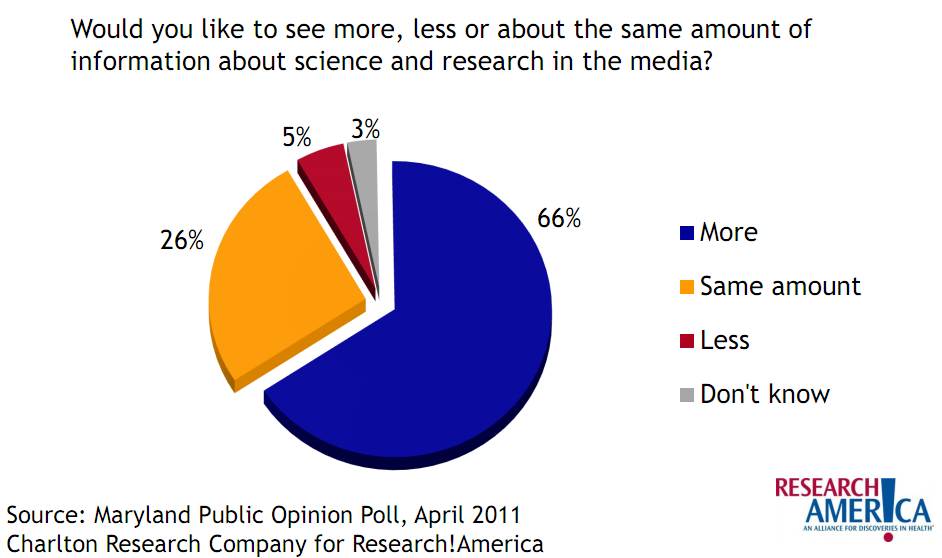
Two factors are largely responsible for public scientific illiteracy: the expansion of social media, and funding cuts to education at all levels. Misinformation, urban legend, and rash "theories" now spread at warp speed thanks to Facebook Twitter, and other internet portals. The consumer, for their part, has the attention span of a gnat, and the media demand answers instantly to "fill the void." Consequently, journalists are quick to pull the trigger on a flimsy "theory" instead of weighing all sides, and waiting patiently for traditional authorities, including scientists, to chime in. This study suggests a sort of "bandwagon" phenomenon in the wake of hot-button topics like the Zika virus.

Funding for public education is also suffering at state and local levels, and every interest group demands that politicians make funding contingent upon their own agenda. Consequently, we get legislation prohibiting the teaching of evolution, and/or equating "creation science" with evolution. Regardless of one's faith, it should be obvious that in order to be fully informed, students need to be aware of basic scientific principles, not shielded from them.

Solutions?

All of the preceding concerns have resulted in the perfect storm of consumer ignorance and orchestrated deception on the part of many for-profit entities. None will be solved overnight, but perhaps we can agree on some goals and strategies for reversing the trends.

  • We need to return the scientific process to the arena of full transparency. Indeed we must, if it is to regain its rightful place of unbiased authority. The public should always be informed as to what company, industry, or agency a scientist is working for.
  • Funding must be increased, or restored in many cases, for independent, basic research from which more specific research is then generated. The same holds true for funding of science education from kindergarten through high school, and in informal settings like parks and museums.
  • We need more rigorous reporting from media to expose bad science, and publicize accurate science. Journalistic standards and integrity from peer-reviewed journals to the nightly news and online outlets need to be returned to their former glory. Where are the Woodwards and Bernsteins of today?

I am not holding my breath for the day when corporations and government officials suddenly start accepting the idea of accountability, but as a writer I hope to continue demanding that they do; and demand more of myself in articulating scientific matters in a timely manner, with a voice of authenticity, and respect for my readers. We need an honest dialogue more than ever, fearless in expressing our fears, and with minds open to enlightenment.

Monday, January 18, 2016

Bernie Sanders and the Debt Class

Presidential candidate Bernie Sanders has made the central issue of his campaign the idea that our government has abandoned its responsibilities to the middle class. I would go a step farther and argue that we don't have a "middle class" at all. What we have is a "debt class" masquerading as a middle class. Debt has become an acceptable concept for politicians and ordinary citizens alike, and actively encouraged by financial institutions that reap huge profits at our collective expense. We're propped up as local, state, and federal governments, and family budgets. We are not solvent in the least.

Not only are we encouraged to borrow, we are punished for saving money by horrendously low interest rates. I still cannot understand why there cannot be separate interest rates for borrowing and saving, but that is the current situation and it is intolerable. One should earn more than (less than) pennies on the dollar for their personal or family emergency fund.

How do we accomplish changes to the status quo? Goals must be set in both legislation and personal consumer choices. We need to resist the temptation to borrow, to "keep up with the Jones'" lifestyle. Service, sharing, and generosity should be our personal governing concepts, not the accumulation of material wealth. We can do that without a government mandate. Those admirable ideals can, however, be enhanced by policies that reward those behaviors, and reward work rather than inherited wealth and corporate excess.

One of the quickest roads to bankruptcy in the U.S.A. is a health catastrophe. When even one hospital visit can put your bank account in arrears, and/or force you to beg on GoFundMe, we have a societal issue. So, addressing healthcare is paramount to turning around the personal debt crisis. A single-payer system ("Medicare for All"), as Sanders advocates, would be a great next step for the Affordable Care Act.

Student loans are another source of debt, and if we could at least make an effort at reducing college costs, if not making higher education free as many other developed nations have, then that would put many people on a more level playing field. When you consider the current minimum wage against cost of living and student debt, it is a wonder any young person can afford housing and a car, let alone a family.

Raising the minimum wage to at least fifteen dollars an hour is doable, with tax credits for small businesses. We should be actively encouraging more small businesses, so reward them as employers and entrepreneurs, and do not demand them to play by the same rules as multinational corporations.

Collect taxes from corporations currently avoiding taxation. End bailouts, subsidies, and other forms of corporate welfare. The revenue from this alone would likely reduce some individual tax rates, as well as reducing the federal deficit.

Meanwhile, we have to take some personal responsibility. We should start saving in spite of the poor returns at the present time. Cut up the credit cards. Flee big banks and put our money in accounts at credit unions where customers come first and there are no shareholders. Stop patronizing payday loan and rent-to-own enterprises that prey on our desire for instant cash or merchandise. Live frugally for ourselves, generously for others. Demand that the media stop obsessing over the wealthy.

What was it Rev. Martin Luther King, Jr. said? Something about "the content of their character." He was denouncing racism, but I suspect that today he would add that we shouldn't be judging the self-worth of others by the content of their bank accounts, either. That should most definitely not be the measure of any man (or woman) today.

Ok, so maybe we can do some of this. What would be the result? Were I a gambling man, I would bet that you would see some or all of the following result from increased wages, reduced debt, and overall fiscal responsibility: Alcoholism and drug abuse would decrease because of decreased stress from debt and poverty. Theft, illegal gambling, and related crimes would decrease with rising income. Frivolous litigation would decrease because currently lawsuits are viewed in part as a way to make up for low wage income. Employment would increase because one person wouldn't need three jobs to make ends meet. Dependence on welfare programs would begin declining. Volunteerism would increase because people would have more time free from wage-earning.

Bernie Sanders has, unfortunately, failed to articulate these connections between wealth disparity and the negative behaviors that result from it, let alone the potential benefits of reforming income inequality. Still, he is endorsed by virtually every economist in the land. We have at hand an unprecedented opportunity to begin reversing trends that, left to continue, will be the ruin of our society. I urge you only to think very carefully about both your vote at the booth, and how you vote with your hard-earned dollars in the marketplace.