Showing posts with label scientists. Show all posts

Wednesday, February 24, 2021

Mars, Thylacines, Ferrets, and Defending Science

The last few days have been full of headline-making science stories. We landed another rover on Mars, cloned an endangered species, and may have rediscovered a species believed to be extinct. If this is all great news, why are some scientists so defensive? The Twitterverse is a strange entanglement of overlapping galaxies, and this week is bringing out the best and worst in the scientific community.

© USFWS National Black-footed Ferret Conservation Center via Phys.org

Depositing a self-propelled data-collecting rover on a distant planet is a technological achievement for which the creators and support personnel should rightly be proud. Among the congratulatory and celebratory voices, however, were those who complained immediately that such milestones unleash an inevitable flurry of public resentment over tax dollars being spent on the “luxury” of space exploration. Public perception, they claim, is that interstellar endeavors are a waste of time, money, and other resources when we have urgent problems affecting flesh-and-blood people here on planet Earth. Landing a rover on Mars while citizens in Texas and other southern states were freezing in the wake of a polar vortex was a coincidence of, dare I say, astronomical proportions.

At the other end of the spectrum came news that is igniting excitement from the public, but criticism from scientists. A video announcement was released suggesting that a trail camera had possibly detected a family of three thylacines, the infamous “Tasmanian tiger,” a large carnivorous marsupial that vaguely resembles a dog. The thylacine was last documented conclusively with the last wild individual captured in 1930. The man in the video has turned over the trail cam images to experts for their evaluation, rather than posting them immediately to the internet. That cautionary act enhances his credibility.

Unfortunately, the immediate reaction of the scientific community was overwhelmingly negative. The consensus seems to be that hunting for thylacines is a fool’s errand, a waste of time, money, and other resources when we have urgent problems affecting endangered species that we know for a fact exist, if by a thread. Sound familiar?

Conservation scientists appear threatened by competition from those still looking for thylacines, Ivory-billed Woodpecker, and other species believed extinct. However, the Formosan subspecies of the Clouded Leopard was declared extinct as of 2013 and yet rediscovered in Taiwan last year. We are, in fact, still discovering new species of mammals every few years. Criticizing scientists engaged in those efforts amounts to a form of bullying and is at best unprofessional.

Meanwhile, it was also announced that scientists in Colorado successfully cloned a female of the highly-endangered Black-footed Ferret. Rarely has anyone been able to spin the science of cloning in a positive fashion, but here we are. At first blush, this does not appear to be cause for elation because it means the youngster is a genetic duplicate of its “parent.” In this case, the female she was cloned from died back in the mid-1980s, so this little one does represent an enhancement of the gene pool.

The only criticism anyone can level at the ferret story is that the species still needs intact prairies, and a prey base of prairie dogs, to sustain and increase its numbers. Here in Colorado, anyway, agricultural interests (to include ranching) and developers, and fossil fuel extracting companies all seem hell bent on eradicating prairie dog towns.

All of us, scientists and the general populace, at least here in the U.S., are guilty of accepting the idea of scarce resources for which we must compete. This is especially true of federal budgets that allocate only so much to each public concern. Pressure needs to be exerted on Congress, and the corporate sector, to be more responsible in budget decisions. What good is a bloated defense budget if we don’t have a country worth defending? Why are only majority shareholders and executive officers of publicly-traded companies the beneficiaries of corporate wealth?

We vote for government representation at some level at least every two years, but we vote in the marketplace daily. We need to make our spending dollars count in both our consumer choices and in our private donations to causes we believe in, from civil rights to endangered species to space exploration. Let’s stop complaining reactively, and be more proactive instead.

Tuesday, July 30, 2019

Of Science and Reverance

Last night I stumbled upon the documentary Inventing Tomorrow, directed by Laura Nix, on our local PBS (Public Broadcasting System) here in Colorado Springs. One of the things that struck me about these young women and men was how much they are motivated by reverence for nature and human history. I found the cultures these students live in to be a welcome, but stark, contrast to the culture and society American children are raised in. Science has informed their emotional attachment to nature, amplified their ability to empathize, and offered them real hope for a brighter future, one they can create.

© Quotation.io

Here in the U.S., children barely connect with their elders, let alone respect them. In many other cultures, several generations reside under one roof, or live next door, or no more than a few blocks away, the better to teach their children and grandchildren well. Personal stories are a powerful source of inspiration and action when told to children. Do we relate our own experiences to our children these days, or do we fear embarrassment, or risk empowering our youth to try daring things like peace marches, or poetry? Do we invite our children to sacrifice instead of feeling entitled to material things? Most children who excel have families that go above and beyond mere support. Fathers and mothers may leave jobs or drive their child for hours to participate in activities or meet with a mentor. Sometimes entire families uproot to be in a location that is optimal for the next step in the child's path to greatness.

While the family is usually at the core of a child's developing sense of values, the community, the "village," is also important. Surrounding a child with influential people outside the familial circle further expands the child's realm of experience and knowledge. This happens routinely in non-American cultures, and it once happened here in the U.S., too, but today we are told that every adult is a stranger, a potential pedophile, rapist, scam artist, or other devious criminal. We assume the worst now, and trust no one. We fear that sending the gifted child to university prematurely will forever stunt their growth in the social sense.....

Religion should be working in concert with science to develop young minds. Science can show what is possible. Religion, ideally, creates the bedrock of reverence for creation and cautions against a completely dispassionate approach to research, especially in the biological sciences. That is not what is happening in American Christianity. Extreme conservatism has put itself at direct odds with scientific advancement, even questioning practices like immunization inoculations that have protected humanity from illness and disease for decades (centuries in some cases).

One could argue that the religious practices of indigenous peoples reflect a much greater reverence for the natural world, but Christianity has dismissed such belief systems as "paganism," seeking to convert other cultures at every possible opportunity. Missionary programs offer poverty relief, but with the strings of Jesus attached. Meanwhile, Christianity pays lip service to a reverence for creation, even when it could claim that Noah was the first wildlife conservationist. Prayer is the only action needed to save the world, while you continue your over-consumptive lifestyle.

I have personally exposed myself to both science and religion, and found that science creates a greater reverence for the natural world. It does at times demand a detachment from your (research) subject that I find distasteful, sometimes outright wrong, but it is generally a far less judgmental community, and getting better by the day. It does not retreat into outdated doctrines that have proved toxic to scientific progress, impeded the advancement of women, and suppressed minorities. It is embracing the entire spectrum of gender identity, and continues to welcome immigrants who bring new insights, skills, strategies, and vision in meeting the challenges of the future.

In short, science is what religion should be. Go ahead and pray, it cannot hurt, but please stop wasting energy attacking science. The two should complement each other, not antagonize one another. Practice restraint in your lifestyle, be conservative in your carbon footprint, and joyful in your celebration of all things wild and free. Feed your curiosity, fascination, and sense of wonder. Support your local science fair, as well as the vacation Bible school bake sale.

Tuesday, May 14, 2019

Book Review: Underbug Will Unravel Your Mind, in a Good Way

Lisa Margonelli's Underbug: An Obsessive Tale of Termites and Technology (2018 Scientific American, 303 pp) offers a much bigger picture than a mere glimpse inside a termite mound. The book has a story arc as great as the universe, and as small as a microbe found in a termite's gut. It represents a metamorphosis of history, science, and the mind of the author herself. Part memoir, part journey, and all science and experience, it works brilliantly.

The only holes in Underbug are the ones in the dust jacket, a clever nod to the affinity of termites for all things cellulose and lignin, or derived from it. The irony that this work about termites will inevitably be consumed by them reflects a bit of the humor in Margonelli's approach, as well as the futility of expectations in scientific inquiry.

It came as a shock to this reader that the book was something of an afterthought that emerged from a....recreational(?)....fascination with scientific endeavors that Margonelli was pursuing at her own expense, without monetary advances and publisher deadlines. Who does that? Maybe the proper question should be why don't we (writers) all do that? I dare say this might have been a completely different book if the author had started with the intention of writing it instead of putting a wild horse before an organized cart.

If your brain is wired to go off on tangents while reading, Underbug will have your mind reeling, spinning off into the existential time and time again. Anticipating a dry-as-weathered-wood treatise on termites? Then you have another think coming; and another, and another after that. All your assumptions about insects, science, and even history and culture are in for a shake-up. This is exactly what our society needs to recognize: that while we may have a desire to compartmentalize our human activities, social groups, and our personal motivations and emotions, they all have impacts far beyond our habitual perceptions. Interconnectedness, distant consequences, ambivalence, and empathy are the major themes of Underbug, not termites.

Margonelli is one of the "new" league of women non-fiction writers who is able to insert herself into the story to the correct degree, conveying humility and struggle rather than bravado and arrogance as many male writers tend to do. She manages the perfect mix of participation and detachment, cultivating a bond with readers that only gets stronger as the story progresses. She shares your skepticism, but has relentless curiosity and a tenacious commitment to doing whatever she needs to in order to elevate her knowledge and broaden her horizons.

Termites, it turns out, are a nexus of ridiculously disparate scientific disciplines, and a metaphor for human societies. They span a scale that ranges from their miniscule bodies to continental landscapes. Well, smaller than that since termites rely on intestinal microbes to digest cellulose and lignin into compounds useful to the termite. Meanwhile, the mounds of many species utterly transform ecosystems. One can argue that termite colonies and their architectural masterpieces are ecosystems.

How such a "simple" organism can achieve such overwhelming success is one of the conundrums addressed in Underbug. Our failure (so far) to scale-up the termite's "engine" to produce "grassoline" and other biofuels is a testament to the complexity of insects and the limits of science and the human mind. Also, where does one termite end and the colony begin? Which of those two is the "brain?" What constitutes a "mind?" You may be left wondering if termites have it better than we do. The attraction of instinct, after all, is freedom from morality, freedom from responsibility for our actions, because we would not be cognizant of them.

We are nothing if not collectively selfish, being animals ourselves, able to execute our desires to eliminate competition from other species for scarce resources, minimize mortality factors such as predators and pathogens, reproduce freely with greater success thanks to advances in medicine, and to enhance our lives through technology. However, as Margonelli writes:

"We need to call technology what it is -- an abstraction of power, politics, and economics. And then -- if we are going to take ideas from the termites into our human realm -- we should use them to become more human, not less."

I cannot recommend this book highly enough, as a microcosm of concepts in critical need of addressing by the world community, and mulled over with regularity by us as individuals, families, and local communities. Oh, and to explorers looking for signs of intelligent life in other galaxies? You might be looking for interstellar termites.

Thursday, February 22, 2018

Book Review: Never Out of Season

Rob Dunn grabs your attention right out of the gate in his book Never Out of Season (Little, Brown and Company, 2017, 323 pp). Our monotonous diet, and utter lack of crop diversity is not just stunning, it is frightening. The book's subtitle, How Having the Food We Want When We Want It Threatens Our Food Supply and Our Future, is a bit misleading. First, that applies mostly to Western cultures which are affluent enough to import fruits and vegetables from other parts of the world, continually. To his credit, Dunn addresses global agriculture and food security, going out of his way not to ignore Third World nations, poverty, war, and other factors that influence the ability of countries to feed themselves, let alone the rest of the world.

Indeed, Dunn's historical accounts demonstrate how time and time again human populations has been on the brink of starvation, yet are bailed out by individuals and organizations on the far side of the globe. It has been Russians and others who have had the foresight to save seeds in banks and vaults, preserving crop diversity even at their own personal peril. Meanwhile, governments and industries have blissfully ignored the lessons furnished by famines and crop failures.

Never Out of Season is in many ways a real-life thriller, but the reader is largely left to draw their own conclusions as to who the villains are. There are plenty of victims and heroes, but aside from a small group of henchmen who sabotaged a cocoa tree plantation by deliberately infecting trees with a fungal disease known as witches'- broom, few criminals. At least, they do not have overtly hostile intentions. The problem is, overwhelmingly, neglect, plus failure to learn from history and failure to properly invest in efforts necessary to avert future calamities.

The progress of the Green Revolution creates the narrative arc, from its beginnings around World War II through present day. Humanity quickly became dependent on pesticides, fertilizers, and other chemicals to increase crop yields and exploit marginal soils. From there, agriculture scaled up, and today it is largely the province of multinational corporations with a primary agenda of profit and patent protection over feeding people. Consumers are left with increasingly processed foods in the supermarket, the illusion of choice, poorer nutrition, and a widening disconnect with farmers. Dunn is less simple and direct in his presentation of the state of agriculture, and how we got here, but is captivating, entertaining, and educational in his language. His research is exhaustive and beyond reproach. The end notes take up forty-six (46) pages.

Readers looking for an unequivocal indictment of industrialized agriculture will have to search elsewhere. Never Out of Season presents a series of cautionary tales that inform, enlighten, and serve as examples of the kinds of catastrophes we are in for if we continue to devalue genetic diversity in our food crops. Genetically Modified Organisms (GMOs) are not painted as evil here, but powerful tools that can help advance agriculture provided we do not become as addicted to them as we did to pesticides, herbicides, fungicides, and phosphate fertilizers.

Dunn also offers hope at the end of the book, successfully energizing and empowering the reader to plant their own yards with vegetables and fruit trees, join in citizen science projects to enhance our collective understanding of agricultural ecology, and to purchase from local farmers those foods they cannot grow. The variety of approaches to agriculture is beginning to diversify, which is a positive trend, but it remains to be seen whether agribusiness will respond favorably, or seek to bury smaller entities under patent-infringement lawsuits and other legal strategies.

Paul Ehrlich, in his own endorsement, states that "Everyone who eats should read Never Out of Season. This reviewer could not agree more. Even fans of fiction would be hard-pressed to find a more compelling page-turner replete with colorful and heroic characters, and an ending that only we, the reader, can finish by holding our leaders accountable for funding priorities, environmental regulation, making conservation of heritage seeds an overriding concern, and bolstering consumer protections. We can also shop smarter and grow our own.

Friday, April 8, 2016

On the Growing Distrust of Science

© Gazettaofapocalypse.Blogspot.com

The sociopolitical landscape of the U.S.A. at this moment seems rather schizophrenic when it comes to whether citizens greet science and scientists with trust and acceptance, or distrust and disbelief. It is my opinion that this is not a sudden phenomenon, but one that has been brewing for several decades. It is not the result of changes in the scientific method, either, but in the agendas of the parties engaged in scientific research. There is now less independent research and more study by scientists beholden to corporations. Meanwhile, politicians have exploited the growing chasm between religion and science. Lastly, the internet has spawned more misinformation than ever, and made it easier for individuals and groups of like minds, predisposed to belief or skepticism, to reinforce their own opinions.

Corporatization, and Science as Product

In an age where perception equals reality, science and scientists are increasingly viewed as agents for the advancement of corporate profits, at the expense of consumer access, safety, and environmental health. The pharmaceutical industry is a great example. Privatization is thus the overriding problem with science today. At worst it excludes science in the decision-making process. It subverts peer-review and limits protocols based on cost-benefit analysis in the monetary sense only. More money is invested in lobbying for deregulation than in establishing and upholding basic standards of health, safety, and disclosure. Even more money is spent on procuring patents and protecting "proprietary information." Science, in essence, is now all about product and everything that this concept entails.

That even includes advertising, from prescription meds to energy. Here in Colorado, we are subjected nightly to advertising which promotes fracking, a means of extracting fossil fuels that are otherwise difficult to harvest. There is actually no science in the advertising. It plays upon sympathy for rural populations that rely on oil and mineral rights to supplement farm and ranch income. Well, of course it is major corporations, usually absentees from the states they are exploiting, that make the real profits. "Coloradans for Responsible Energy Development" and "Protect Colorado" are behind the ads, but guess who bankrolls them?

Where is the Oversight?

The government regulatory agencies we have traditionally relied upon to serve as watchdogs for the public interest are also increasingly in the pockets of the multinational corporations they were designed to be skeptical of. This is what happens when industries are successful in lobbying for deregulation. Did we learn nothing from the collapse of the big banks of Wall Street? Apparently, because we seem hell-bent on repeating the same scenario with science; only this time it is our personal health and the health of the environment that are at stake.

Yet another problem is that scientific decisions are now bypassing the scientific community. No unbiased scientist in their right mind is going to blindly sign off on the decision to make the Detroit River the new water source for consumers in Flint, Michigan, for example. Again, politicians are not scientists, but now they are not even soliciting input from scientists, or they do so after the fact.

© Scilogs.com
Scientific Illiteracy

Two factors are largely responsible for public scientific illiteracy: the expansion of social media, and funding cuts to education at all levels. Misinformation, urban legend, and rash "theories" now spread at warp speed thanks to Facebook Twitter, and other internet portals. The consumer, for their part, has the attention span of a gnat, and the media demand answers instantly to "fill the void." Consequently, journalists are quick to pull the trigger on a flimsy "theory" instead of weighing all sides, and waiting patiently for traditional authorities, including scientists, to chime in. This study suggests a sort of "bandwagon" phenomenon in the wake of hot-button topics like the Zika virus.

Funding for public education is also suffering at state and local levels, and every interest group demands that politicians make funding contingent upon their own agenda. Consequently, we get legislation prohibiting the teaching of evolution, and/or equating "creation science" with evolution. Regardless of one's faith, it should be obvious that in order to be fully informed, students need to be aware of basic scientific principles, not shielded from them.

Solutions?

All of the preceding concerns have resulted in the perfect storm of consumer ignorance and orchestrated deception on the part of many for-profit entities. None will be solved overnight, but perhaps we can agree on some goals and strategies for reversing the trends.

  • We need to return the scientific process to the arena of full transparency. Indeed we must, if it is to regain its rightful place of unbiased authority. The public should always be informed as to what company, industry, or agency a scientist is working for.
  • Funding must be increased, or restored in many cases, for independent, basic research from which more specific research is then generated. The same holds true for funding of science education from kindergarten through high school, and in informal settings like parks and museums.
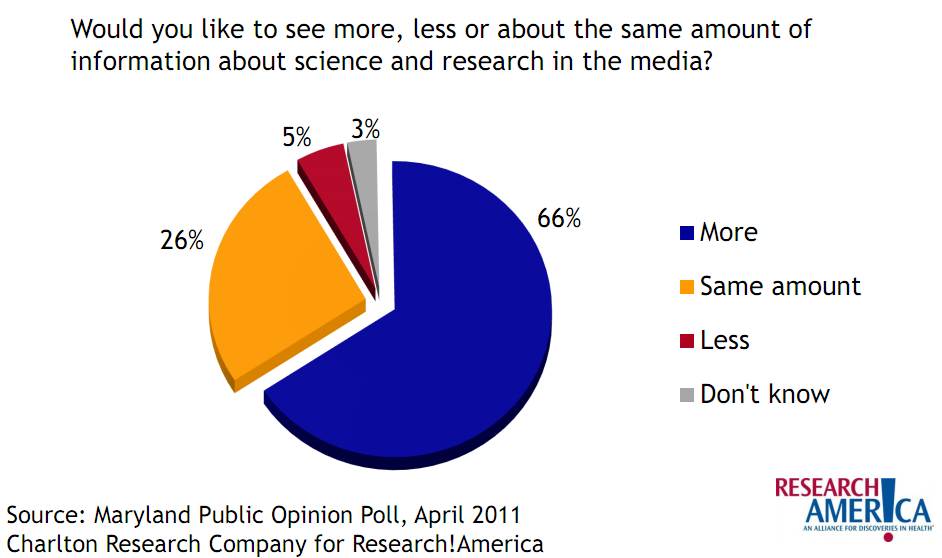
  • We need more rigorous reporting from media to expose bad science, and publicize accurate science. Journalistic standards and integrity from peer-reviewed journals to the nightly news and online outlets need to be returned to their former glory. Where are the Woodwards and Bernsteins of today?

I am not holding my breath for the day when corporations and government officials suddenly start accepting the idea of accountability, but as a writer I hope to continue demanding that they do; and demand more of myself in articulating scientific matters in a timely manner, with a voice of authenticity, and respect for my readers. We need an honest dialogue more than ever, fearless in expressing our fears, and with minds open to enlightenment.