
The sociopolitical landscape of the U.S.A. at this moment seems rather schizophrenic when it comes to whether citizens greet science and scientists with trust and acceptance, or distrust and disbelief. It is my opinion that this is not a sudden phenomenon, but one that has been brewing for several decades. It is not the result of changes in the scientific method, either, but in the agendas of the parties engaged in scientific research. There is now less independent research and more study by scientists beholden to corporations. Meanwhile, politicians have exploited the growing chasm between religion and science. Lastly, the internet has spawned more misinformation than ever, and made it easier for individuals and groups of like minds, predisposed to belief or skepticism, to reinforce their own opinions.
In an age where perception equals reality, science and scientists are increasingly viewed as agents for the advancement of corporate profits, at the expense of consumer access, safety, and environmental health. The pharmaceutical industry is a great example. Privatization is thus the overriding problem with science today. At worst it excludes science in the decision-making process. It subverts peer-review and limits protocols based on cost-benefit analysis in the monetary sense only. More money is invested in lobbying for deregulation than in establishing and upholding basic standards of health, safety, and disclosure. Even more money is spent on procuring patents and protecting "proprietary information." Science, in essence, is now all about product and everything that this concept entails.
That even includes advertising, from prescription meds to energy. Here in Colorado, we are subjected nightly to advertising which promotes fracking, a means of extracting fossil fuels that are otherwise difficult to harvest. There is actually no science in the advertising. It plays upon sympathy for rural populations that rely on oil and mineral rights to supplement farm and ranch income. Well, of course it is major corporations, usually absentees from the states they are exploiting, that make the real profits. "Coloradans for Responsible Energy Development" and "Protect Colorado" are behind the ads, but guess who bankrolls them?
The government regulatory agencies we have traditionally relied upon to serve as watchdogs for the public interest are also increasingly in the pockets of the multinational corporations they were designed to be skeptical of. This is what happens when industries are successful in lobbying for deregulation. Did we learn nothing from the collapse of the big banks of Wall Street? Apparently, because we seem hell-bent on repeating the same scenario with science; only this time it is our personal health and the health of the environment that are at stake.
Yet another problem is that scientific decisions are now bypassing the scientific community. No unbiased scientist in their right mind is going to blindly sign off on the decision to make the Detroit River the new water source for consumers in Flint, Michigan, for example. Again, politicians are not scientists, but now they are not even soliciting input from scientists, or they do so after the fact.
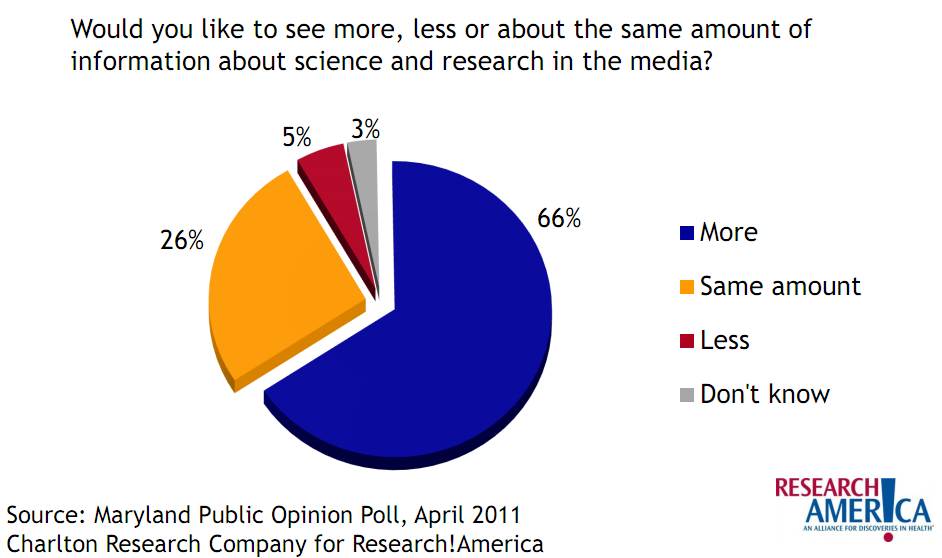
Two factors are largely responsible for public scientific illiteracy: the expansion of social media, and funding cuts to education at all levels. Misinformation, urban legend, and rash "theories" now spread at warp speed thanks to Facebook Twitter, and other internet portals. The consumer, for their part, has the attention span of a gnat, and the media demand answers instantly to "fill the void." Consequently, journalists are quick to pull the trigger on a flimsy "theory" instead of weighing all sides, and waiting patiently for traditional authorities, including scientists, to chime in. This study suggests a sort of "bandwagon" phenomenon in the wake of hot-button topics like the Zika virus.
Funding for public education is also suffering at state and local levels, and every interest group demands that politicians make funding contingent upon their own agenda. Consequently, we get legislation prohibiting the teaching of evolution, and/or equating "creation science" with evolution. Regardless of one's faith, it should be obvious that in order to be fully informed, students need to be aware of basic scientific principles, not shielded from them.
All of the preceding concerns have resulted in the perfect storm of consumer ignorance and orchestrated deception on the part of many for-profit entities. None will be solved overnight, but perhaps we can agree on some goals and strategies for reversing the trends.
- We need to return the scientific process to the arena of full transparency. Indeed we must, if it is to regain its rightful place of unbiased authority. The public should always be informed as to what company, industry, or agency a scientist is working for.
- Funding must be increased, or restored in many cases, for independent, basic research from which more specific research is then generated. The same holds true for funding of science education from kindergarten through high school, and in informal settings like parks and museums.
- We need more rigorous reporting from media to expose bad science, and publicize accurate science. Journalistic standards and integrity from peer-reviewed journals to the nightly news and online outlets need to be returned to their former glory. Where are the Woodwards and Bernsteins of today?
I am not holding my breath for the day when corporations and government officials suddenly start accepting the idea of accountability, but as a writer I hope to continue demanding that they do; and demand more of myself in articulating scientific matters in a timely manner, with a voice of authenticity, and respect for my readers. We need an honest dialogue more than ever, fearless in expressing our fears, and with minds open to enlightenment.

