Sunday, April 17, 2016

Mountain Bikers & Trail Runners: Slow Down for Snakes!

Here in Colorado, at least along the Front Range, we enjoy a variety of "wilderness" recreational opportunities from hiking to rock climbing. Sometimes differing modes of trail enjoyment come into conflict, and sometimes the wildlife suffers even worse consequences. Here I will relate why people traveling over trails at high speed (mountain bikers and trail runners specifically) need to understand their potential impacts on reptiles in particular.

Baby gartersnake basking on trail

I have been fortunate to encounter at least four species of snakes along popular trails in various parks and open spaces. Snakes make use of patches of earth unobstructed by vegetation in order to bask, warming their bodies for active hunting later, to help digest a meal, or otherwise regulate their metabolism. Trails are ideal for this purpose and it is not uncommon to find serpents stretched across the full width of a trail.

Obviously, venomous snakes such as the Prairie Rattlesnake also pose a threat to people using trails. Trail runners must be mindful of the potential to encounter rattlesnakes, especially in early morning or early evening hours, and on overcast days. I personally recall one afternoon when a trail runner passed me, and I almost tripped over a Prairie Rattlesnake shortly thereafter. I suspect the runner never saw it.

A handsome Prairie Rattlesnake stretched across a trail

When traversing terrain at a high rate of speed, it is essentially impossible to notice a snake or other small organism on the trail. If it is noticed it may be mistaken for a branch or other object. Snakes are generally well-camouflaged and overlooked even by those seeking to find them.

Besides the fact that a snake cannot move rapidly enough to avoid an oncoming bicycle tire, or running shoe, it is usually not programmed to do so behaviorally. A snake's primary defense against a perceived threat is to rely on camouflage and stillness in hopes the predator or danger does not detect it. So, snakes are, figuratively if not literally, "sitting ducks" when it comes to oblivious mountain bikers and trail runners.

Aw-w-w, a basking baby gophersnake

There is evidence that other types of small animals also suffer from collisions or other encounters with mountain bikers and trail runners. While my chief personal interest is in insects and spiders, and I find a great deal of carnage related to even regular bicyclists, most invertebrate species have robust, widespread populations that can withstand even heavy mortality. Not so with many reptiles, small mammals, ground-nesting birds, and other organisms. Remember that all animals are subject to many non-human mortality factors as well: Predators, parasites, disease, and infertility for example.

Gartersnake smile

What can you do to avoid conflict and still enjoy yourself? Consider recreating at a time of day when reptiles are not normally active. Yes, that means late morning through afternoon during the warmer months. Winter riding means little or no conflict with wildlife. Slow down, especially in open habitats such as prairies, meadows, and glades, south- or east-facing hillsides, and along rock outcrops. Ride only on trails designated for mountain biking (but you do that already, I'm sure). If there is a park headquarters, visitors center, or nature center, consult with personnel there to find out which trails are best, and whether there is frequent wildlife activity along them.

Thank you for reconsidering your riding and running habits and becoming more "wildlife-friendly" to other creatures. Those of us who share the trails but move at a slower pace and enjoy our encounters with animals will be grateful for your thoughtfulness.

Prairie Rattlesnake thanks you for your courtesy

Sources: Burgin, Shelley and Nigel Hardiman. 2012. "Is the evolving sport of mountain biking compatible with fauna conservation in national parks?," Australian Zoologist 36(2): 201-208.
Craver, Monica. 2009. "The Impacts of Mountain Biking on Amphibians and Reptiles, 2008," e-mail to Council ATdnv.org
Davenport, John and T. Adam Switalski. 2006. "Environmental Impacts of Transport, Related to Tourism and Leisure Activities," in Davenport, John and Julia L. The Ecology of Transportation: Managing Mobility for the Environment. Dordrecht: Springer. pp. 333-360.
Goode, Matthew J., Jeffrey M. Howland, and Michael J. Sredl. 1995. Effects of Microhabitat Destruction on Reptile Abundance in Sonoran Desert Rock Outcrops. Nongame and Endangered Wildlife Program Heritage Report. Arizona Game and Fish Department, Phoenix, Arizona.
Vandeman, M.J. 2011. "The Impacts of Mountain Biking on Wildlife and People - A Review of the Literature," ARPN Journal of Science and Technology 4(7): 418-426.

Wednesday, April 13, 2016

Advice to Creative People

I could probably summarize my advice to other creative people in one sentence: "Get comfortable with yourself." What would be the fun in that, though? It takes awhile to grow into that mindset anyway, so here are some thoughts that might help you get there faster.

Value your works

Maybe the first thing you have to appreciate is that what you produce are "works": irreproducible images, passages, and other products of your personal vision, interpretation, and mind. Social media, and the digital age in general, has severely eroded the value that our society once assigned to the arts. Don't stand for that. Demand compensation, within reason of course, that reflects what you put into a given work. Recognize your worth as an artist and human being and don't back down from it.

Don't emulate anyone else

It is very easy to fall into the trap of believing that if you....followed the writing routine of Elmore Leonard, say, you would be much more productive and successful. Balderdash. Not everyone works the same way. A routine that is effective for one person is completely inappropriate for another. Seldom are even two consecutive days the same for my own writing style. If you are producing, then you are doing what works for you. Only if you fail completely to produce, over a long period, do you need to re-think your approach.

Make your art a priority

You do have to make your creative endeavors a priority in your life if you want to be successful. Still, recognize that on some days, even the best at their craft would sooner have a root canal than sit down at the desk, stand at the easel, or whatever. Just the same, remember that healthy eating, exercise, cultivating loving relationships with others, and personal education are also necessary for your productivity. A diversity of activities each day, or at least each week, is key to keeping energized and creative. I make it a point to take a brisk 30-minute walk every day, unless the weather poses a threat to my health.

The myth of the muse

One cannot rely on someone else, or something else for inspiration. "Write (draw, paint, etc) what you know" is a constant refrain from teachers and mentors, but there is good reason for that advice. It is a steady stream feeding your creative self, and it lends uniqueness to your voice. You must believe in your personal perspective, realm of experience, and style of expression. My personal desire to change public attitudes towards insects, spiders, and other "unlovable" creatures drives me daily. What I don't already know I learn; and I infuse my writing and photography with my personal enthusiasm and awe for the natural world.

There is no "writer's block"

If you are passionate about your work, there is no valve on creative flow. It is a constant torrent. What can happen is periodic lack of motivation and/or a lack of focus. Many of us are prone to distraction, maybe even have undiagnosed ADD. Committing to one project, be it an essay, novel, painting, or commissioned sculpture, may seem impossible at times because other projects or life events are clamoring for our attention. That is natural and afflicts everyone regardless of their occupation or career. Accept that this will happen, and take extra care of your physical and mental health when it does.

Don't compare yourself to others

Many times this will be a pitfall, something that consumes you when you are vulnerable to a sudden attack of an inferiority complex. Your measure of success must be your own. You may be prone to jealousy and envy, but most of us are. Use those emotions as motivation, not as an excuse to wallow or give up. Your uniqueness is all you have going for you. Celebrate it.

Get comfortable with turmoil

There is some truth to the "suffering artist" cliché. Passion often comes from personal experiences, circumstances, or world events and issues that you react viscerally to. Channel the rage, anger, hostility, or pain into something that moves others. Personally, I believe my greatest successes are when I express opinions and beliefs that are shared by others, but that those other people never dared broadcast out of fear. What would their friends think? How dare they say that! Be that kind of daredevil.

Don't apologize

This comes on the heels of being fearless. Do not be fearful of changing your mind or attitude when confronted by an opposing point of view that has merit; but don't apologize for expressing yourself in the moment, espousing your own personal interpretations (be they written, drawn, painted, sculpted, sung, etc) of your world. You are not responsible for how others receive your works. Your intent should never be to willfully hurt others, but you are going to cause wounds now and again and you have to accept that as part of the price of the creative process. Forgive yourself when that happens.

Don't live by someone else's standards

Did I say that already? Well, it bears repeating. Here is "A Cartoonist's Advice," by Bill Watterson, the man behind Calvin and Hobbes:

"Creating a life that reflects your values and satisfies your soul is a rare achievement. In a culture that relentlessly promotes avarice and excess as the good life, a person happy doing his own work is usually considered an eccentric, if not a subversive. Ambition is only understood if it’s to rise to the top of some imaginary ladder of success. Someone who takes an undemanding job because it affords him the time to pursue other interests and activities is considered a flake. A person who abandons a career in order to stay home and raise children is considered not to be living up to his potential — as if a job title and salary are the sole measure of human worth.

You’ll be told in a hundred ways, some subtle and some not, to keep climbing, and never be satisfied with where you are, who you are, and what you’re doing. There are a million ways to sell yourself out, and I guarantee you’ll hear about them.

To invent your own life’s meaning is not easy, but it’s still allowed, and I think you’ll be happier for the trouble."

Write your own rules

Whatever you may take from this blog post, there is greater value in what you decide is best for yourself. You will always be your own worst critic, but you have to also be your staunchest advocate. There is no one else capable to making you great. So, pin those self-affirming statements to the wall over your desk, to the frame of your easel, or mirror, or monitor. Experience joy. Make sacrifices. Accept occasional poverty (in the financial sense only). Think. Feel. Live. That is all that art is.

Friday, April 8, 2016

On the Growing Distrust of Science

© Gazettaofapocalypse.Blogspot.com

The sociopolitical landscape of the U.S.A. at this moment seems rather schizophrenic when it comes to whether citizens greet science and scientists with trust and acceptance, or distrust and disbelief. It is my opinion that this is not a sudden phenomenon, but one that has been brewing for several decades. It is not the result of changes in the scientific method, either, but in the agendas of the parties engaged in scientific research. There is now less independent research and more study by scientists beholden to corporations. Meanwhile, politicians have exploited the growing chasm between religion and science. Lastly, the internet has spawned more misinformation than ever, and made it easier for individuals and groups of like minds, predisposed to belief or skepticism, to reinforce their own opinions.

Corporatization, and Science as Product

In an age where perception equals reality, science and scientists are increasingly viewed as agents for the advancement of corporate profits, at the expense of consumer access, safety, and environmental health. The pharmaceutical industry is a great example. Privatization is thus the overriding problem with science today. At worst it excludes science in the decision-making process. It subverts peer-review and limits protocols based on cost-benefit analysis in the monetary sense only. More money is invested in lobbying for deregulation than in establishing and upholding basic standards of health, safety, and disclosure. Even more money is spent on procuring patents and protecting "proprietary information." Science, in essence, is now all about product and everything that this concept entails.

That even includes advertising, from prescription meds to energy. Here in Colorado, we are subjected nightly to advertising which promotes fracking, a means of extracting fossil fuels that are otherwise difficult to harvest. There is actually no science in the advertising. It plays upon sympathy for rural populations that rely on oil and mineral rights to supplement farm and ranch income. Well, of course it is major corporations, usually absentees from the states they are exploiting, that make the real profits. "Coloradans for Responsible Energy Development" and "Protect Colorado" are behind the ads, but guess who bankrolls them?

Where is the Oversight?

The government regulatory agencies we have traditionally relied upon to serve as watchdogs for the public interest are also increasingly in the pockets of the multinational corporations they were designed to be skeptical of. This is what happens when industries are successful in lobbying for deregulation. Did we learn nothing from the collapse of the big banks of Wall Street? Apparently, because we seem hell-bent on repeating the same scenario with science; only this time it is our personal health and the health of the environment that are at stake.

Yet another problem is that scientific decisions are now bypassing the scientific community. No unbiased scientist in their right mind is going to blindly sign off on the decision to make the Detroit River the new water source for consumers in Flint, Michigan, for example. Again, politicians are not scientists, but now they are not even soliciting input from scientists, or they do so after the fact.

© Scilogs.com
Scientific Illiteracy

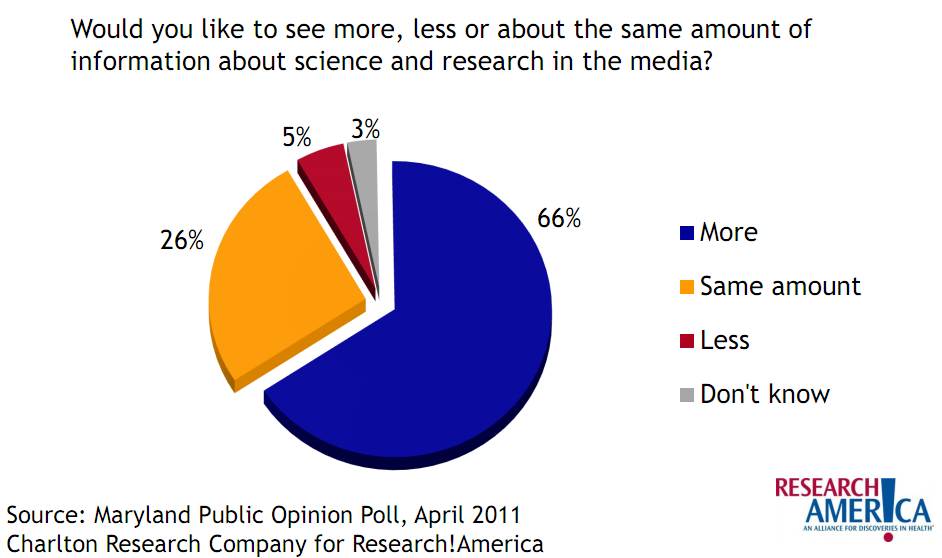
Two factors are largely responsible for public scientific illiteracy: the expansion of social media, and funding cuts to education at all levels. Misinformation, urban legend, and rash "theories" now spread at warp speed thanks to Facebook Twitter, and other internet portals. The consumer, for their part, has the attention span of a gnat, and the media demand answers instantly to "fill the void." Consequently, journalists are quick to pull the trigger on a flimsy "theory" instead of weighing all sides, and waiting patiently for traditional authorities, including scientists, to chime in. This study suggests a sort of "bandwagon" phenomenon in the wake of hot-button topics like the Zika virus.

Funding for public education is also suffering at state and local levels, and every interest group demands that politicians make funding contingent upon their own agenda. Consequently, we get legislation prohibiting the teaching of evolution, and/or equating "creation science" with evolution. Regardless of one's faith, it should be obvious that in order to be fully informed, students need to be aware of basic scientific principles, not shielded from them.

Solutions?

All of the preceding concerns have resulted in the perfect storm of consumer ignorance and orchestrated deception on the part of many for-profit entities. None will be solved overnight, but perhaps we can agree on some goals and strategies for reversing the trends.

  • We need to return the scientific process to the arena of full transparency. Indeed we must, if it is to regain its rightful place of unbiased authority. The public should always be informed as to what company, industry, or agency a scientist is working for.
  • Funding must be increased, or restored in many cases, for independent, basic research from which more specific research is then generated. The same holds true for funding of science education from kindergarten through high school, and in informal settings like parks and museums.
  • We need more rigorous reporting from media to expose bad science, and publicize accurate science. Journalistic standards and integrity from peer-reviewed journals to the nightly news and online outlets need to be returned to their former glory. Where are the Woodwards and Bernsteins of today?

I am not holding my breath for the day when corporations and government officials suddenly start accepting the idea of accountability, but as a writer I hope to continue demanding that they do; and demand more of myself in articulating scientific matters in a timely manner, with a voice of authenticity, and respect for my readers. We need an honest dialogue more than ever, fearless in expressing our fears, and with minds open to enlightenment.

Tuesday, April 5, 2016

Success and Failure

Earlier this year I reached a decision that might be considered a failure, but my conclusion remains that it was for the best. We are collectively too self-critical, and what I want to do in this post is share how I have learned to re-frame experiences and recapture self-esteem and motivation.

The Project

Back in 2014, I signed a contract to write a field guide to U.S. spiders for an academic publisher. This sounded great at the time, but soon became overwhelming to me. I found it difficult to even begin outlining the book, and I suddenly felt inadequate in my knowledge and organizational skills. My editor was so "hands-off" as to be essentially absent, and I am not a self-motivated individual. I need deadlines. These and other reasons led me to cancel the contract.

I felt most disappointed for those who knew I had this project going and who were looking forward to my "slant" on the subject. I felt I had failed them, much more than failing myself. There is also the problem of paying back the advance. Fortunately, the publisher is being most generous with terms of re-payment. Meanwhile, I have been able to cultivate a couple new clients for smaller projects that are less daunting in scope.

Books I've had a hand in producing
Take Stock

One of the first things I did after this life-altering decision was to lay out all the other books I have had a hand (or at least a finger) in producing. I was surprised at the number, and I even forgot about one book to which I'd contributed an image; and another book to which I contributed a couple chapters but was so expensive I couldn't afford my own copy. This might seem like an exercise in egotism, but not so. It helped me to realize that I have a lot to be proud of already, and that successes can happen again.

Define "Failure"

Another thing I did was to ask myself "is this decision to terminate the contract really a failure?" My spouse might agree that it was, at least financially, but the stress relief alone was worth it to me. Recognizing my limits and my lack of motivation was actually something of a success, though I wish I had realized that sooner. Still, one does not always realize whether a project is a good fit or not until one is immersed in it. There are no "good guys" or "bad guys" in this scenario, just different methods of working. My editor at the university press is a nice man, we just did not have compatible approaches to the project. We parted ways amicably, and it appears I may have found him a much more qualified author to execute the project.

Moving On

Making up for lost income is always a great motivator, but given that my subject niche is so narrow, and markets for it evaporating almost weekly, I have to get really creative. I also have to be persistent, negotiable on payment, and dependable in delivering what I agree to. I may have to self-publish book-length projects from now on because traditional publishers are so reluctant to risk taking on new authors. Fortunately, thanks to advances in technology, and the evolution of social media and crowdfunding, self-publishing is now easier; and the quality of self-published books can equal or even exceed that of the big houses.

Don't Apologize

I advise against apologizing unnecessarily for decisions that might disappoint third parties. You do not owe anyone except yourself (and your family if you have one). You don't even owe friends and consumers an explanation. What you owe yourself is forgiveness, a positive outlook for the future, and a renewed commitment to your own personal goals. Set standards. Decide what you will and will not compromise on with your clients. Treat them fairly, but treat yourself fairly, too. Do not be afraid to say "no," especially if your instincts are sounding alarm bells. You have to protect yourself in a marketplace rife with thieves and immoral degenerates. Do your homework on clients before you approach them, if possible, to avoid the bad eggs.

End of Advice

Whatever your own occupation, vocation, or art, I hope you never feel like a failure. What really matters, of course, is our character. That is what governs all of your relationships, be they professional or personal. Strive to accept who you are, and better those "weaknesses." Some days you'll have setbacks, but how you interpret them determines your success tomorrow. Good luck.

Tuesday, March 15, 2016

Strawberry Fields (and Hills) Forever?

Heidi and I had the privilege today of touring the parcel of land in western Colorado Springs, Colorado known legally as Strawberry Hills, and affectionately as "Strawberry Fields." This is the 189 acres destined to be transferred to the Broadmoor Hotel if a proposed land swap occurs between the City of Colorado Springs and that private corporation.

© Heidi Eaton

The tour was led by Rick Skorman, better known perhaps as the owner and founder of Poor Richard's, a series of adjacent downtown storefronts with a bookstore, coffee house, restaurant, and toy store.

© Heidi Eaton

Last week I wrote my opinion about the land exchange, and if anything my sentiments are stronger after traversing the meadow myself. I can only imagine what it would look like in spring and summer when wildflowers are in bloom, and the landscape greener. Here is a video of another tour, including some stunning overhead footage shot by a drone, and a bit of history.

There is precious little time for the public to make their case against this land swap. There have been many public "meetings," but citizens have had little time allotted to express their opinions at these gatherings. At least one more meeting will be held at Goldcamp Elementary School on Wednesday, March 30, at 6:00 PM.

© Heidi Eaton

Meanwhile, the best thing you can do is write, call, or e-mail the Mayor and City Council directly. Here is information for doing so:

  • Andy Pico, District 6, (719) 385-5491, ApicoATspringsgov.com
  • Bill Murray, At-Large, (719) 385-5485, bmurrayATspringsgov.com
  • Don Knight, District 1, (719) 385-5487, DknightATspringsgov.com
  • Helen Collins, District 4, (719) 385-5492, hcollinsATspringsgov.com
  • Jill Gaebler, President Pro Tem, (719) 385-5483, JgaeblerATspringsgov.com
  • Keith King, District 3, (719) 385-5470, KckingATspringsgov.com
  • Larry Bagley, District 2, (719) 385-5493, lbagleyATspringsgov.com
  • Merv Bennett, President, (719) 385-5469, MBennettATspringsgov.com
  • Tom Strand, At-Large, (719) 385-5486, tstrandATspringsgov.com
  • Mayor John Suthers, (719) 385-5900, jsuthersATspringsgov.com
  • Entire City Council(?), (719) 385-5986, allCouncilATspringsgov.com

Remember to replace "AT" with the "@" symbol when e-mailing. It is especially critical that Mayor and Council hear from those residents who do not live near Strawberry Hills. There is a strong perception that no one else cares about this parcel of public land and we need to correct that assumption. Lastly, it might help to lobby the Parks and Recreation Advisory Board, which will ultimately vote on the proposal: (719) 385-5940, jkriskoATspringsgov.com.

© Heidi Eaton

Oh, I almost forgot. Your most up-to-date source of information about this ongoing saga is Save Cheyenne on Facebook.

This "deal," a product of premature action, in the absence of biological inventories, without channeling through the Planning Commission, and largely without public input or avenues for recourse, would set a terrible precedent if allowed to pass. Today it is Strawberry Hills. What will it be tomorrow?

Saturday, February 27, 2016

Land Swapping in the Springs

A proposed land swap is in the works between the City of Colorado Springs and the Broadmoor Hotel. The following is my personal assessment of the deal based on my own experiences with the parties involved.

Full disclosure: I have been interacting with the City Parks department and Trails and Open Spaces Working Group to try and get a large parcel of land in my own neighborhood designated as an Open Space. I have found department personnel and committee members to be very receptive to citizen initiatives; and I have nothing but good things to say about them.

Unfortunately, I have no nice things to say about the Broadmoor, which is owned by the Anschutz Corporation, a large conglomerate headquartered in Denver. Since I have lived here, the Broadmoor has demonstrated nothing but arrogance, bullying, and whining when it doesn't get its way.

The company put its name on the World Arena, a venue for many entertainment acts and sports events. "World Arena" was a fine name all by itself, if you ask me, and everyone knew the Broadmoor before that publicity anyway.

The Broadmoor later exerted leverage to essentially turn the public Bear Creek Regional Park into its own private trail-riding club. The kicker here is that the Broadmoor already owns riding stables up on Cheyenne Mountain. Neighborhoods around Bear Creek fought back, and the idea has been tabled.

When the Broadmoor does not get what it wants, it often throws editorial temper-tantrums in the Colorado Springs Gazette, which....surprise, surprise, is also owned by the Anshutz Corporation. Gee, I wonder how critical that newspaper is going to be concerning the proposed land swap.

City and county officials paint a glowing picture of this land exchange proposal, consistently repeating how the City is getting more acreage than the Broadmoor wants in exchange, and at how the property being acquired is worth more than what is being sacrificed. We are assured that this will make all the trail connections seamless now, with any future extensions much easier to carry out with the new rights-of-way.

Were it not for the Friends of North Cheyenne Cañon, and the recently-created Save Cheyenne, we would not know what we stand to lose in this transaction. Locals know the 189-acre parcel slated to be turned over to the Broadmoor as "Strawberry Fields." I'd never heard of it, but many people who are long-time residents haven't, either. It may be the most scenic piece of real estate in the Front Range foothills, and perhaps the closest thing to true wilderness this close to the city.

Aside from my contempt for the Broadmoor, I have two additional concerns. The City puts an overwhelming emphasis on "active" recreation, which I prefer to call "speed recreation" since it mostly means trail runners and mountain bikers. One "perk" of the land swap being touted by the City is that the trade will still preserve access to Hully Gully, an ice-climbing route. The City would also get to finally claim the "Incline," a nearly mile-long, almost vertical (2,000 ft. elevation gain) staircase of railroad ties that is immensely popular with the athletic crowd.

What about those of us who like to hike leisurely, without being run over by runners or mountain bikers? In fairness, the majority of mountain bikers I have encountered are conscientious, and observant, and will stop if they see me taking pictures of a bird or something. Some are even genuinely interested in what caught my eye. Still, there are those blind curves where cyclist and pedestrian risk colliding. And then there is the erosion issue.

Lastly, I am unaware of any natural heritage inventory to inform us as to what may be compromised in terms of natural resources should this deal go through. The Broadmoor has thusfar not declared what developments will happen on the Strawberry Fields property, or where they would happen. There is the promise of a picnic shelter where the Parks Department can conduct fundraising events free of rental charges. The Broadmoor may or may not want stables and a riding arena. They will certainly build equestrian trails for their use only.

My bottom line is that I would really, really hate to see Strawberry Fields become yet another playground for the wealthy, forever closed to those who cannot afford to visit. Further, enacting this plan would continue the practice of the Mayor and City Council putting the interests of corporations and wealthy individuals ahead of the public good. You have a chance to make your own voice heard via an online response form at Speak Up! COS, but there is not a lot of latitude for "freestyle" comments, and you have to create an account to participate. Still, I recommend it.

Sources:Hazlehurst, John. 2016. "Broadmoor land swap proposal divides southwest neighborhood," The Colorado Springs Business Journal

Monday, January 18, 2016

Bernie Sanders and the Debt Class

Presidential candidate Bernie Sanders has made the central issue of his campaign the idea that our government has abandoned its responsibilities to the middle class. I would go a step farther and argue that we don't have a "middle class" at all. What we have is a "debt class" masquerading as a middle class. Debt has become an acceptable concept for politicians and ordinary citizens alike, and actively encouraged by financial institutions that reap huge profits at our collective expense. We're propped up as local, state, and federal governments, and family budgets. We are not solvent in the least.

Not only are we encouraged to borrow, we are punished for saving money by horrendously low interest rates. I still cannot understand why there cannot be separate interest rates for borrowing and saving, but that is the current situation and it is intolerable. One should earn more than (less than) pennies on the dollar for their personal or family emergency fund.

How do we accomplish changes to the status quo? Goals must be set in both legislation and personal consumer choices. We need to resist the temptation to borrow, to "keep up with the Jones'" lifestyle. Service, sharing, and generosity should be our personal governing concepts, not the accumulation of material wealth. We can do that without a government mandate. Those admirable ideals can, however, be enhanced by policies that reward those behaviors, and reward work rather than inherited wealth and corporate excess.

One of the quickest roads to bankruptcy in the U.S.A. is a health catastrophe. When even one hospital visit can put your bank account in arrears, and/or force you to beg on GoFundMe, we have a societal issue. So, addressing healthcare is paramount to turning around the personal debt crisis. A single-payer system ("Medicare for All"), as Sanders advocates, would be a great next step for the Affordable Care Act.

Student loans are another source of debt, and if we could at least make an effort at reducing college costs, if not making higher education free as many other developed nations have, then that would put many people on a more level playing field. When you consider the current minimum wage against cost of living and student debt, it is a wonder any young person can afford housing and a car, let alone a family.

Raising the minimum wage to at least fifteen dollars an hour is doable, with tax credits for small businesses. We should be actively encouraging more small businesses, so reward them as employers and entrepreneurs, and do not demand them to play by the same rules as multinational corporations.

Collect taxes from corporations currently avoiding taxation. End bailouts, subsidies, and other forms of corporate welfare. The revenue from this alone would likely reduce some individual tax rates, as well as reducing the federal deficit.

Meanwhile, we have to take some personal responsibility. We should start saving in spite of the poor returns at the present time. Cut up the credit cards. Flee big banks and put our money in accounts at credit unions where customers come first and there are no shareholders. Stop patronizing payday loan and rent-to-own enterprises that prey on our desire for instant cash or merchandise. Live frugally for ourselves, generously for others. Demand that the media stop obsessing over the wealthy.

What was it Rev. Martin Luther King, Jr. said? Something about "the content of their character." He was denouncing racism, but I suspect that today he would add that we shouldn't be judging the self-worth of others by the content of their bank accounts, either. That should most definitely not be the measure of any man (or woman) today.

Ok, so maybe we can do some of this. What would be the result? Were I a gambling man, I would bet that you would see some or all of the following result from increased wages, reduced debt, and overall fiscal responsibility: Alcoholism and drug abuse would decrease because of decreased stress from debt and poverty. Theft, illegal gambling, and related crimes would decrease with rising income. Frivolous litigation would decrease because currently lawsuits are viewed in part as a way to make up for low wage income. Employment would increase because one person wouldn't need three jobs to make ends meet. Dependence on welfare programs would begin declining. Volunteerism would increase because people would have more time free from wage-earning.

Bernie Sanders has, unfortunately, failed to articulate these connections between wealth disparity and the negative behaviors that result from it, let alone the potential benefits of reforming income inequality. Still, he is endorsed by virtually every economist in the land. We have at hand an unprecedented opportunity to begin reversing trends that, left to continue, will be the ruin of our society. I urge you only to think very carefully about both your vote at the booth, and how you vote with your hard-earned dollars in the marketplace.